






Deer Goat Antelope
Blackbuck
Antilope cervicapra
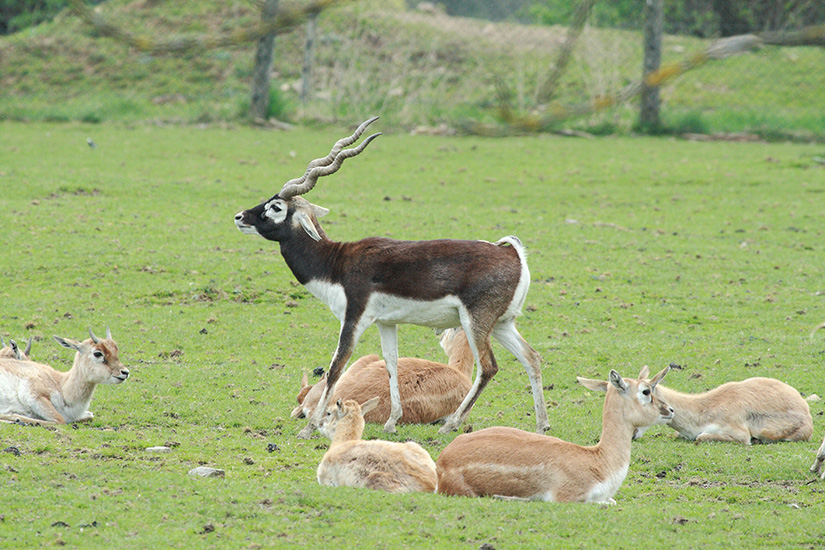
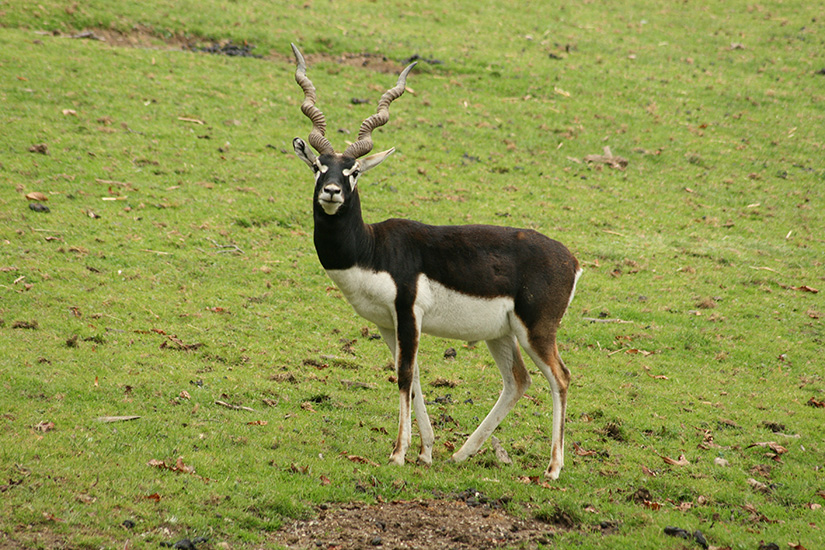
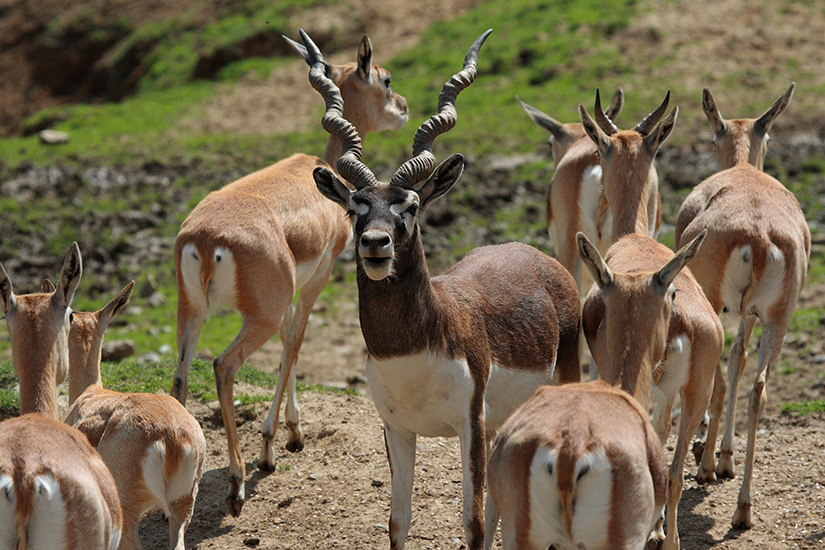
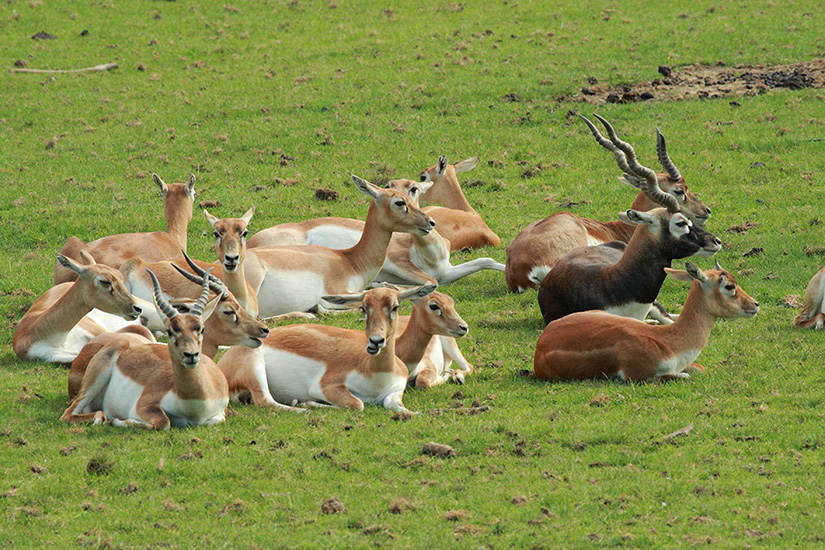
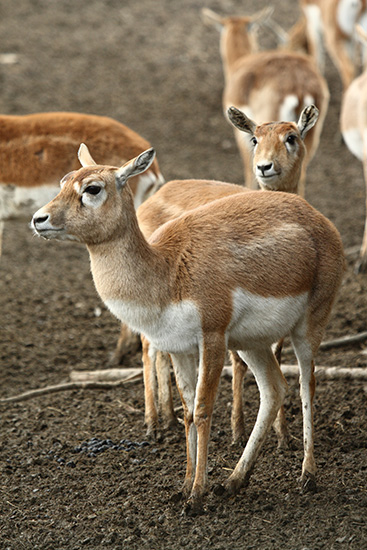
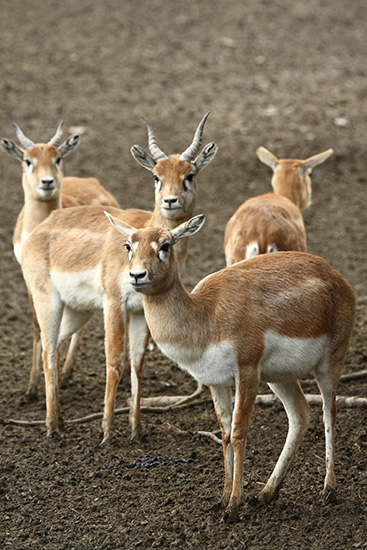
The male’s horn is artfully twisted, while the females are hornless. During the mating season, the male holds his head high to display his horn. The contrast between the blackish-brown upper body and the white belly rounds out the overall appearance. The females and immature males are light brown.
Have you seen this yet?
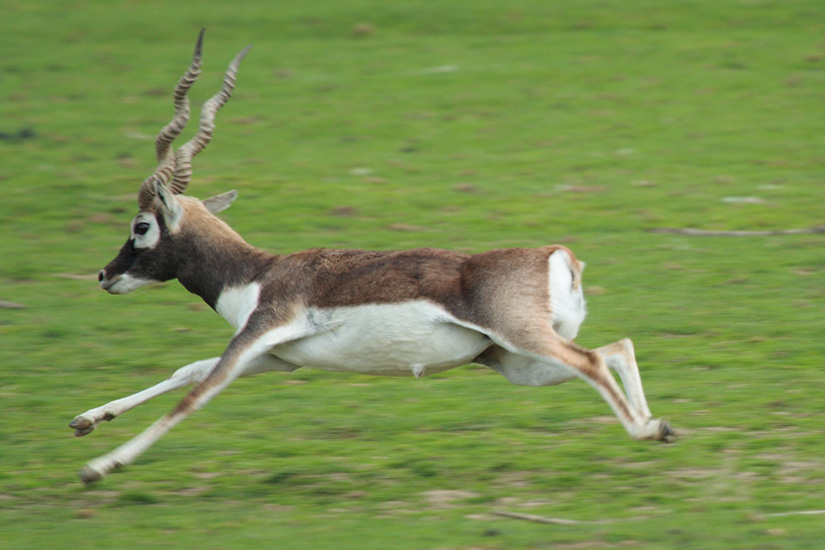
Hirschziegenantilopes sometimes perform peculiar leaps in which they catapult themselves straight up into the air with all four legs simultaneously, keeping their legs stiff. These so-called bounding leaps are often seen when the animals have spotted a predator in the distance.
| Order | Pair-hoofed animals |
| Family | Horn-bearer |
| Distribution | India (naturalized in Argentina and Texas) |
| Habitat |     |
| Food |  |
| Activity |   |
| Weight | 25–45 kg |
| Size | Body length 100–150 cm, shoulder height 60–83 cm |
| Service life | 10–12 years (zoo: 15 years) |
| Reproduction | After a gestation period of 5.5 months, a calf is born; like deer, they are set aside and do not follow their mother until they are 2 weeks old. |
| Risk |  |
| Enemies | Big cats, wolves, leopards, jackals, foxes, eagles, humans |
Tierwelt Herberstein
Steirischer Landestiergarten GmbH
A 8223 Stubenberg am See
Buchberg 50
Phone: +43 3176 80777
Fax: +43 3176 80777 20
Email: info (at) tierwelt-herberstein. at