







Insect Hotel in the Animal Kingdom
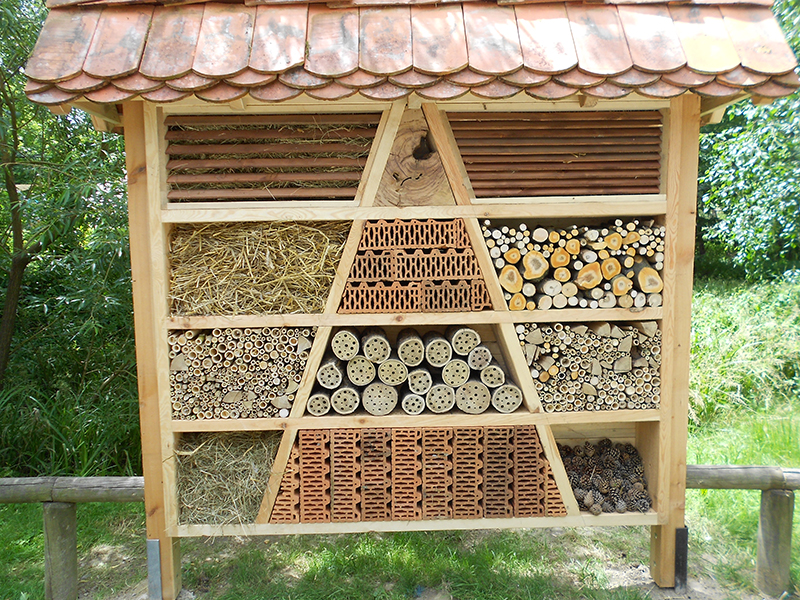
Our insect hotel is designed to provide a habitat for many different species of insects. To make this possible, the interior layout and materials used must be very diverse. The many rooms, each made of a wide variety of materials, create nesting and hiding places for a large number of insects.
Wild bees
Wild bees live either as solitary individuals or in small groups. They are very important pollinators of our flowering plants; here in Eastern Styria, in particular, they ensure a bountiful apple harvest. Unlike honeybees, which need slightly higher temperatures to fly, wild bees fly even at temperatures below 15°C. They lay their eggs individually in brood cells, and each egg is supplied with a reserve of pollen and nectar. The brood cell is then sealed. In this protected area, the larva develops, feeding on the reserves. In most cases, the adult bee emerges within the same year.
Wasps
Several species of wasps will also make their home in the insect hotel: path wasps, for example, paralyze spiders with a sting, carry their prey into the brood chamber, lay an egg on the spider, and seal the chamber. Protected from potential predators in this way, the young wasp can now develop. Digger wasps will also move in here; their food supply consists of paralyzed beetles or grasshoppers.
Lacewings
On the top floor, a few rooms await the lacewings for the winter. Behind the strips, the chambers are filled with hay and straw; lacewings prefer dry, draft-free conditions. By the way, the strips are painted red because lacewings are attracted to red! Lacewing larvae—also known as aphid lions—have a voracious appetite for aphids and should therefore be welcome guests in every garden.
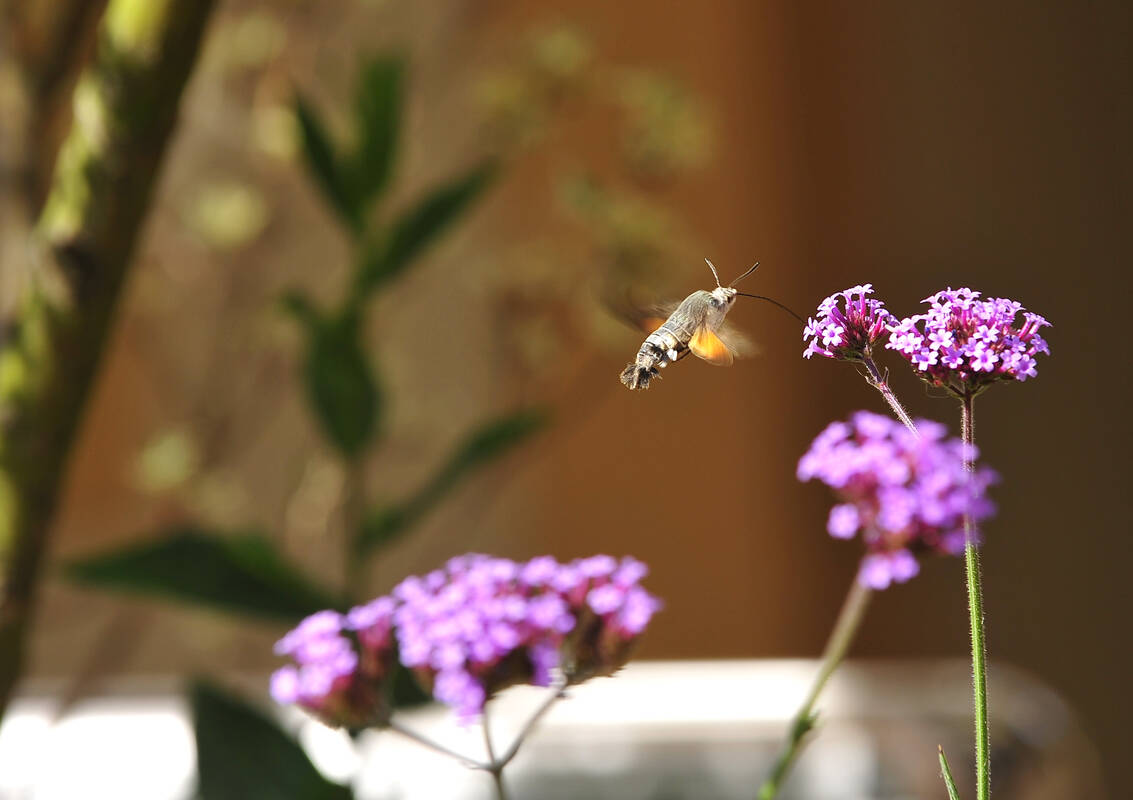
Bumblebees
Bumblebees usually prefer underground nests. However, some species of bumblebees, such as tree bumblebees, garden bumblebees, and stone bumblebees, build their nests above ground. There’s a room available for them in our insect hotel, too.
Ladybug
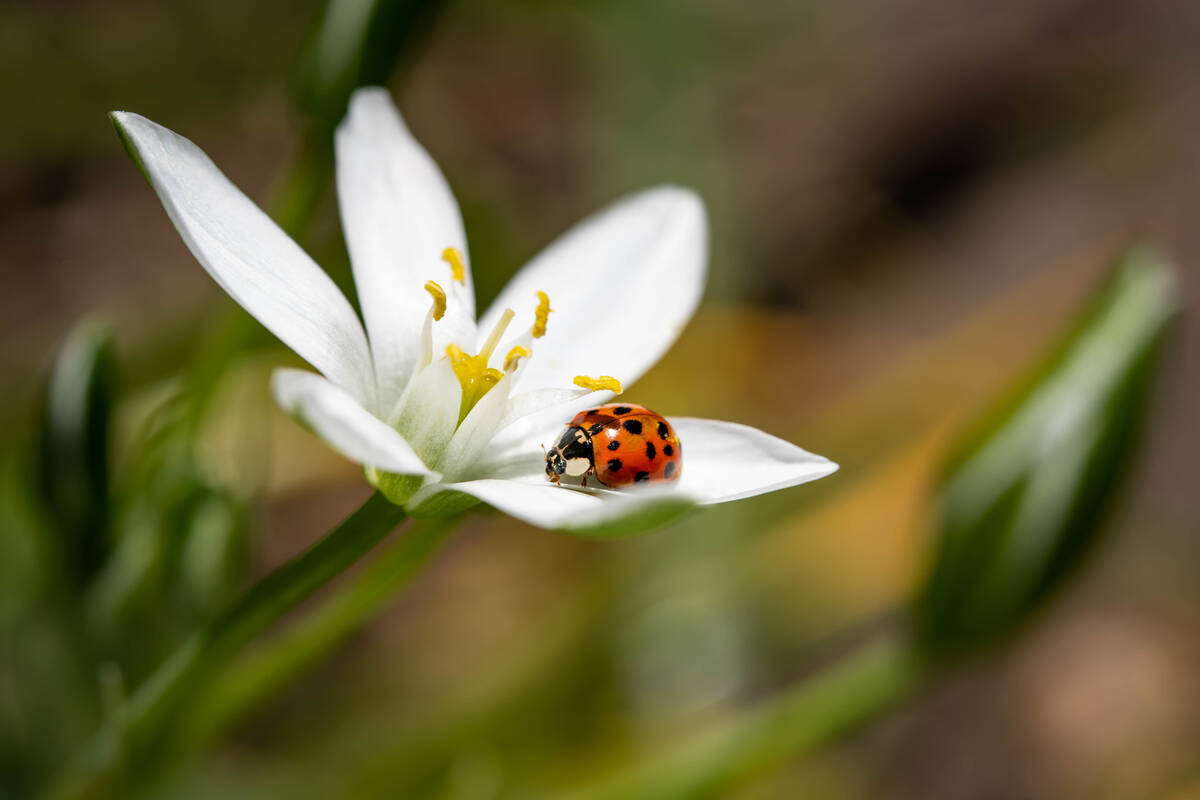
Spotted ladybugs are a must-have in any garden. The same applies to them as to lacewings: they love to eat aphids. A ladybug eats several thousand aphids over the course of its life, and a ladybug larva needs about 50 aphids per day. They, too, will move into their rooms on the upper floors; some will join the lacewings, while others will move into the bricks provided.
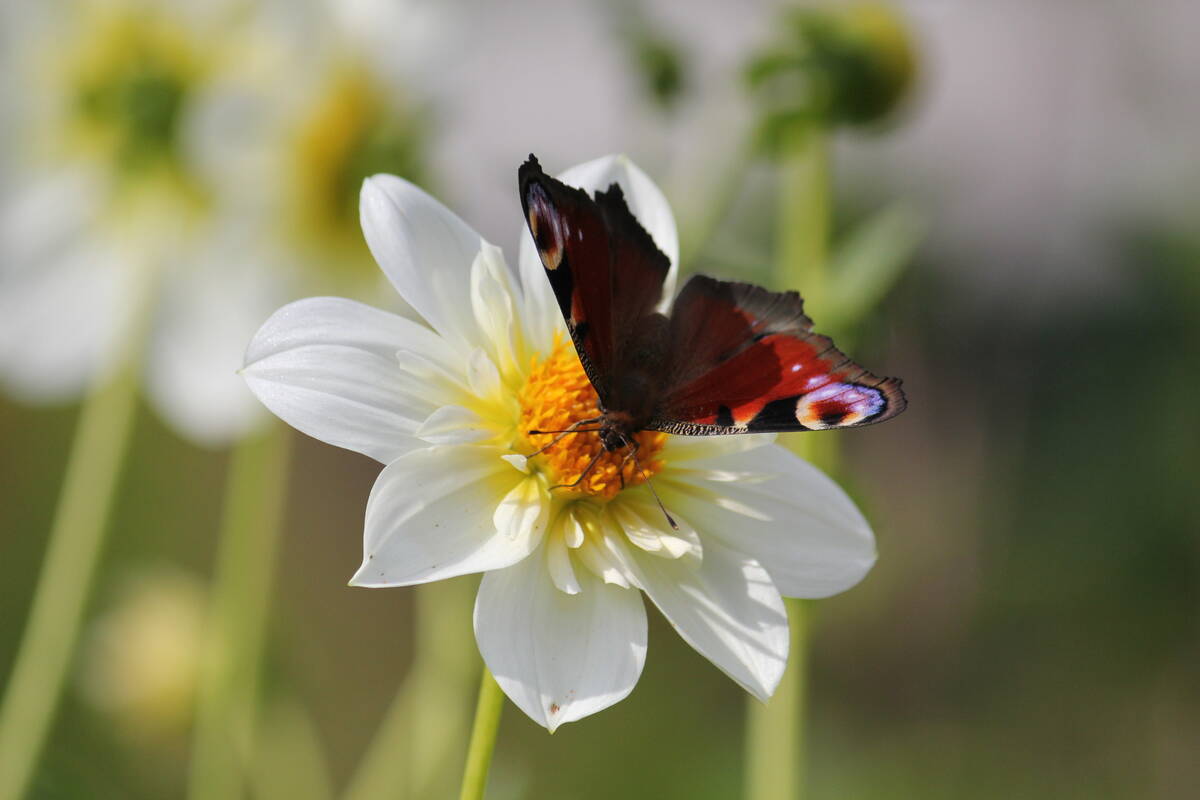
Butterflies
Butterflies, too, should find a home at our hotel. The branches, with their hollows, offer them good shelter, and they’ll also find good hiding places among the bricks. Here at the “ Tierwelt Herberstein ,” both the caterpillars and the adult butterflies find an abundance of food thanks to the many different plant species.
Earworms
For the earwigs—which are essential beneficial insects in our hotel—there’s a suitable room available right at the bottom. In the pine cones and among the loosely packed straw, they find a perfect hiding spot that they use during the day. At night, they go hunting for aphids.
Horned mason bee
Osmia cornuta
Horned mason bees are among the first bees to fly in the spring. The males usually hatch a few days before the females. They are also easily distinguished from the females by their white “facial hair” and smaller size.
The females dig brood tunnels in clay walls, which are divided from the rear to the opening into individual brood cells. Pollen and nectar are stored in each of these brood cells as a food supply, and the bee lays a single egg in each one. The young bees are fully developed by late summer, but they do not hatch until the following spring.
Did you know?
In our neatly manicured gardens, many beneficial insects lack places to lay their eggs. To increase biodiversity in our immediate surroundings, insect hotels are therefore a good alternative. Instructions for building a simple nesting structure can be found, for example, on the Nature Conservation Union’s website.

| Order | Stinging Wasps (Aceleata) |
| Family | Carpenter bees (Megachilidae) |
| Distribution | Europe, from Portugal to northern Germany and the Caucasus |
| Habitat |  |
| Food |  |
| Activity |  |
| Weight | up to 0.1 g |
| Size | up to 16 mm |
| Service life | 1 year (from egg through larva and pupa to adult insect) |
| Reproduction | The life cycle lasts approximately 39 days, from egg laying to pupation. |
| Risk |  |
| Enemies | unknown |

Tierwelt Herberstein
Steirischer Landestiergarten GmbH
A 8223 Stubenberg am See
Buchberg 50
Phone: +43 3176 80777
Fax: +43 3176 80777 20
Email: info (at) tierwelt-herberstein. at