







Chinese Muntjac
Chinese Muntjac
Muntiacus reevesi
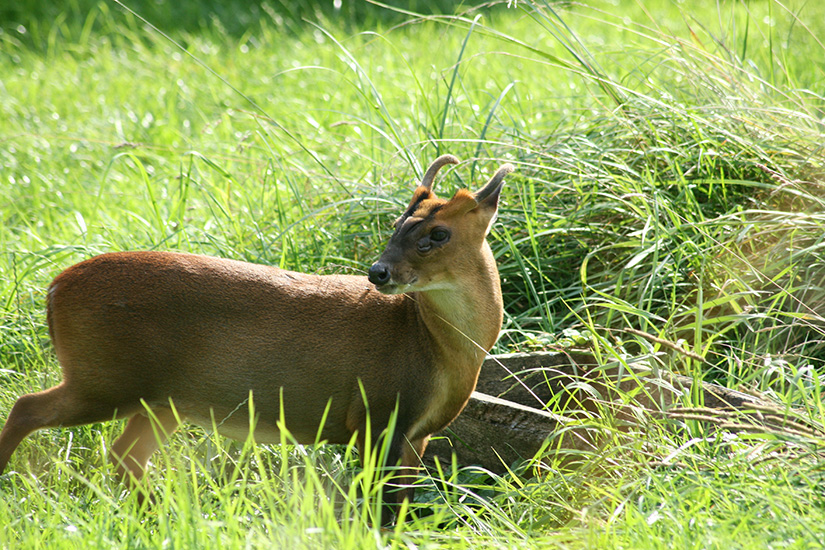
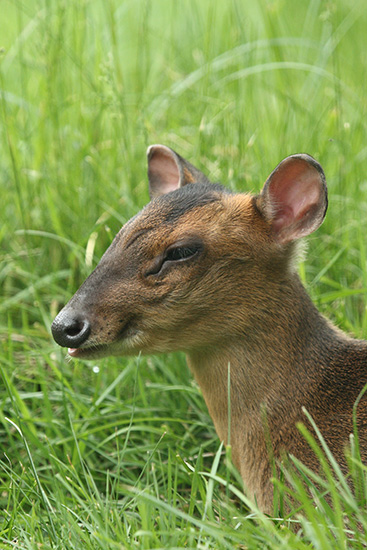
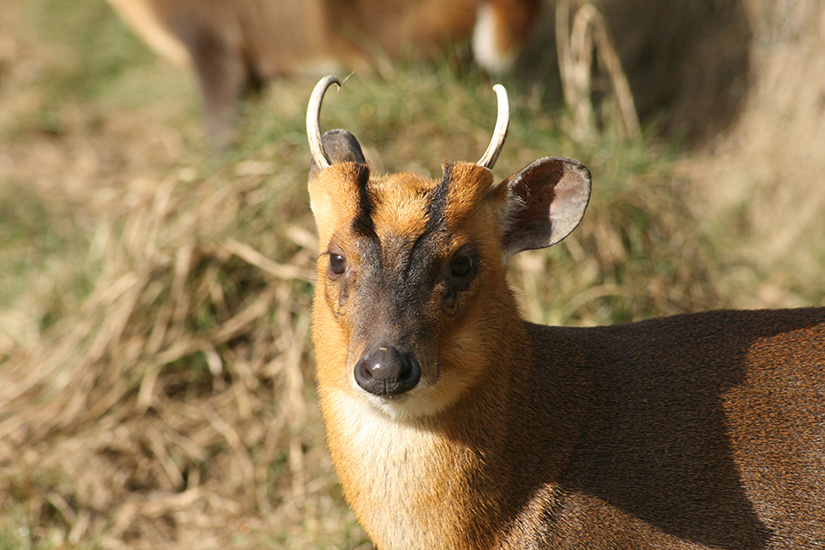
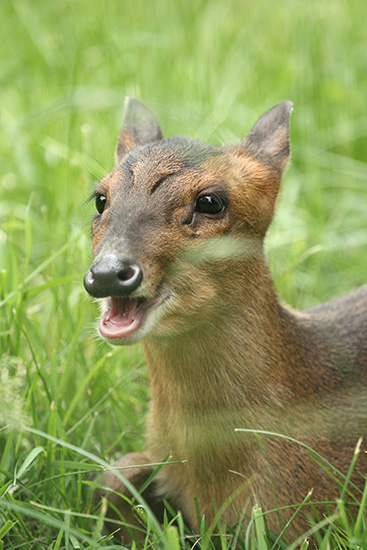
The Chinese muntjac is a strange deer in every respect. Standing just over 40 cm tall and equipped with tiny antlers, the comparison to the stately red deer found in our forests is enough to make one smile. However, one should not be deceived by its appearance. Male muntjacs have upper canine teeth up to 2.5 cm long, which they use successfully to catch prey.
Did you know?
Although he is a ruminant, like all deer, he also likes to supplement his diet with the meat of smaller vertebrates.
| Order | Pair-hoofed animals |
| Family | Deer |
| Distribution | China, Taiwan |
| Habitat |    |
| Food |  |
| Activity |   |
| Weight | 11–18 kg |
| Size | Shoulder height: 43–45 cm |
| Service life | 11 years (17 years in zoos) |
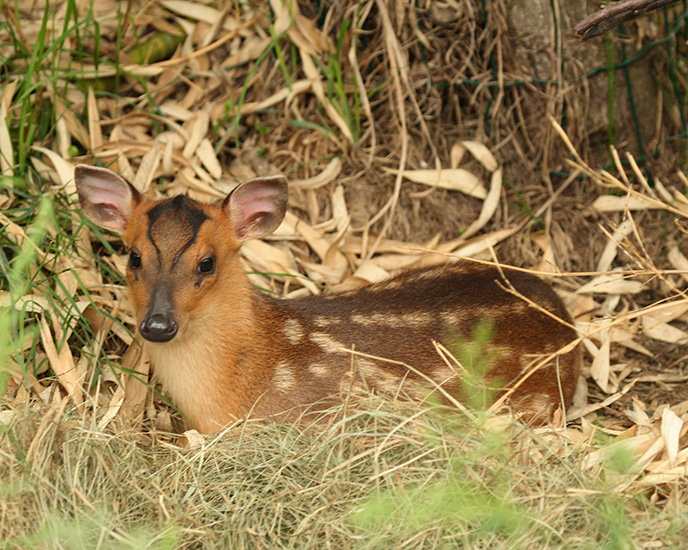
| Reproduction | For Chinese muntjacs, the mating season runs from January through March. After a gestation period of about 7 months, 1–2 young are born, which must leave their mother’s territory at about 6 months of age. |
| Risk |  |
| Enemies | Tiger, leopard, jackal, crocodile, red dog, python, human |

Tierwelt Herberstein
Steirischer Landestiergarten GmbH
A 8223 Stubenberg am See
Buchberg 50
Phone: +43 3176 80777
Fax: +43 3176 80777 20
Email: info (at) tierwelt-herberstein. at