







Mishimi Falls
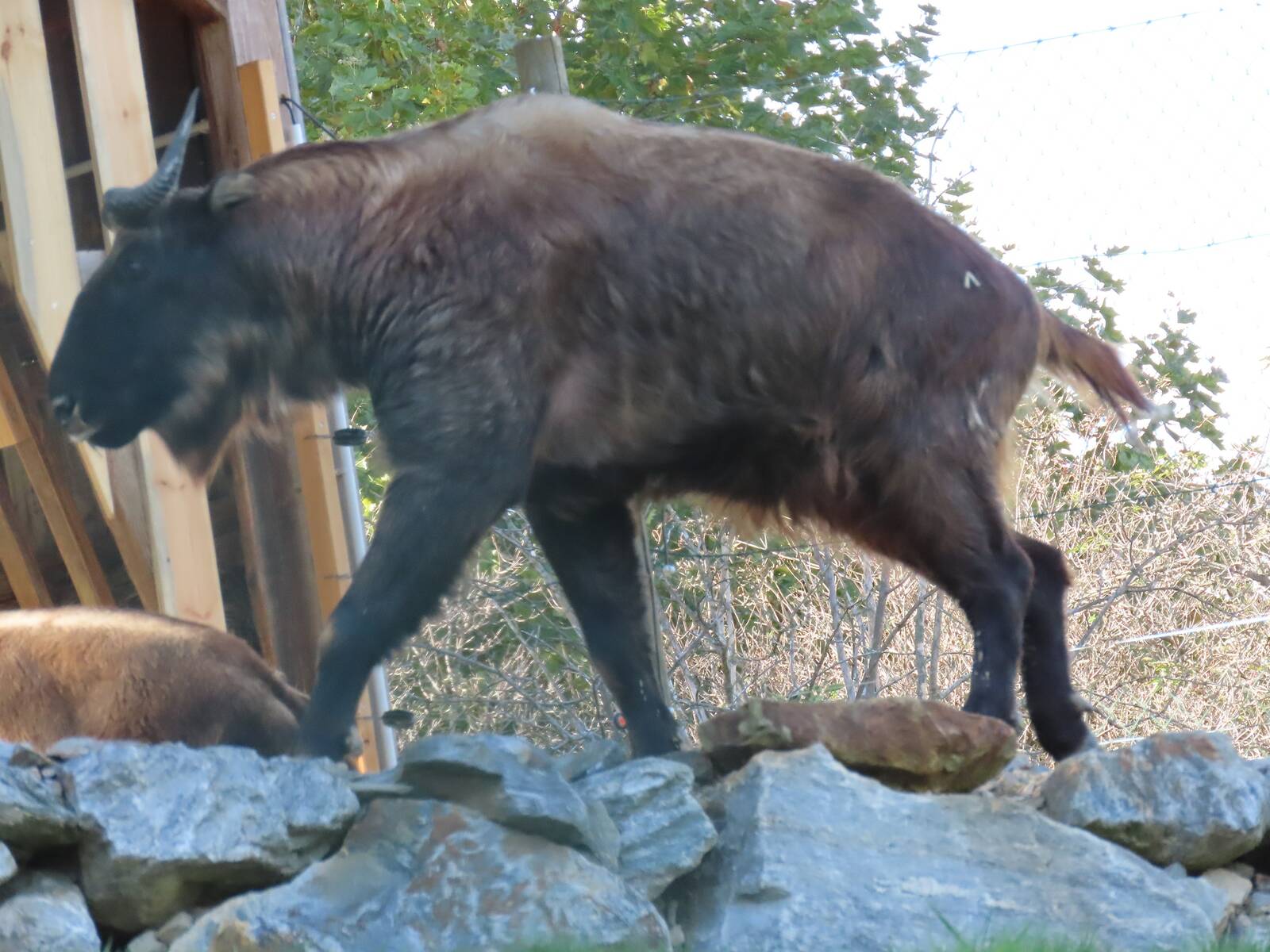
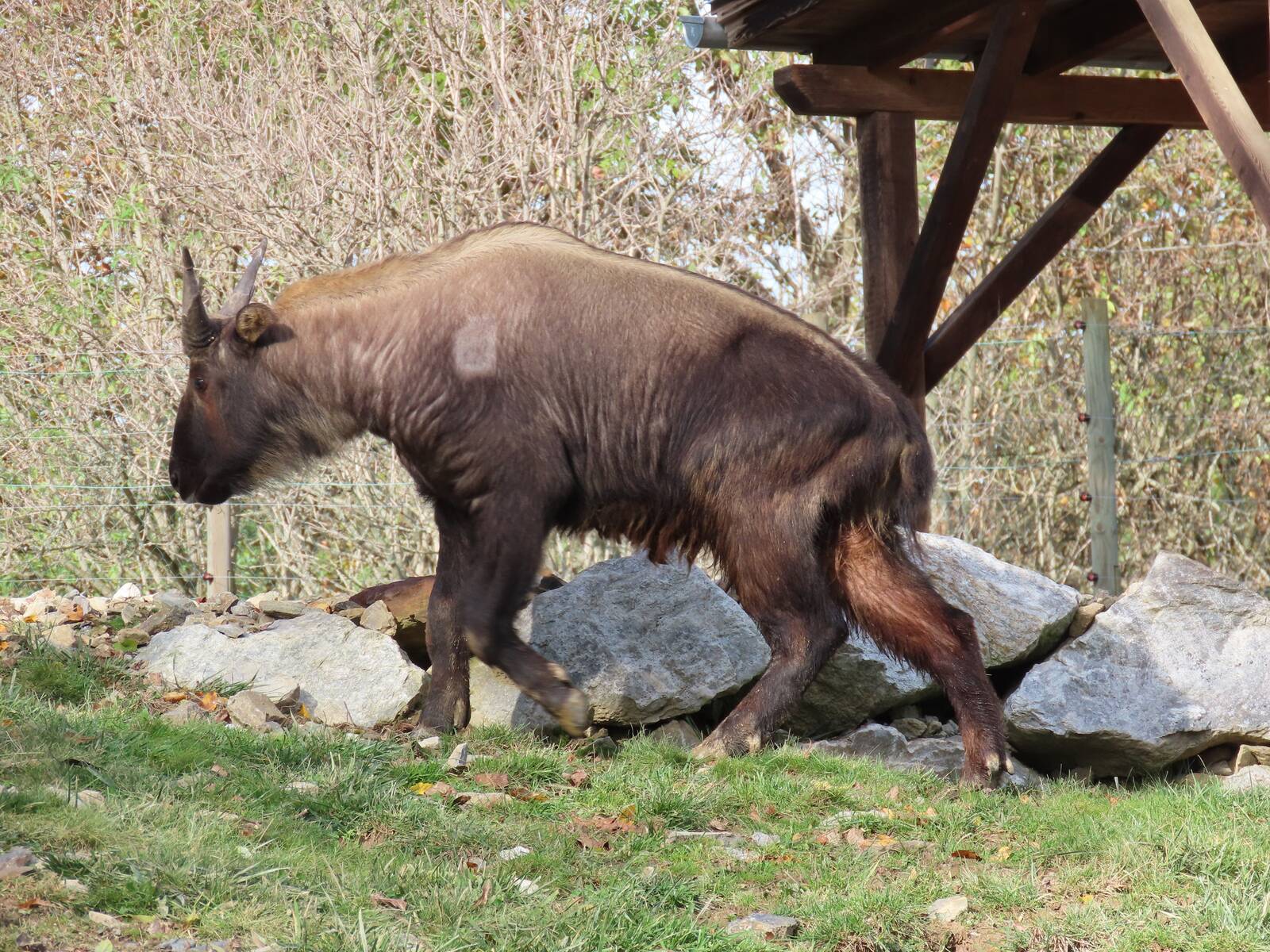
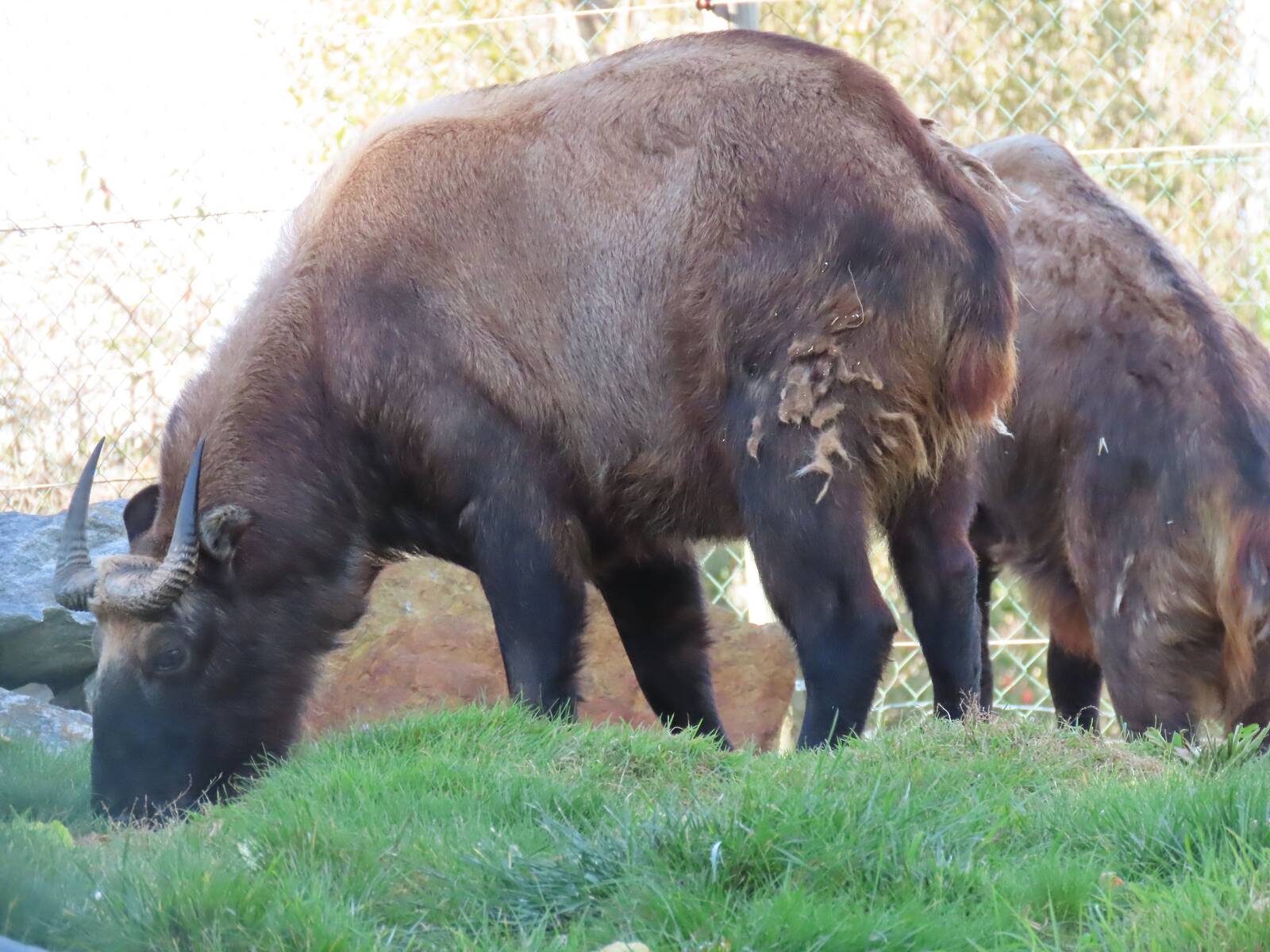
Mishmi takin
Budorcas taxicolor
Takines are exceptionally well-adapted to life in mountainous regions. The toes of their hooves can be spread apart individually, which not only gives the animals a secure footing but also prevents them from sinking too deeply into the snow.
They spend the summer in large herds on alpine meadows at elevations of up to 4,500 meters; in winter, they split into smaller groups and migrate to lower-lying mountain forests in sheltered areas. When danger threatens, they gather the young animals in the center and form a defensive ring around them.
Did you know?
The takin's evolutionary relationships are somewhat unclear. Because its appearance combines a wide variety of characteristics found in ungulates, it is sometimes referred to as a "cattle chamois" or "gnu goat."
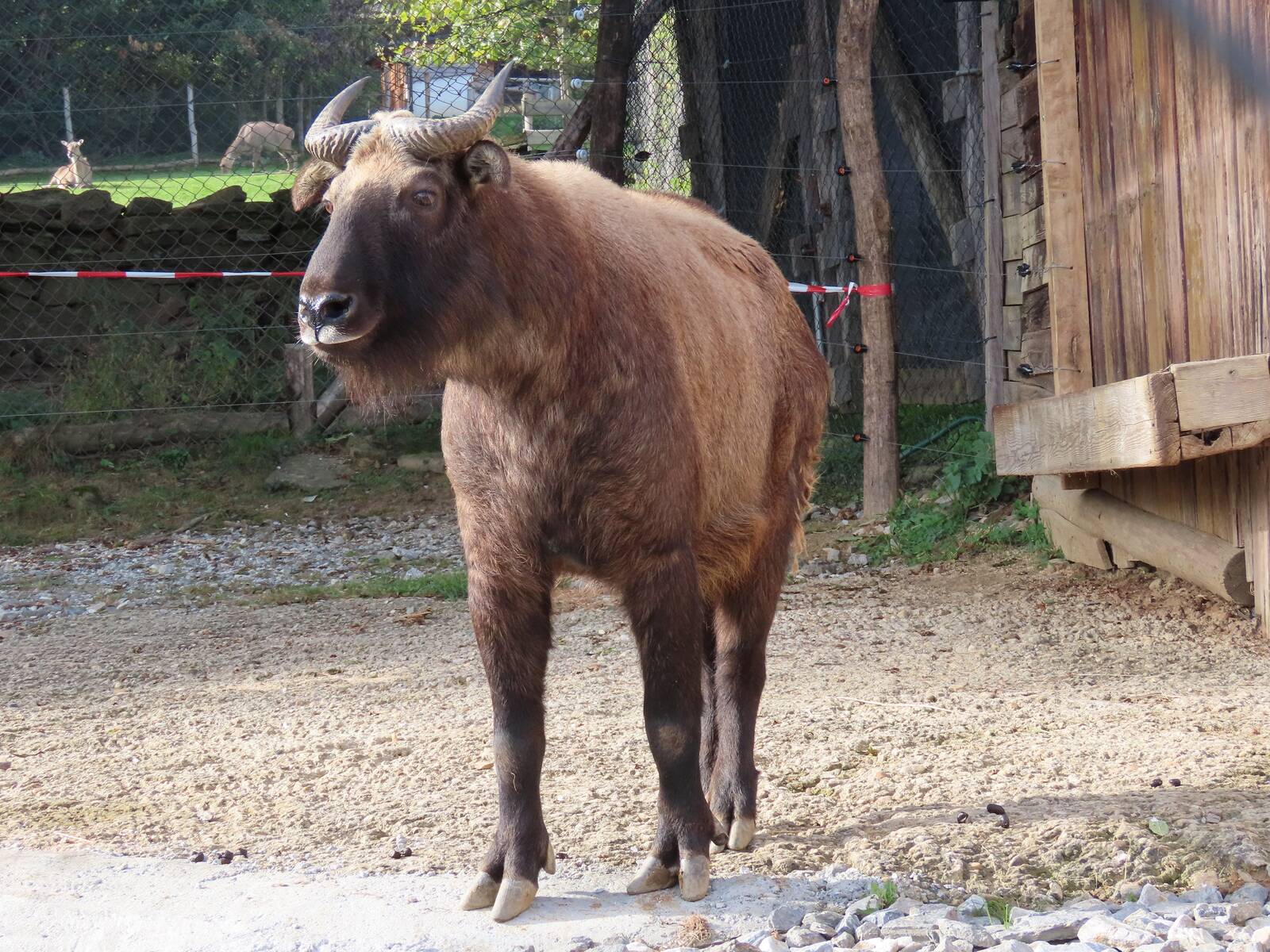
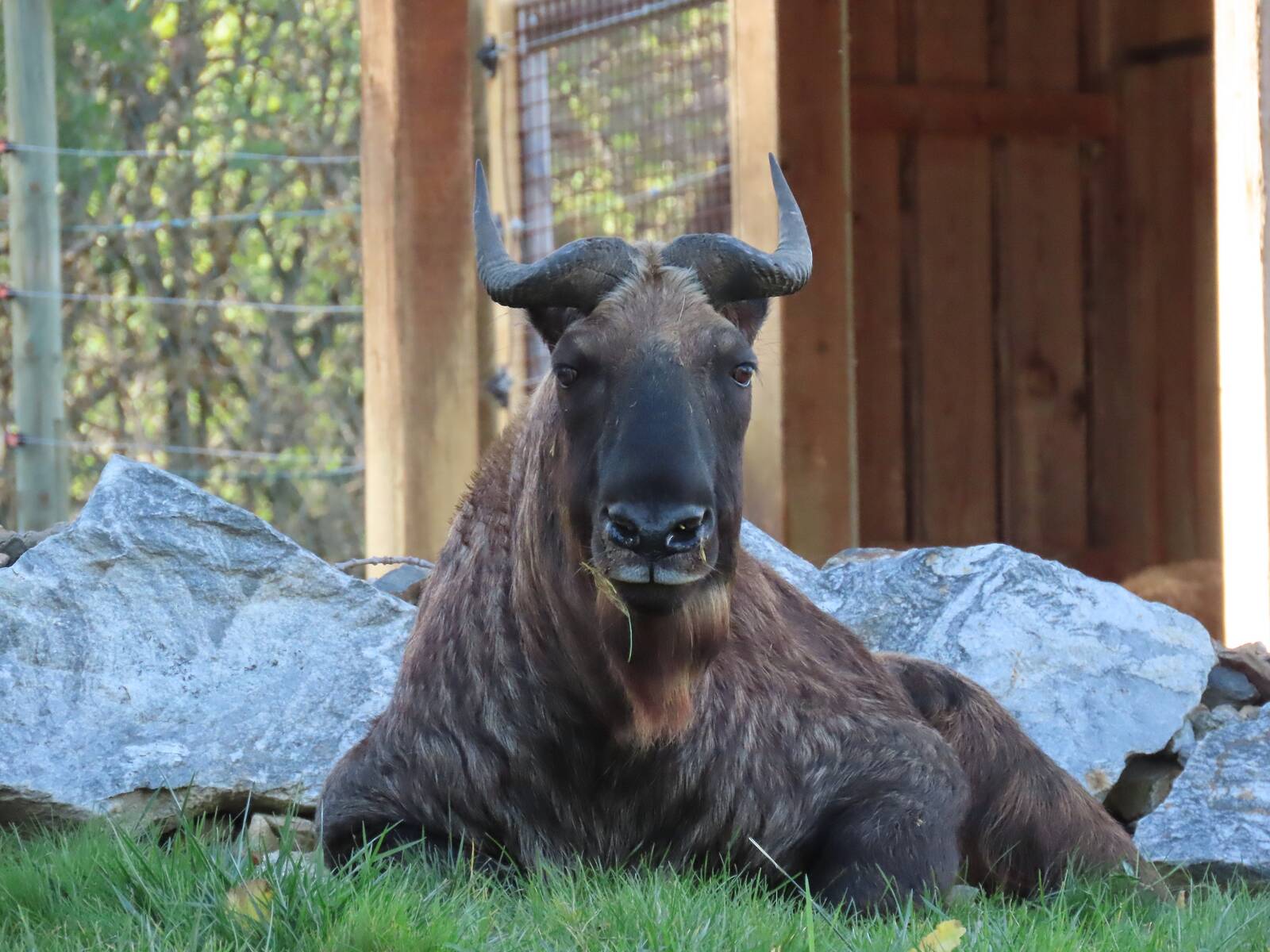
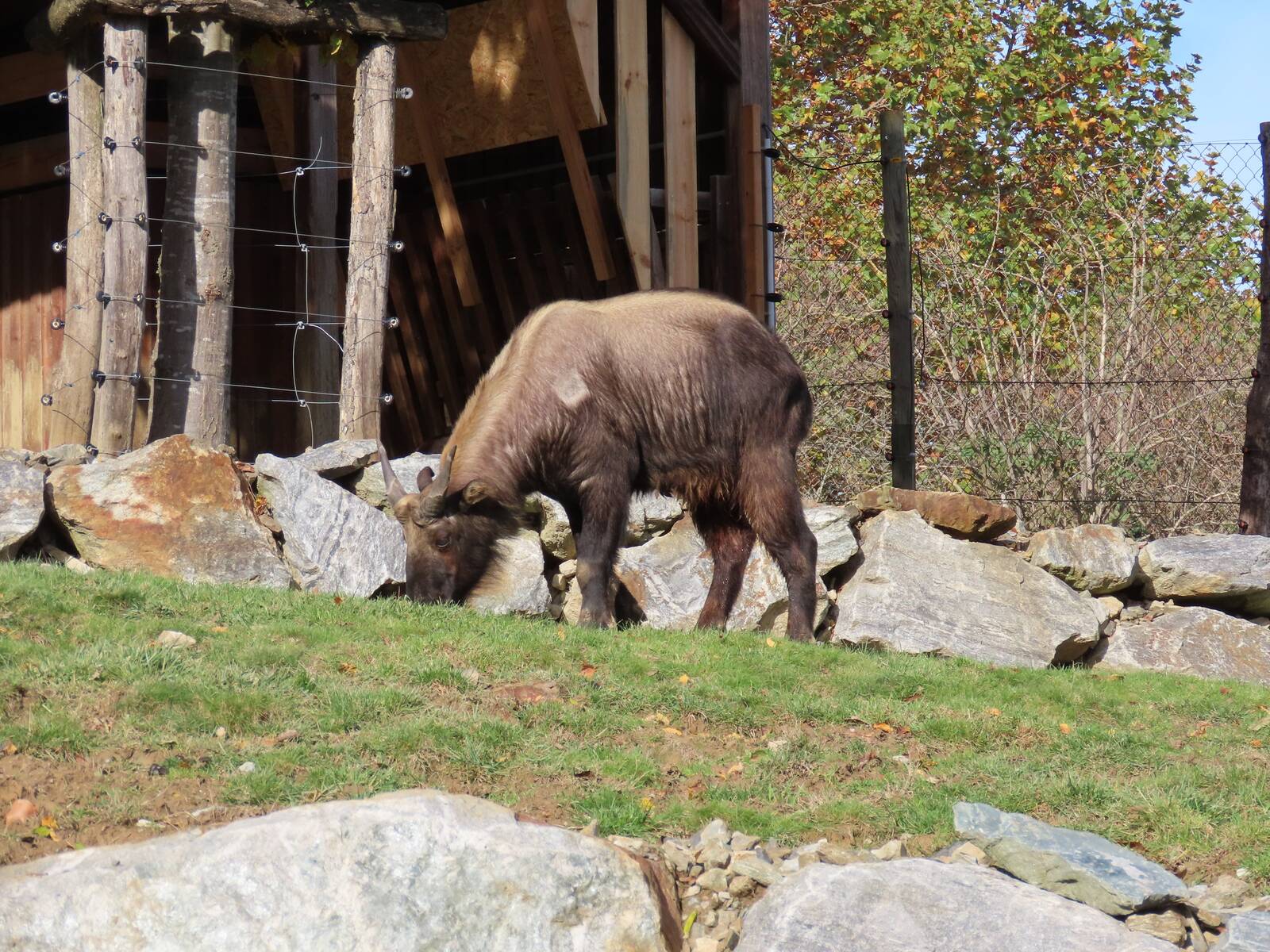
| Order | Artiodactyla (even-toed ungulates) |
| Family | Bovidae (horned animals) |
| Distribution | East and Southeast Asia (Bhutan, China, India, northern Myanmar) |
| Habitat |   |
| Food |  |
| Activity |  |
| Weight | W up to 250 kg, M up to 350 kg |
| Size | Body length 170–220 cm, shoulder height 110–140 cm |
| Service life | 20 years |
| Reproduction | |
| Risk |  |
| Enemies | Human, snow leopard, red fox |

Tierwelt Herberstein
Steirischer Landestiergarten GmbH
A 8223 Stubenberg am See
Buchberg 50
Phone: +43 3176 80777
Fax: +43 3176 80777 20
Email: info (at) tierwelt-herberstein. at