




Przewalski's Wild Horse
Przewalski's Wild Horse
Equus caballus przewalskii
Successful Rescue of Asian Wild Horses
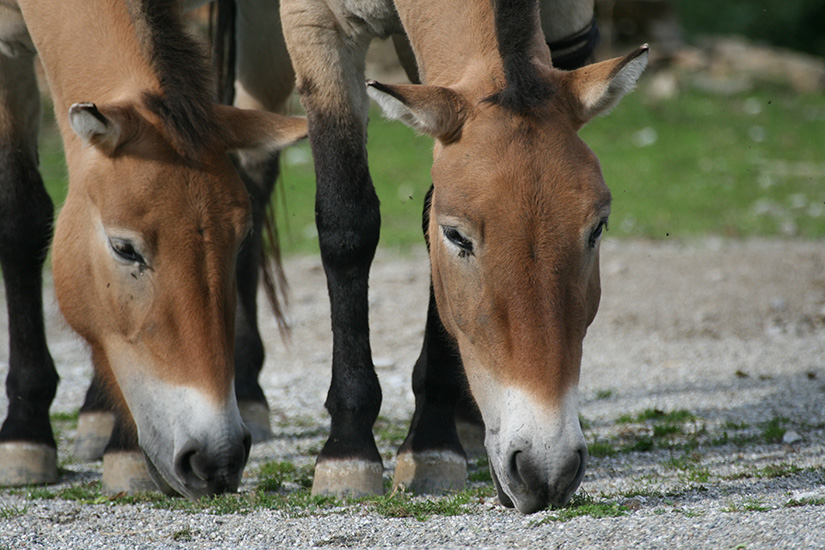
Mongolia’s wild horses are one of the prime examples of successful species conservation. The decline in their population began with World War II, after they were initially displaced by herds of domestic livestock and later served primarily as a source of meat for Kazakh tribes. By the late 1960s, not a single wild horse remained in the wild. The foundation for their rescue was laid by private owners at the beginning of the 20th century, when they brought a few horses to European zoos. Through coordinated breeding programs, a stable zoo population was established despite the very small number of animals. In 1992, the first horses were finally reintroduced to Mongolia. Today, there are once again wild herds, though they remain at high risk of extinction. In addition to genetic poverty, they face threats such as interbreeding with domestic horses, various diseases, food shortages due to agricultural use, and harsh winters.
Did you know?
The name “Przewalski’s horse”—which is almost impossible for us to pronounce—comes from the Russian explorer Nikolai Mikhailovich Przewalski, who brought the hide and skull of this wild horse species—which had not yet been scientifically described—to St. Petersburg in 1878.
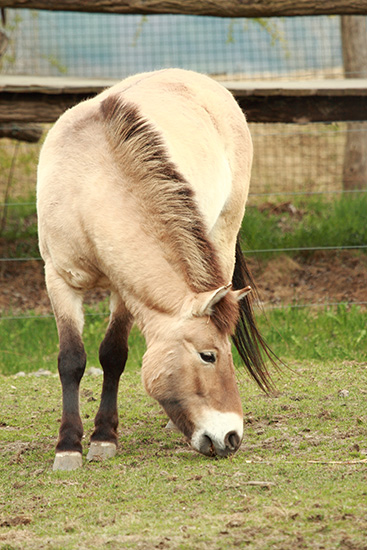
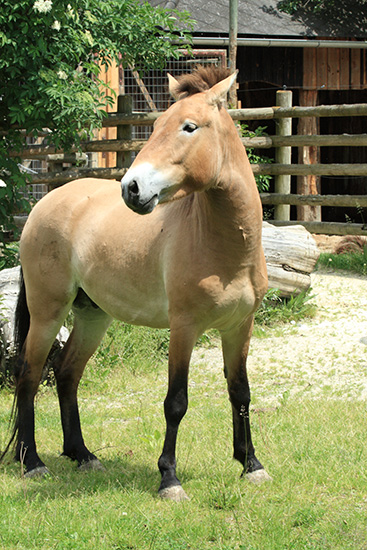
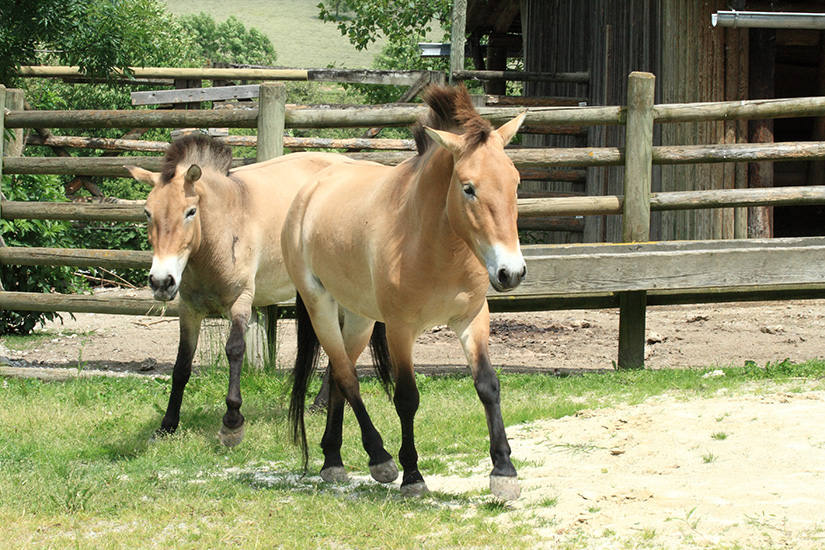
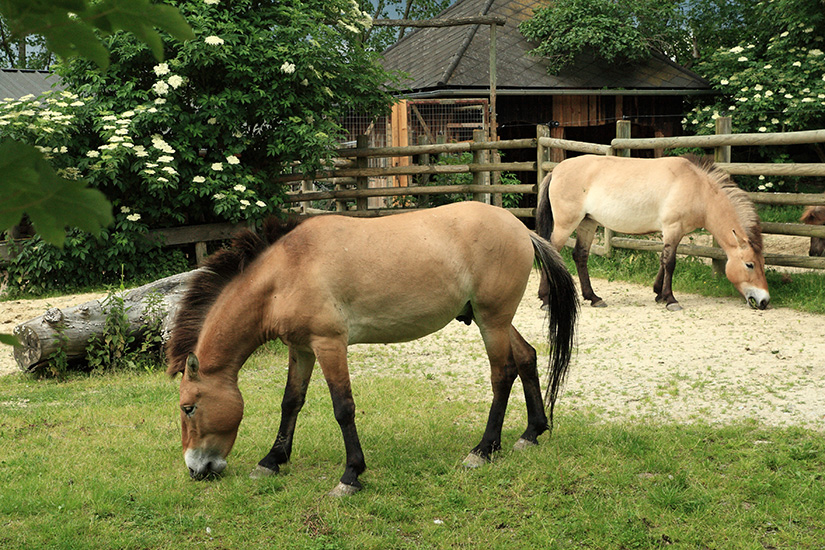
| Order | odd-toed ungulates |
| Family | Horses |
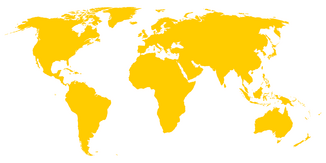
| Distribution | Inner Mongolia (resettled) |
| Habitat |   |
| Food |  |
| Activity |  |
| Weight | 200–350 kg |
| Size | Body length 210 cm, shoulder height 120–140 cm |
| Service life | 20 years (zoo: more than 30 years) |
| Reproduction | After a gestation period of 11 to 11.5 months, most foals are born between April and June. The young animals reach sexual maturity at 3 to 4 years of age. |
| Risk |  |
| Enemies | Wolf, Human |
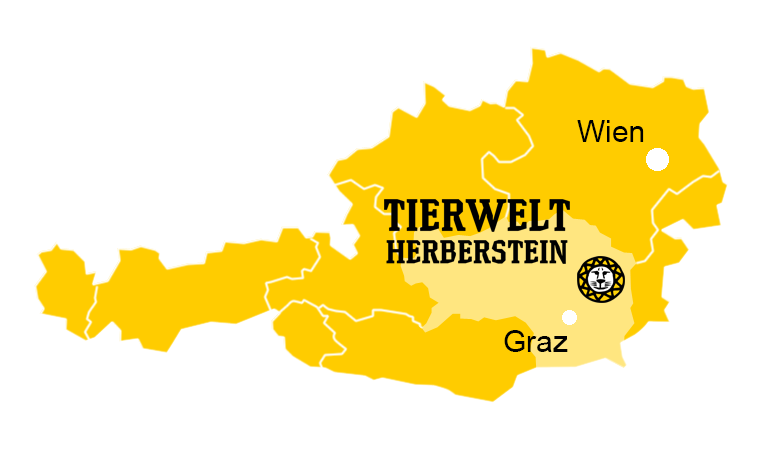
Tierwelt Herberstein
Steirischer Landestiergarten GmbH
A 8223 Stubenberg am See
Buchberg 50
Phone: +43 3176 80777
Fax: +43 3176 80777 20
Email: info (at) tierwelt-herberstein. at