







Camel
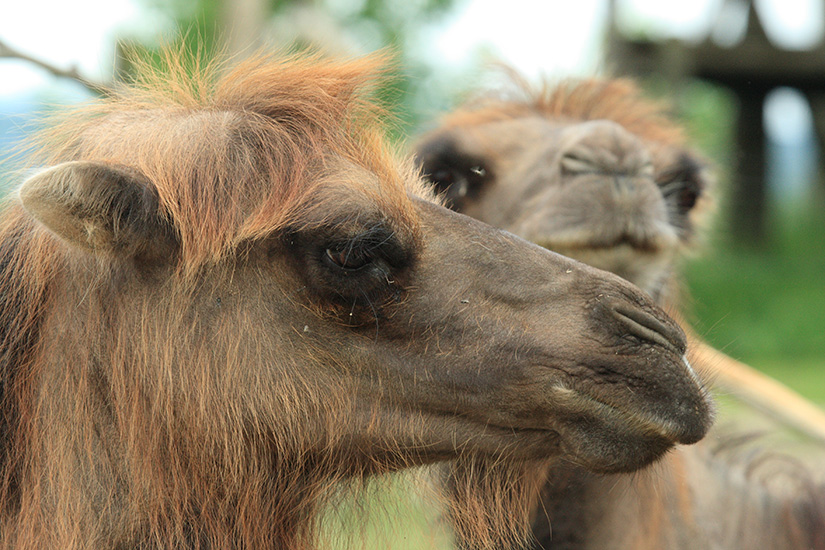
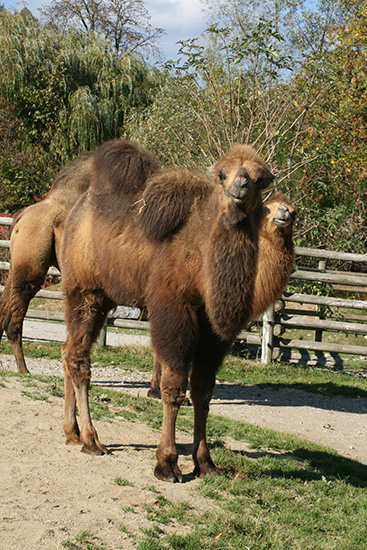
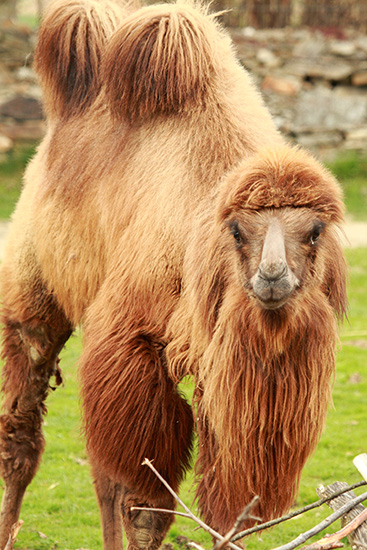
Bactrian Camel
Camelus bactrianus
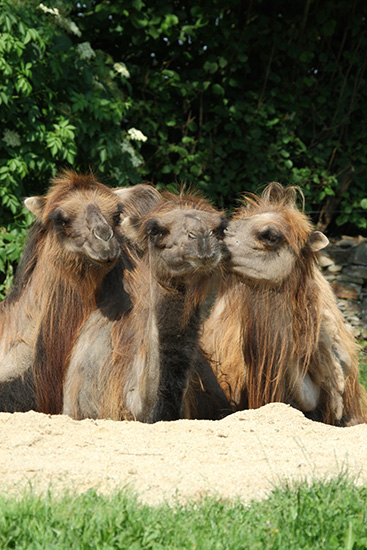
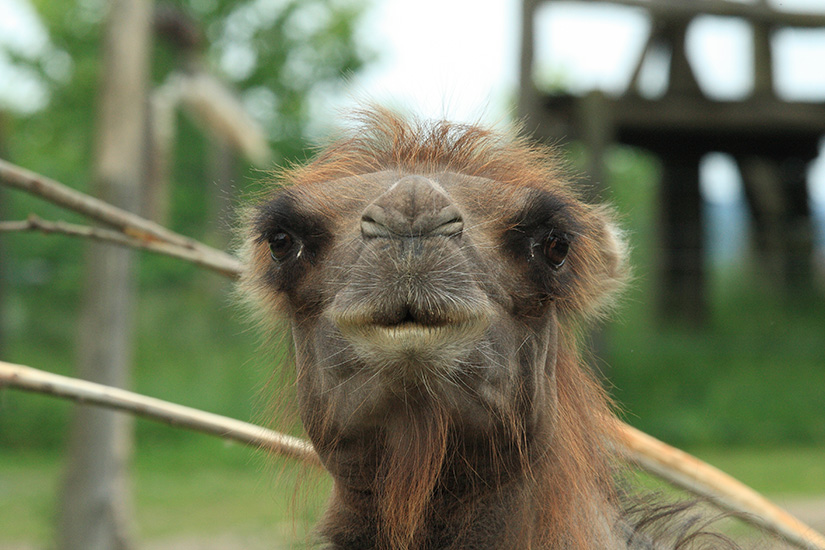
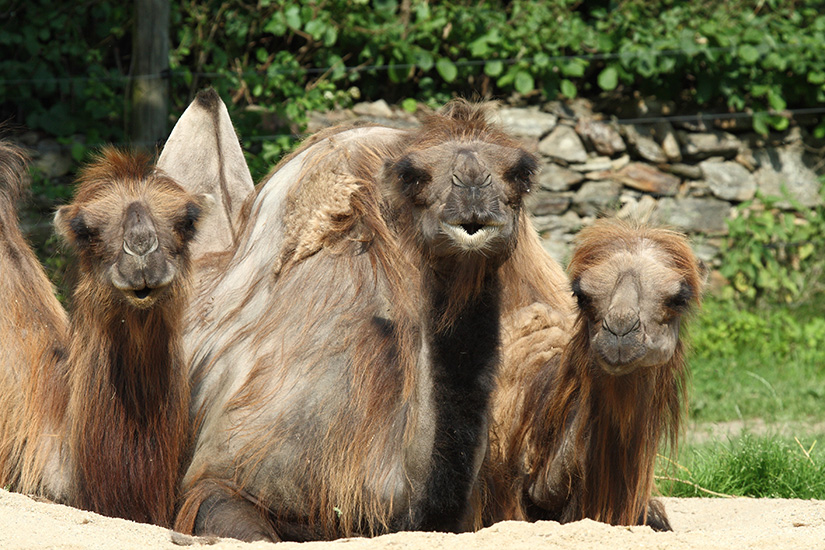
It was discovered very early on that the largest member of the camel family is an excellent pack animal due to its incredible frugality, endurance, and strength. It can cope with temperatures ranging from -40°C to +40°C because its body temperature can fluctuate by several degrees. As a result, a camel begins to sweat later, thereby conserving water. It can survive a loss of fluid amounting to about half its own body weight.
Did you know?
A camel can drink up to 200 liters in just a few minutes and then go for days without needing to drink again.
| Order | Pair-hoofed animals |
| Family | Camels |
| Distribution | Originally from Asia |
| Habitat |   |
| Food |  |
| Activity |  |
| Weight | up to 1,000 kg |
| Size | Body length up to 300 cm, shoulder height 180–230 cm |
| Service life | up to 40 years old |
| Reproduction | Camels reach sexual maturity at about 4 years of age. The mating season for wild camels is from February through April, whereas domestic camels mate year-round. The mating process, during which the female lies down, lasts about half an hour. After a gestation period of 12–14 months, the foal is born. |
| Risk |  |
| Enemies | - |

Tierwelt Herberstein
Steirischer Landestiergarten GmbH
A 8223 Stubenberg am See
Buchberg 50
Phone: +43 3176 80777
Fax: +43 3176 80777 20
Email: info (at) tierwelt-herberstein. at