




Red Panda
Red Panda
Ailurus fulgens
Please, only with air conditioning!
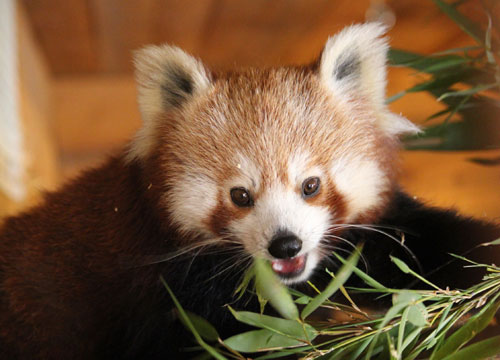
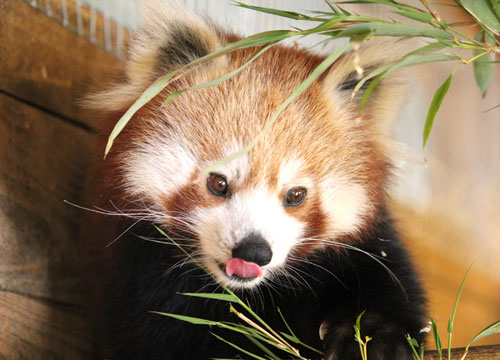
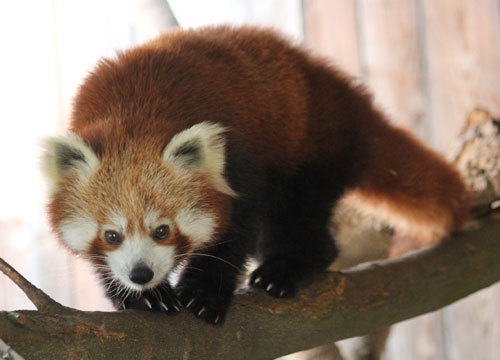
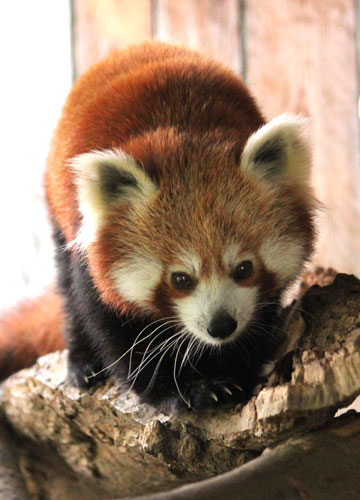
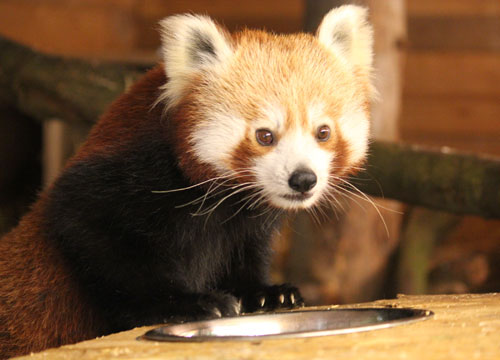
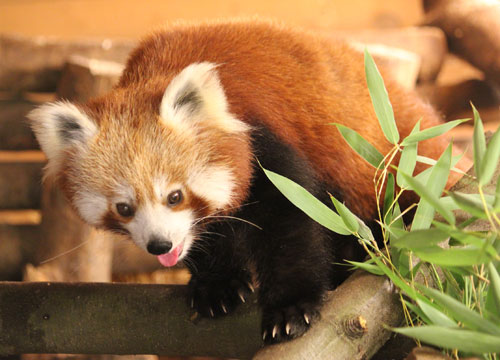
As in so many other zoos, these little bears are among the crowd favorites here, too. In the wild, however, red pandas are becoming increasingly rare because their habitat is being destroyed at an ever-accelerating rate. Like its larger black-and-white relative, the red panda’s favorite food is bamboo. However, since the plant has very little nutritional value, a young red panda needs up to 2 kg of leaves a day!
Did you know?!
Red pandas are native to the cooler regions of Asia; when temperatures rise above 25°C, they begin to suffer from the heat. To ensure they don’t have any problems with our high summer temperatures, their enclosure even has its own air conditioning!
| Order | Predators |
| Family | Red Pandas |
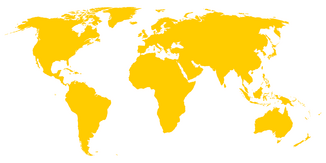
| Distribution | Nepal, India, Bhutan, Tibet, the western provinces of China |
| Habitat |  |
| Food |  |
| Activity |   |
| Weight | 4–6 kg |
| Size | Body length up to 60 cm, tail length up to 60 cm |
| Service life | up to 10 years old (zoo: 14 years old) |
| Reproduction | Red pandas tend to be solitary animals that usually come together with other members of their species only for mating, typically from late December through mid-February. A few days before giving birth, the female begins to gather nesting material. The nest is usually built in a hollow tree or a crevice in a rock. Births occur from late May through early July, always between 4:00 p.m. and 9:00 a.m. local time, during their active period. Gestation period: 120–140 days (1–4 cubs) |
| Risk |  |
| Enemies | Snow leopard, marten, human |
Corporate Sponsorships

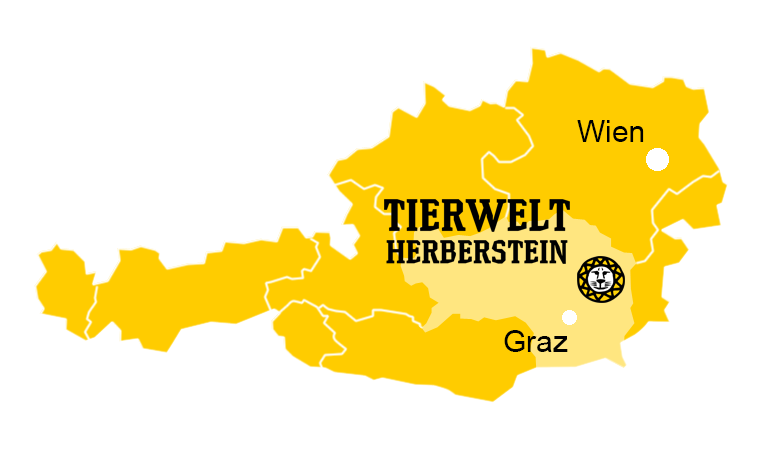
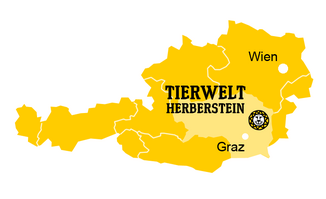
Tierwelt Herberstein
Steirischer Landestiergarten GmbH
A 8223 Stubenberg am See
Buchberg 50
Phone: +43 3176 80777
Fax: +43 3176 80777 20
Email: info (at) tierwelt-herberstein. at