






Glutton
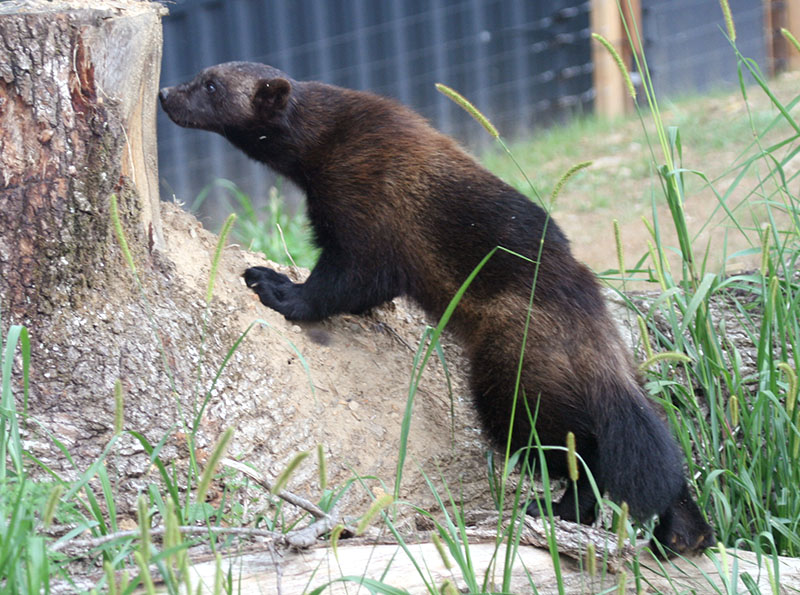
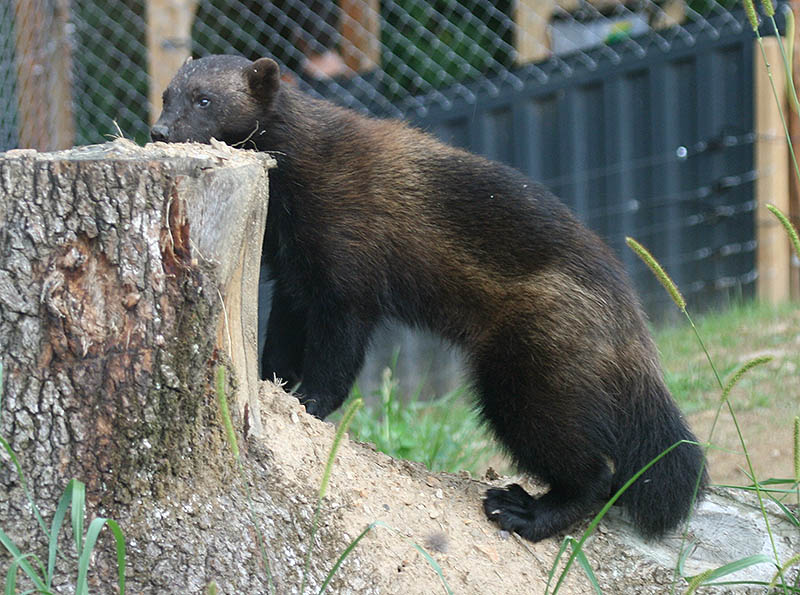
Wolverine
Gulo gulo
Old Norse Mountain Cat
The name “Vielfraß” for the largest of all martens likely originated from a translation error: the Old Norse “fjellfräs” became the German “Vielfraß,” even though it actually means “mountain cat.”
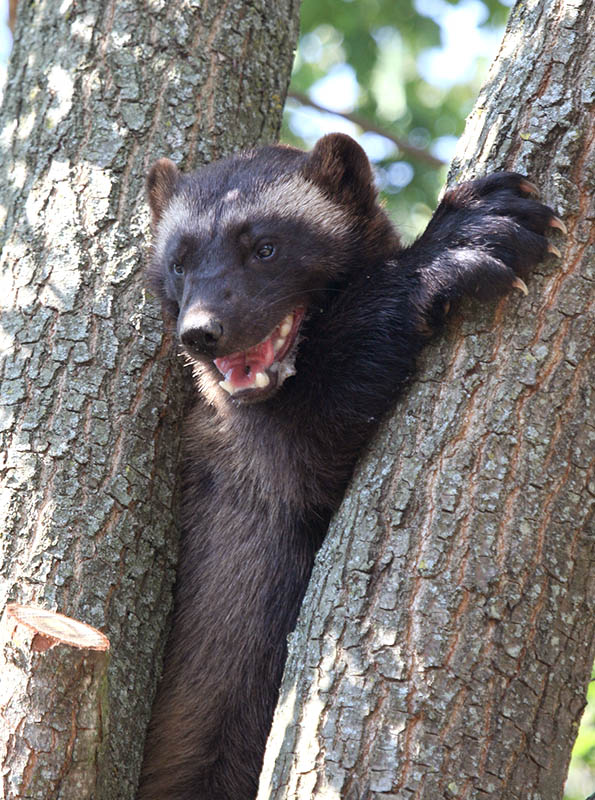
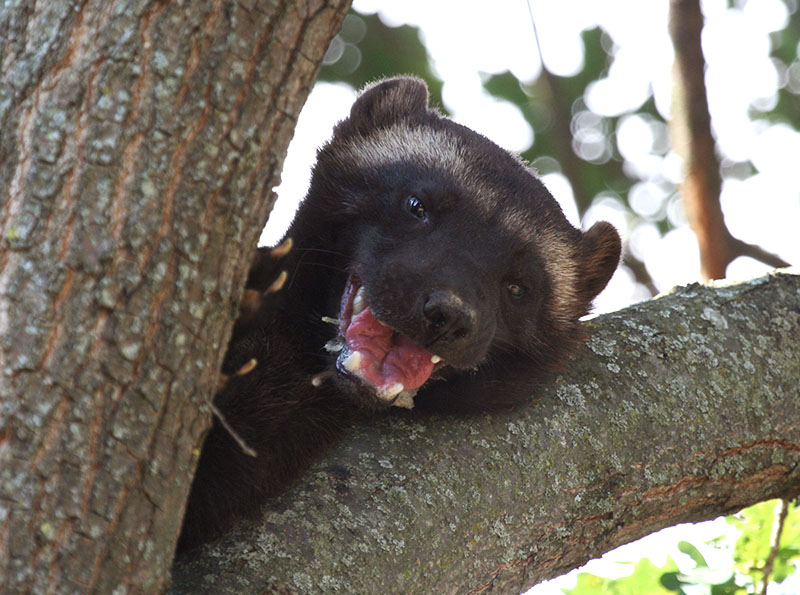
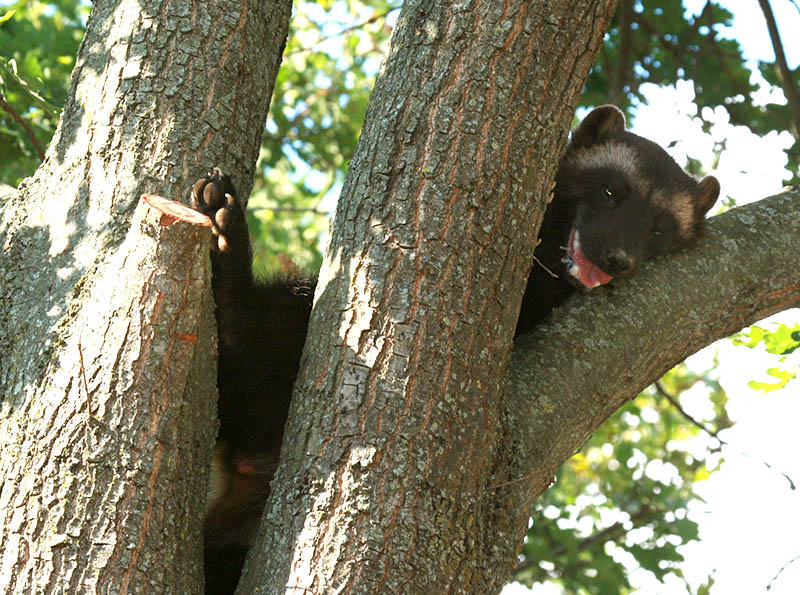
The wolverine’s dietary habits change with the seasons: during the summer months, this large predator has a hard time sneaking up on its prey silently. Therefore, its main diet at that time consists of young shoots, berries, and carrion. Live prey, such as young reindeer or moose, is rare. In the winter months, however, it has the advantage over most other predators, as it usually does not sink into deep snow and can sneak up on its prey silently. During this time, it feeds primarily on meat.
Did you know?!
The mating season for wolverines is in the spring, but the egg then undergoes a period of dormancy lasting several months. The embryo continues to develop only during the winter months, and after a total gestation period of up to nine months, the young are born.
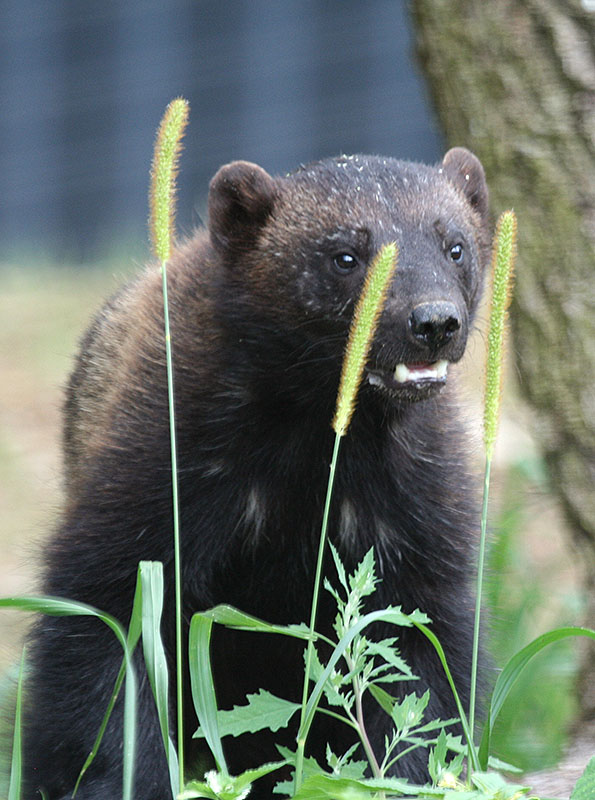
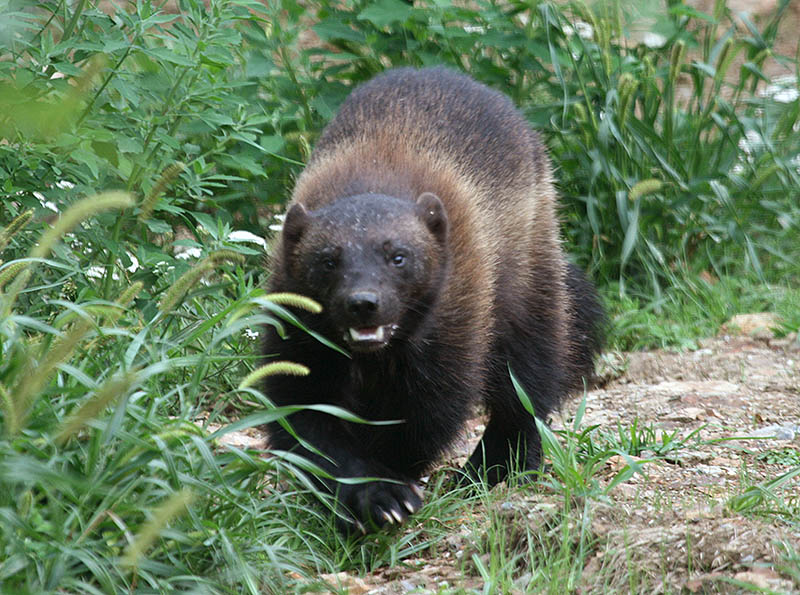
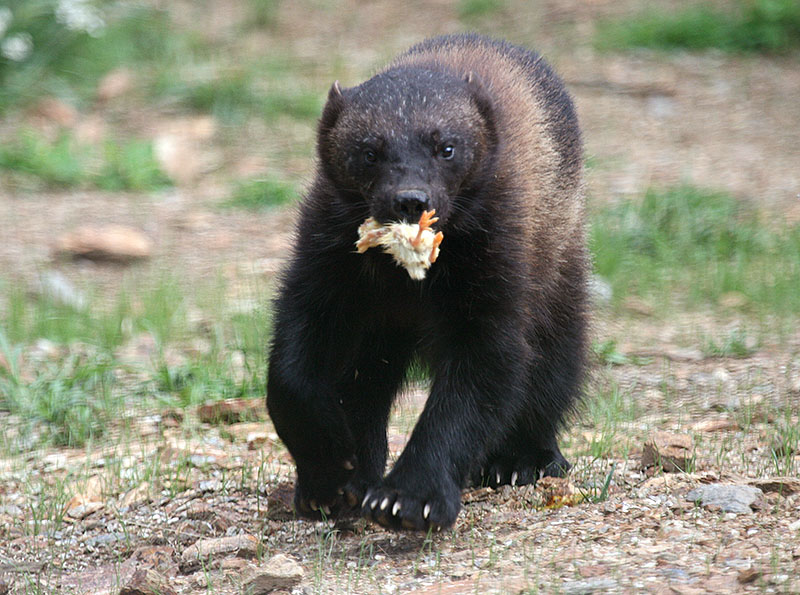
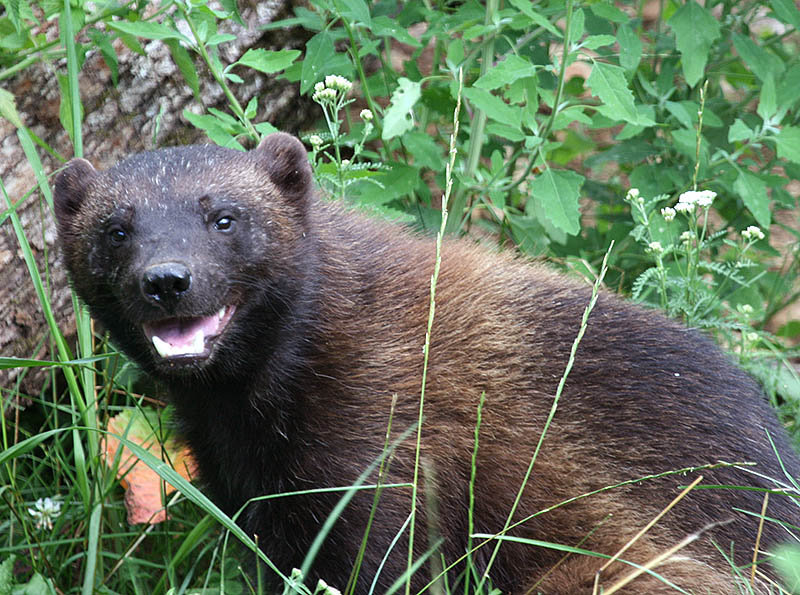
| Order | Predators |
| Family | Marten |
| Distribution | Scandinavia, northern Russia, northern North America |
| Habitat |  |
| Food |  |
| Activity |  |
| Weight | up to 30 kg |
| Size | Body length up to 100 cm, tail length up to 45 cm |
| Service life | up to 10 years old (zoo: 18 years old) |
| Reproduction | Gestation period: 30–40 days (dormant for up to 7 months), 2–4 young |
| Risk |  |
| Enemies | Wolf, human; young animals: bear, lynx, fox, eagle |
Tierwelt Herberstein
Steirischer Landestiergarten GmbH
A 8223 Stubenberg am See
Buchberg 50
Phone: +43 3176 80777
Fax: +43 3176 80777 20
Email: info (at) tierwelt-herberstein. at