


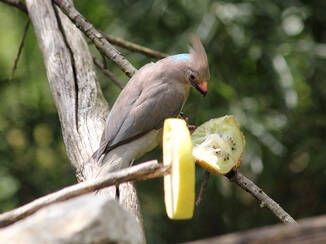





Crested Pelican
Dalmatian Pelican
Pelecanus crispus
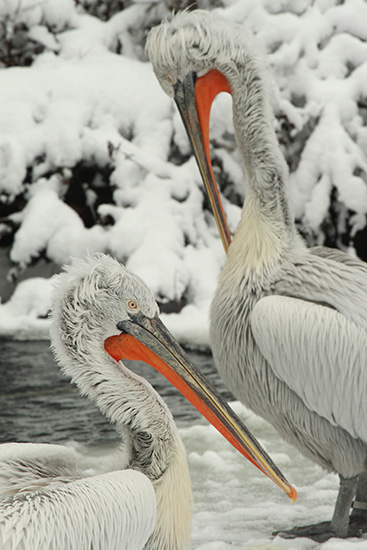
I’ll show you my throat pouch
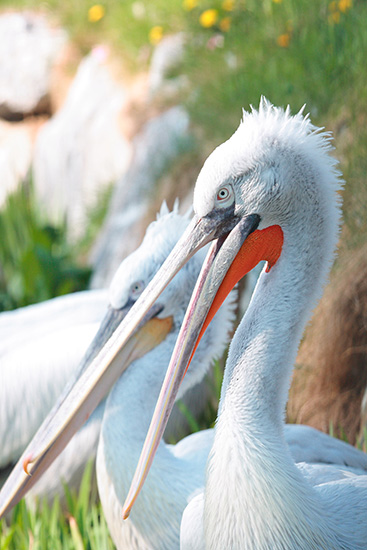
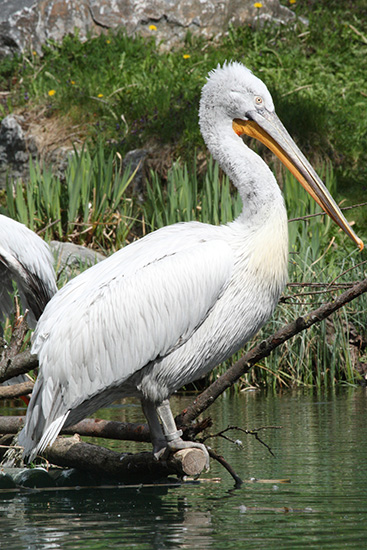
The crested pelican gets its name from the long, ruffled feathers on the back of its head, which are particularly prominent during the breeding season. In addition, the otherwise pale yellow throat pouch turns bright orange, making it unmistakably clear to the opposite sex that it’s time to get down to the business of breeding. In the wild, the breeding season runs from March through June; in zoos, however, pelicans often enter the breeding mood as early as winter. Within the large colony, pairs form and remain together for at least one breeding season, though sometimes longer. Both parents participate in building the nest, which is constructed in the reeds from various plant materials. They also take turns incubating the eggs and, later, feeding the chicks. The chicks are fed pre-digested fish. Fish is also the sole food source for the adults.
Together we are strong
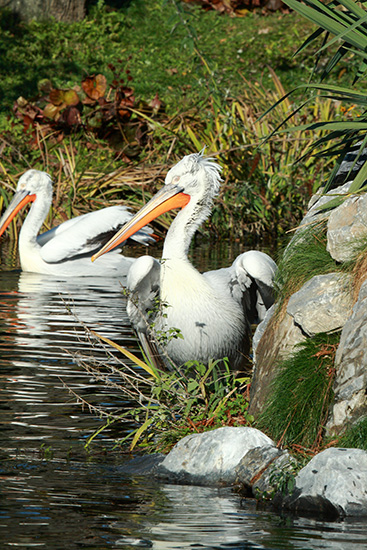
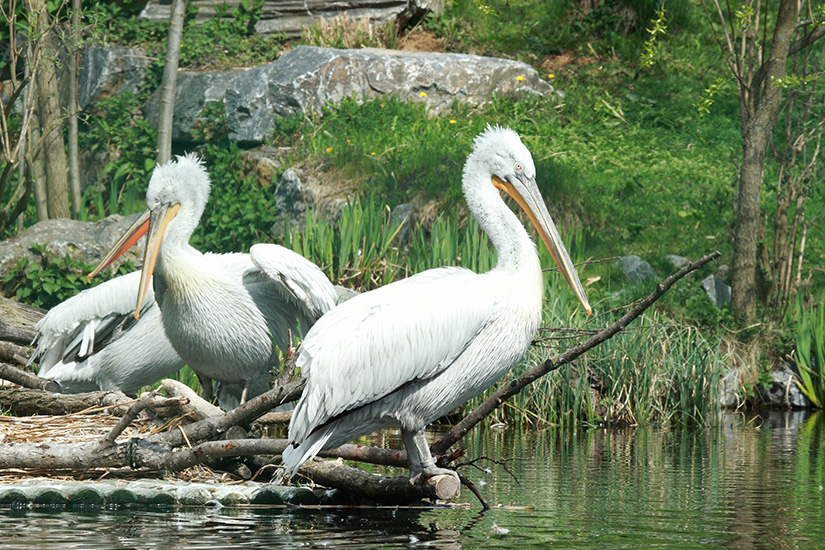
Dalmatian pelicans are migratory birds. When the cold season sets in in their breeding grounds in Europe and East-Central Asia, they migrate to their wintering grounds (e.g., Turkey, the Persian Gulf, and the east coast of China). However, since food is abundant year-round in the wild, our pelicans feel right at home here even in winter. Despite their considerable size, Dalmatian pelicans are elegant gliders and rank among the largest flying birds in the world. To save weight, flying birds have air-filled bones. In addition, pelicans have extensive air sacs under their skin, which provide them with strong lift in the air. However, this lift also prevents them from reaching their prey by diving. As a result, crested pelicans have developed a sophisticated hunting strategy. Several birds line up in up to three “driving chains” and, flapping their wings, drive schools of fish into shallow water, where they can then simply scoop up their prey using their throat pouches.
Did you know?
A crested pelican eats about 1–3 kg of fish per day, which it swallows whole and digests only with the help of strong gastric juices.
| Order | Pelicans |
| Family | Pelicans |
| Distribution | Southeast Europe to China |
| Habitat |   |
| Food |  |
| Activity |  |
| Weight | 6–13 kg |
| Size | Body length 160–180 cm, wingspan 310–345 cm |
| Service life | 20 years (zoo: over 30 years) |
| Reproduction | Incubation period: 30–34 days (1–6 eggs, usually 2) |
| Risk |  |
| Enemies | Birds of Prey, Humans |
Corporate Sponsorships



Tierwelt Herberstein
Steirischer Landestiergarten GmbH
A 8223 Stubenberg am See
Buchberg 50
Phone: +43 3176 80777
Fax: +43 3176 80777 20
Email: info (at) tierwelt-herberstein. at