






Blue Peacock
Peacock
Pavo cristatus
A real eye-catcher
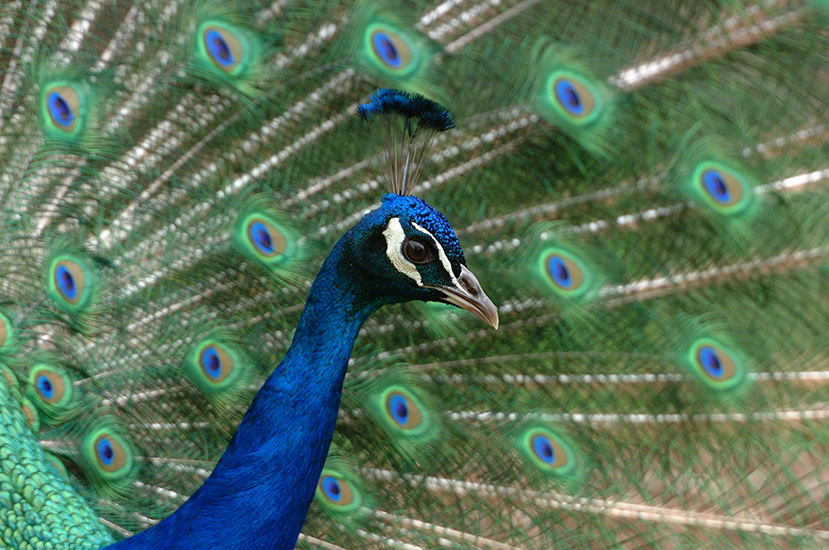
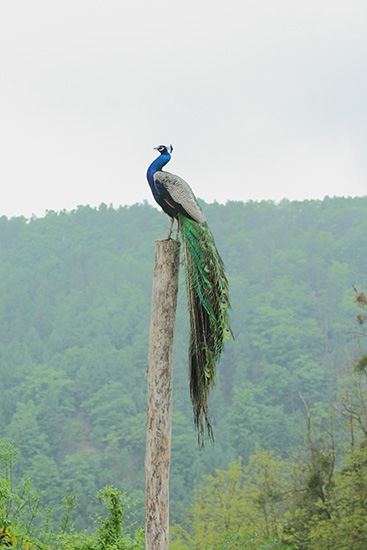
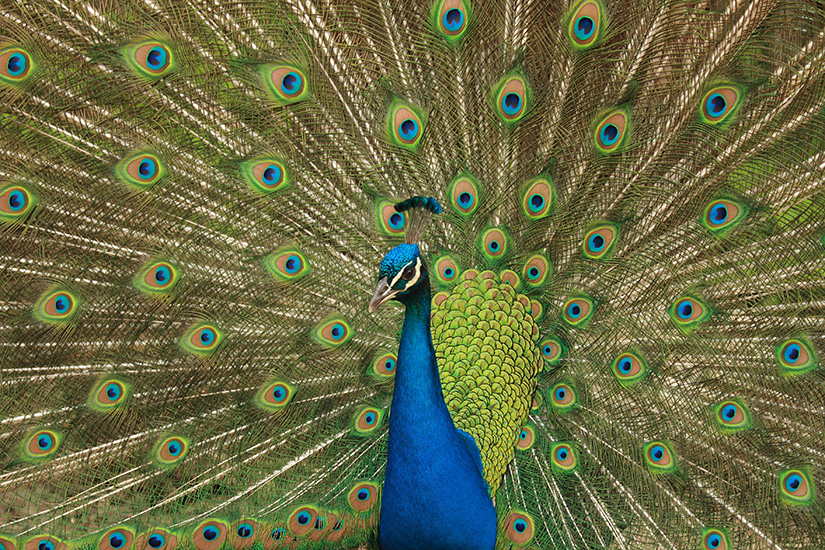
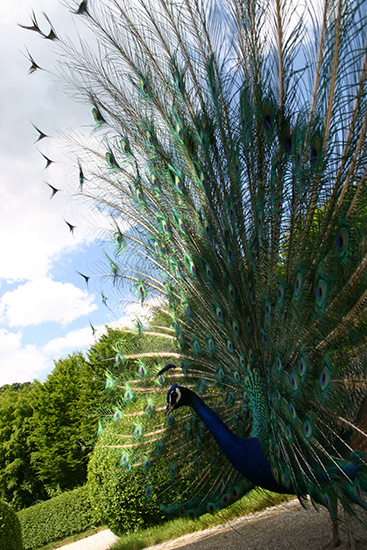
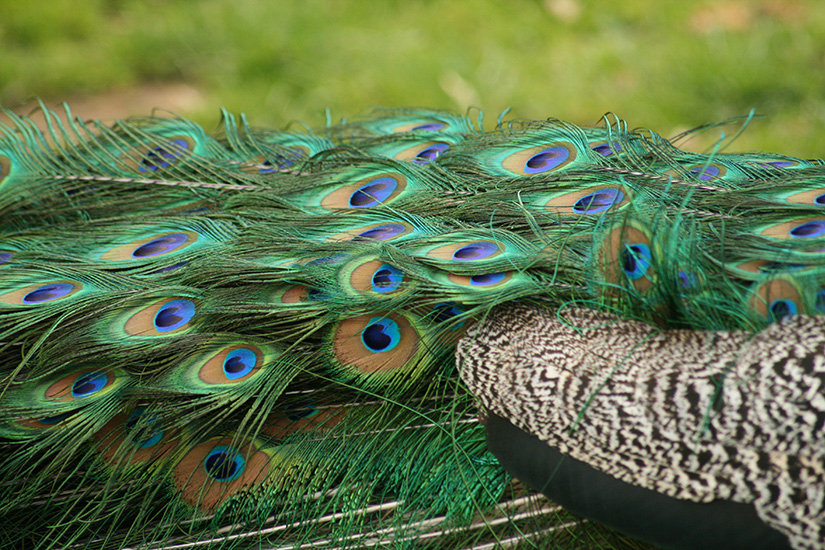
The blue peacock is an extremely popular park bird in Europe. Their bright blue color and long tail feathers, adorned with numerous eye-like spots, make male peacocks a real eye-catcher. As is often the case in the animal kingdom, the female must make do with a plain brown plumage. But this color actually benefits the females during breeding; if they were as blue as the males, they would be easy prey for any predator.
The long train of tail feathers tends to get in the way of male peacocks when they need to flee, but the male peacock takes this risk deliberately: the longer the train, the healthier and stronger the male. Of course, the females know this too and consciously choose such a male as the father for their offspring.
Did you know?
In India, peacocks are popular pets; among their favorite foods are young cobras. In this way, the peacocks help keep their owners' homes free of these dangerous snakes.
| Order | Galliformes |
| Family | Pheasant-like birds |
| Distribution | South Asia (India, Pakistan, Sri Lanka) |
| Habitat |   |
| Food |  |
| Activity |   |
| Weight | 2.7–6 kg |
| Size | Body length (M) up to 230 cm, body length (W) up to 100 cm, wingspan 80–160 cm |
| Service life | about 20 years (zoo) |
| Reproduction | In the peacocks' native habitat, the breeding season depends largely on the rainy season. Male peacocks gather 2–5 females around them. The clutch consists of 3–5 eggs, which are incubated for 27–30 days. |
| Risk |  |
| Enemies | Tiger, Leopard, Human |
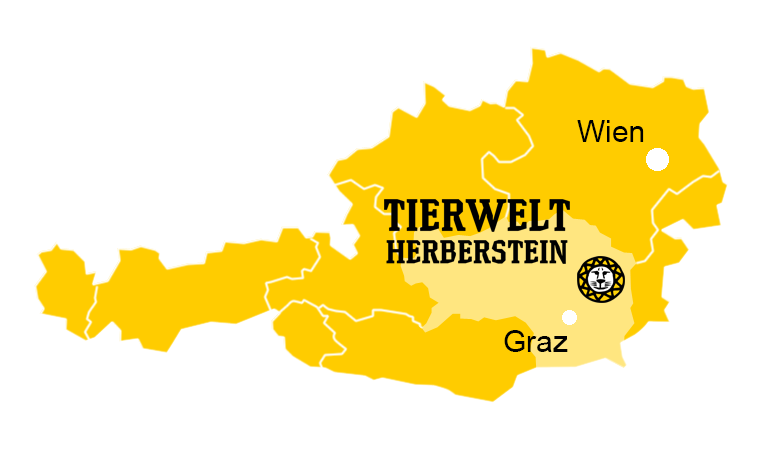
Tierwelt Herberstein
Steirischer Landestiergarten GmbH
A 8223 Stubenberg am See
Buchberg 50
Phone: +43 3176 80777
Fax: +43 3176 80777 20
Email: info (at) tierwelt-herberstein. at