






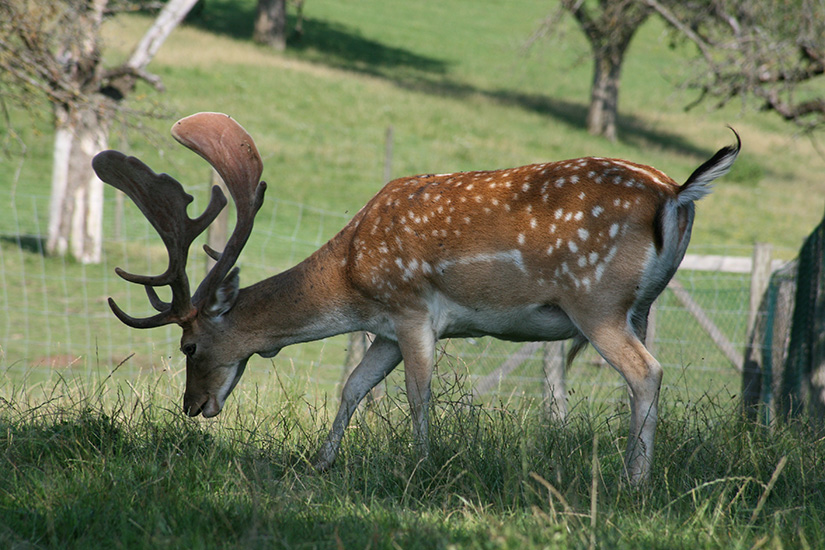
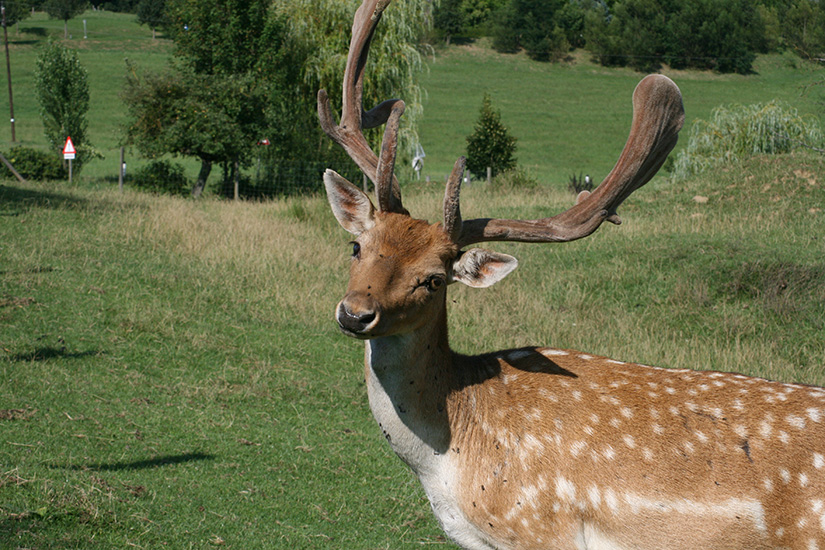
Fallow deer
Fallow Deer
Dama dama
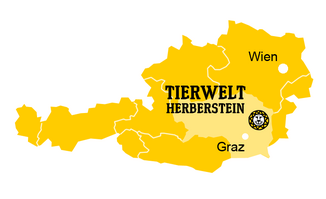
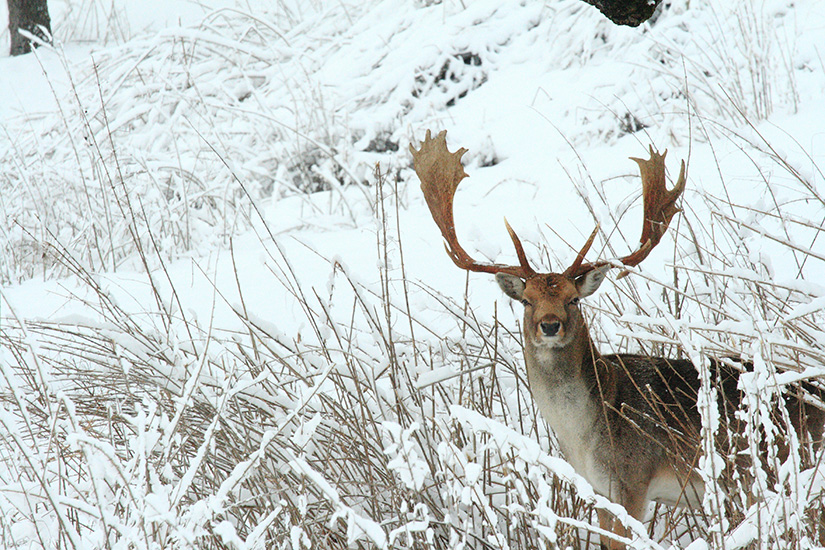
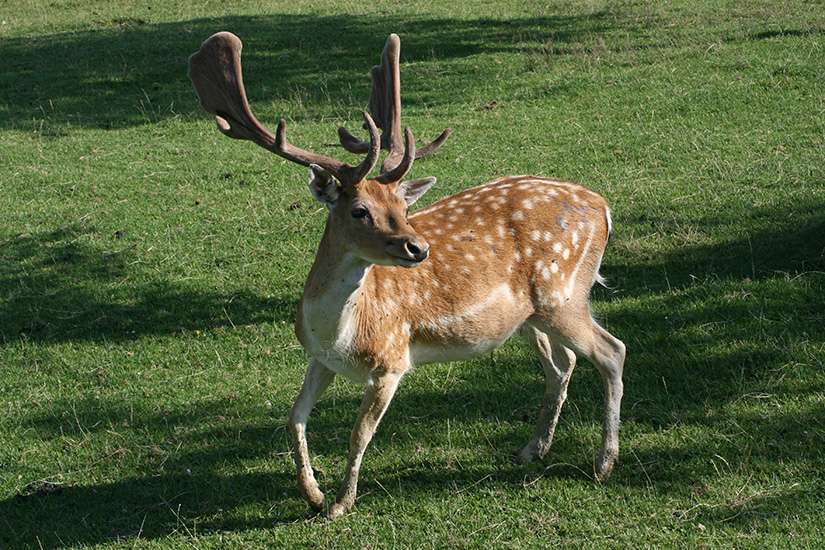
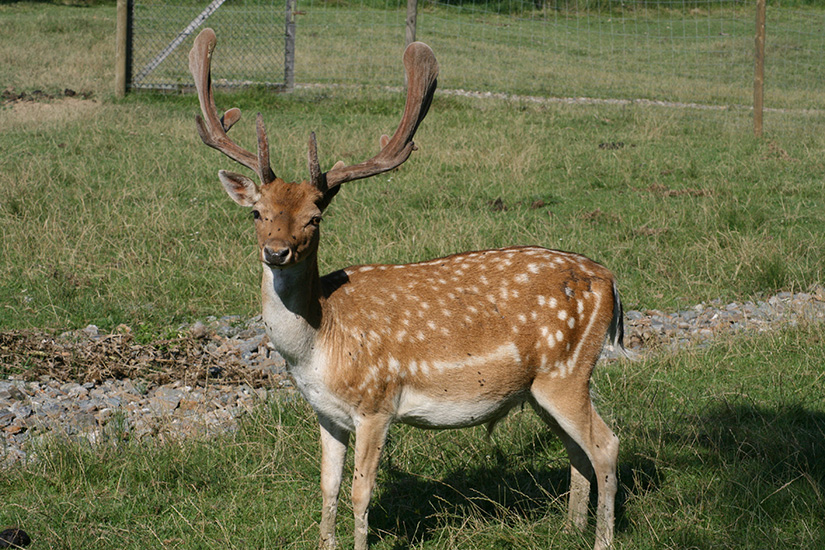
The fallow deer has made a remarkable spread. While it was originally native only to Asia Minor and the Near East, as well as, most likely, Italy and Bulgaria, it has since been introduced to many parts of Europe, South America, Russia, Australia, and New Zealand. As early as the mid-17th century, fallow deer were brought from Italy to Herberstein for hunting, thus laying the foundation for today’s zoo.
Did you know?
The fallow deer rut begins in mid-October, following that of the red deer. Fierce fights often break out among the stags, and these do not always end without injuries. Unlike the bellow of the red deer, the fallow deer’s rut call sounds like a harsh belch.
| Order | Pair-hoofed animals |
| Family | Deer |
| Distribution | Native to Turkey, Italy, and Bulgaria; naturalized in Europe, South America, Russia, South Africa, New Zealand, and Fiji |
| Habitat |    |
| Food |  |
| Activity |   |
| Weight | Men: 60–90 kg, Women: 30–50 kg |
| Size | Body length 130–160 cm, shoulder height (men) 90–110 cm, shoulder height (women) 80–85 cm |
| Service life | 25 years |
| Reproduction | The fallow deer rut begins in mid-October, following that of the red deer. Fierce battles often break out among the stags, and these do not always end without injuries. Unlike the bellowing of the red deer, the fallow deer’s rut call sounds like a harsh belch. After a gestation period of 7.5 months, the female gives birth to 1, rarely 2 fawns, which she hides during the first two weeks of life and visits only to nurse them. |
| Risk |  |
| Enemies | Wolf, Lynx, Bear, Human |
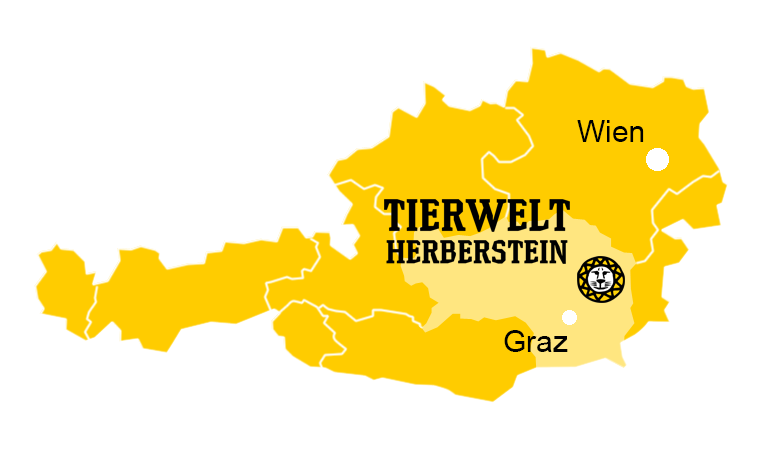
Tierwelt Herberstein
Steirischer Landestiergarten GmbH
A 8223 Stubenberg am See
Buchberg 50
Phone: +43 3176 80777
Fax: +43 3176 80777 20
Email: info (at) tierwelt-herberstein. at