







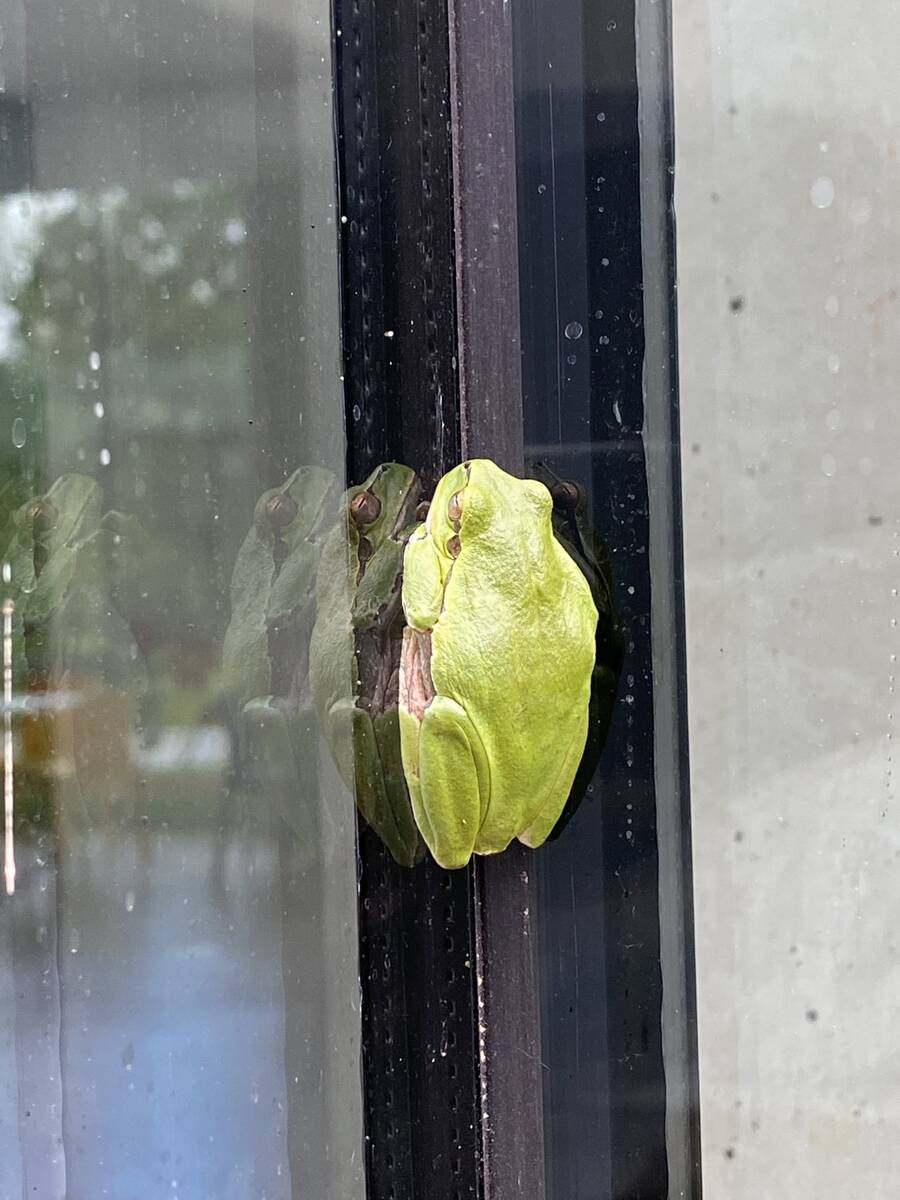
European Tree Frog
Hyla arborea
Weather Frog and Frog King
The European tree frog is considered a charming member of the frog family; we encounter it in fairy tales and children’s books, and it is said to predict the weather through its climbing abilities. In Austria, the tree frog is the only amphibian species that climbs trees. It owes its exceptional grip and climbing ability to the intricate structure of the so-called adhesive pads on its toes.
Did you know?
The tree frog family includes about 1,000 species, which are primarily found in the tropical rainforests of South America but are also present in North America, Eurasia, Australia, and New Guinea.
| Order | Frogs |
| Family | Leaf-tailed frogs |
| Distribution | Western Europe to Ukraine in the east and Greece and Turkey in the southeast |
| Habitat | From wet meadows to riparian forests, well-structured open landscapes with nearby sunny spawning waters that feature a vegetation-free shallow-water zone |
| Food | Flies, mosquitoes, beetles, and spiders |
| Activity |    |
| Weight | 6–10 g |
| Size | 3.5–5 cm |
| Service life | 5 years |
| Reproduction | The males’ mating calls—a distinctive “äpp… äpp… äpp…”—begin in April and can be heard from far away. These calls attract the females, who lay several dozen spawning masses in a single night; each mass consists of 30 to 80 eggs and can swell to the size of a walnut in the water. The first tadpoles hatch after just 3 days. |
| Risk |  |
| Enemies | Birds such as waders, ravens, shrikes, birds of prey, and owls; predatory fish and snakes |

Tierwelt Herberstein
Steirischer Landestiergarten GmbH
A 8223 Stubenberg am See
Buchberg 50
Phone: +43 3176 80777
Fax: +43 3176 80777 20
Email: info (at) tierwelt-herberstein. at