


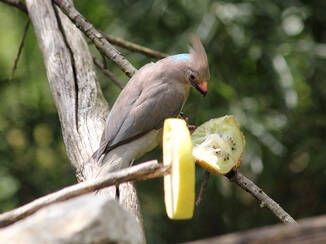




Middle Spotted Woodpecker
Dendrocoptes medius
This woodpecker loves oak forests
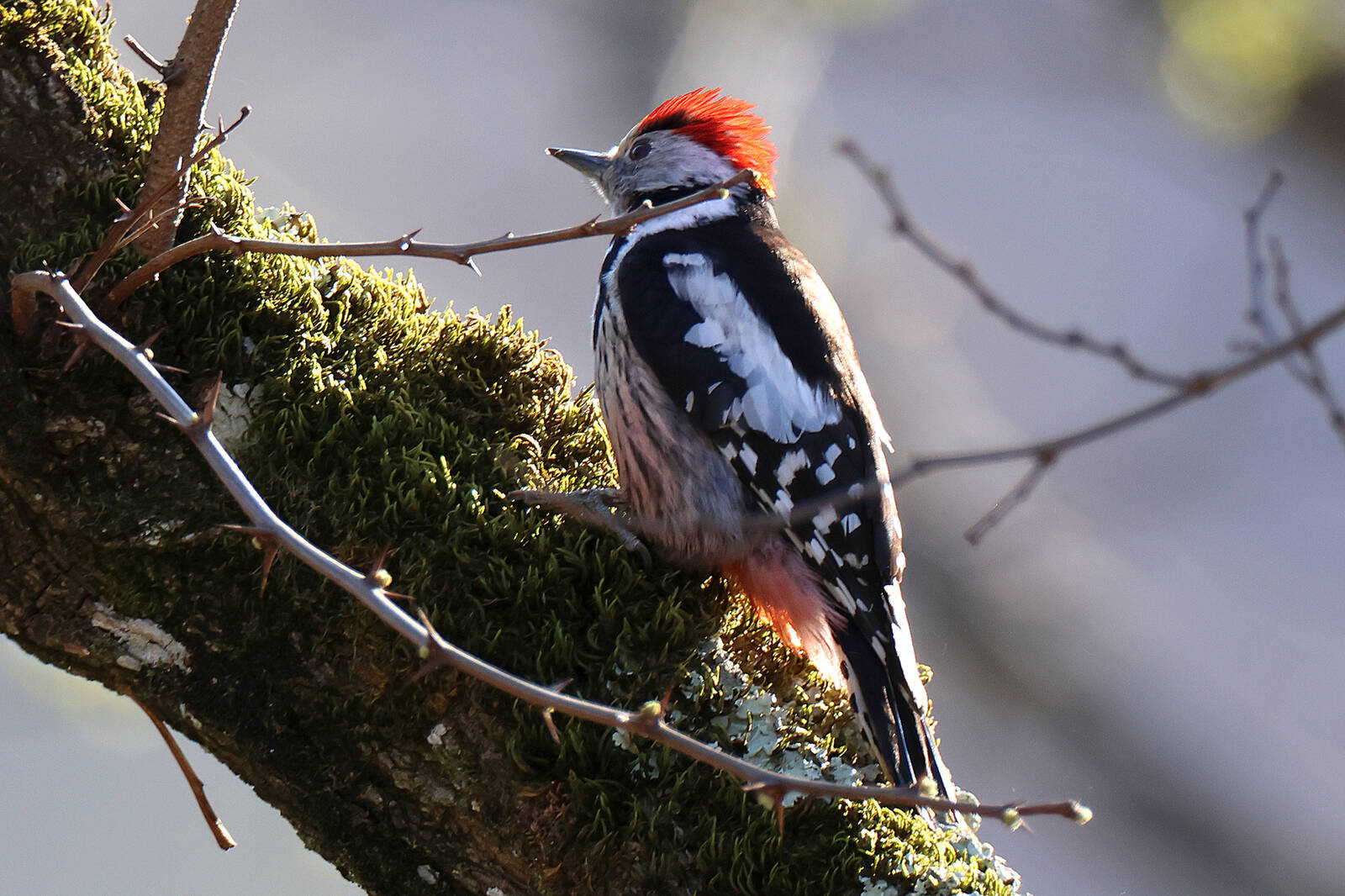
This species, which belongs to the family of spotted woodpeckers, requires heavily decayed or dry tree trunks to build its nest cavity. Its beak is less robust than that of other woodpecker species. It forages for food on branches and trunks with rough bark. It is therefore associated with mixed oak forests.
Did you know?
The middle spotted woodpecker is about 15% smaller than the great spotted woodpecker. It lacks the distinctive black band that runs from the beak to the nape of the neck in the great spotted woodpecker. In the middle spotted woodpecker, both sexes have a bright red crown.
| Order | Woodpeckers |
| Family | Woodpeckers |
| Distribution | Central and Eastern Europe to Anatolia and Western Iran |
| Habitat |  |
| Food | insects that live on tree trunks and bark |
| Activity |  |
| Weight | 50–85 g |
| Size | 21 cm |
| Service life | 8 years |
| Reproduction | Starting in April, in tree hollows they have built themselves, both partners incubate the 4 to 7 eggs, from which the chicks hatch after 12–14 days |
| Risk |  |
| Enemies | Sparrowhawk, Marten |

Tierwelt Herberstein
Steirischer Landestiergarten GmbH
A 8223 Stubenberg am See
Buchberg 50
Phone: +43 3176 80777
Fax: +43 3176 80777 20
Email: info (at) tierwelt-herberstein. at