






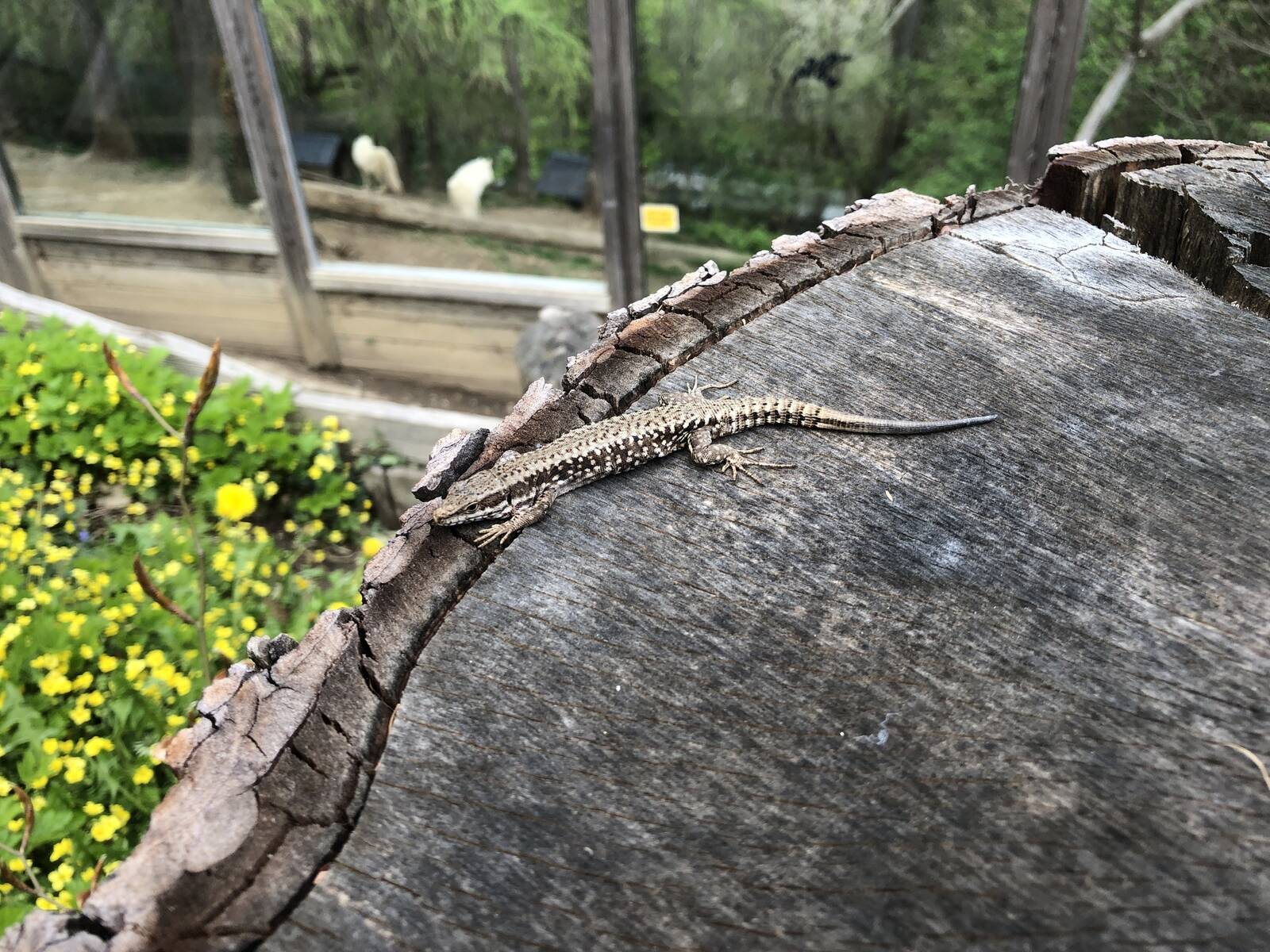
Wall lizard
Podacris muralis
A Life by the Wall
The wall lizard also inhabits habitats that are heavily influenced by humans, as long as these habitats offer sufficient hiding places in cracks in walls and rocks and are sunny, warm, and relatively dry.
Did you know?
Like all native reptiles, the wall lizard hibernates. However, it occasionally wakes up when the sun is out and is active again by the end of February, even when the air temperature is still below zero degrees. It can even survive brief drops in its body temperature below 0°C without harm.
| Order | Scaly Reptiles |
| Family | True lizards |
| Distribution | Central Europe, parts of the Iberian Peninsula, and as far as Western Anatolia |
| Habitat |  |
| Food | Insects, spiders, woodlice |
| Activity |  |
| Weight | 8 g |
| Size | Total length up to 22.5 cm (of which 2/3 is tail length) |
| Service life | Max. 10 years, average 4–6 years |
| Reproduction | Mating season is from March to June; eggs are laid 30 days after fertilization; clutches of 2–11 eggs are laid in cracks in walls or in burrows the animals dig themselves; the young hatch after 6–11 weeks and begin to appear in July |
| Risk |  |
| Enemies | Cats, snakes (constrictor snakes), birds of prey, red-backed shrikes |

Tierwelt Herberstein
Steirischer Landestiergarten GmbH
A 8223 Stubenberg am See
Buchberg 50
Phone: +43 3176 80777
Fax: +43 3176 80777 20
Email: info (at) tierwelt-herberstein. at