








Eagle Owl / Largest Owl in Central Europe
Bubo bubo
Sparkling eyes and a fantastic sense of hearing
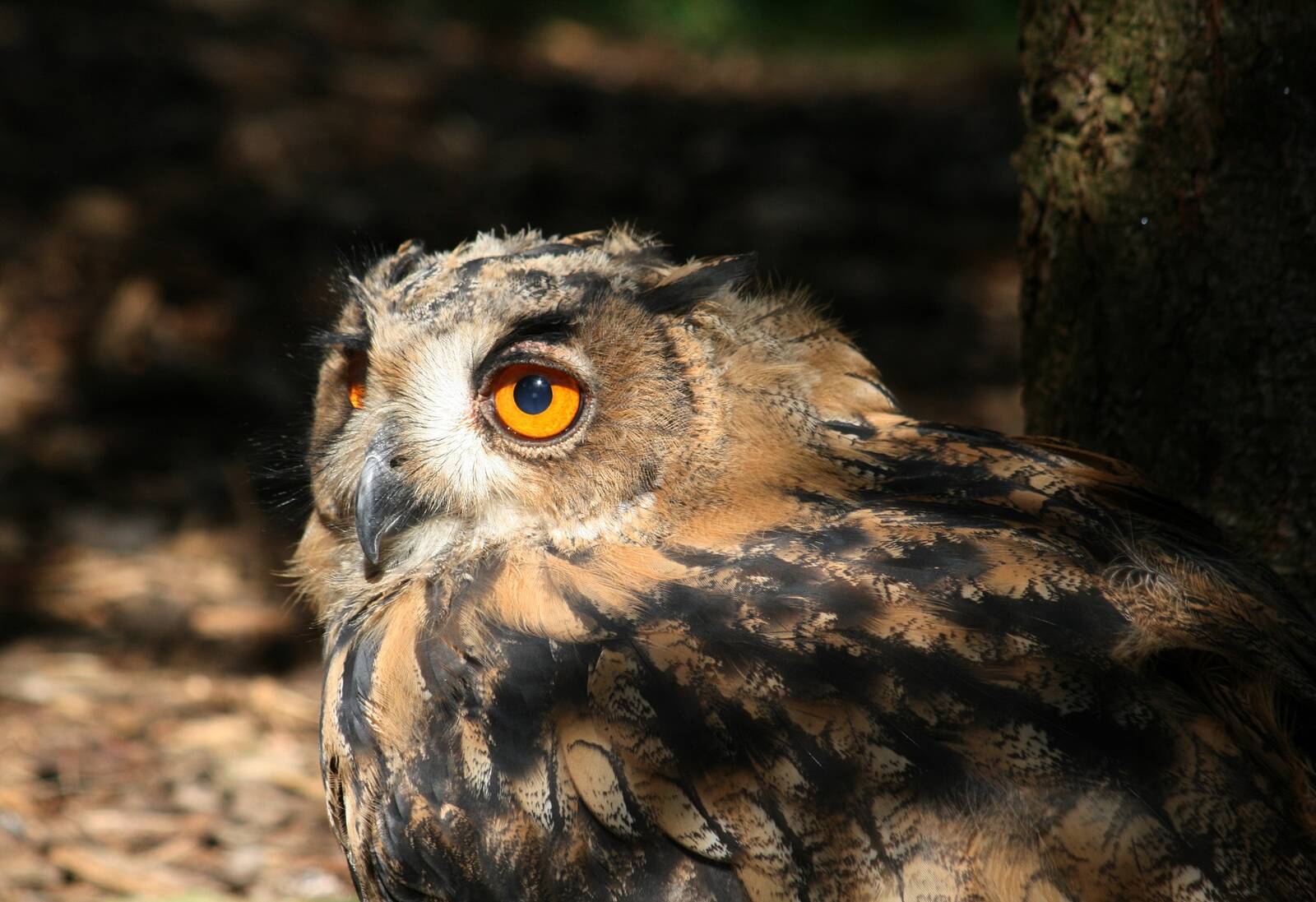
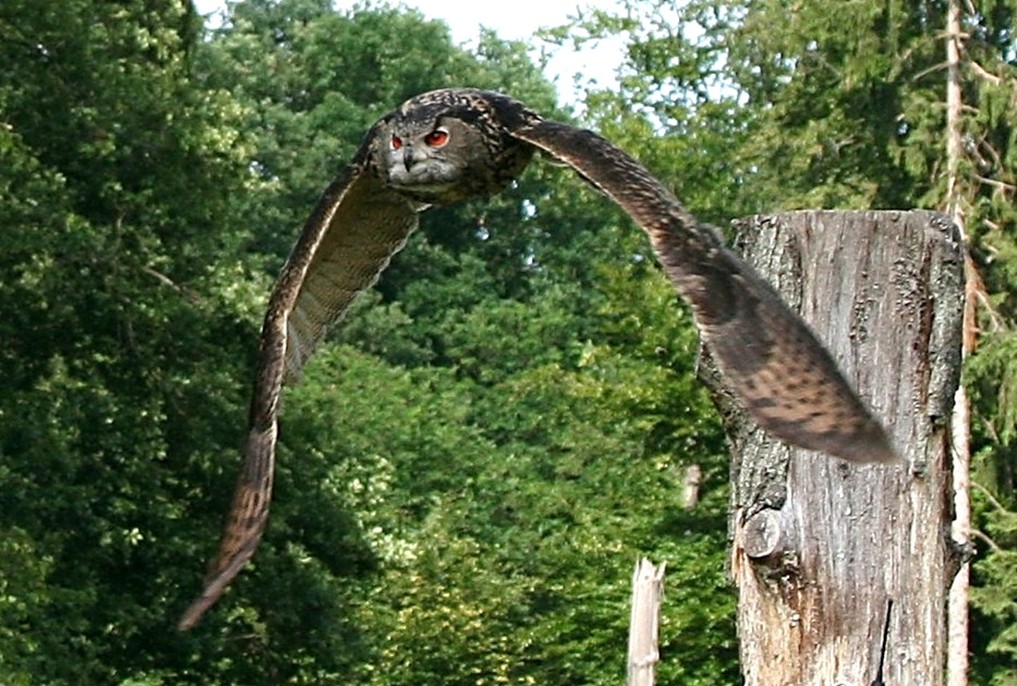
With its size, powerful build, bright orange eyes, and feathered ears, the eagle owl is unmistakable. Its large, powerful talons enable it to seize and kill its prey. As an adaptation to hunting at night, it has a highly developed sense of hearing.
Did you know?
The eagle owl is the largest owl in Central Europe. It can carry prey weighing up to two-thirds of its own body weight while in flight.



| Order | Owls |
| Family | True Owls |
| Distribution | Eurasia |
| Habitat |   |
| Food |  |
| Activity |  |
| Weight | 1.9 to over 3 kg (females are larger and heavier) |
| Size | 60–70 cm, 170 cm wingspan |
| Service life | over 25 years |
| Reproduction | From February through April, the female lays 2–4 nearly spherical eggs in shallow depressions, on rock ledges, or in abandoned birds-of-prey nests, which she incubates alone for about 35 days |
| Risk |  |
| Enemies | Eagle |

Tierwelt Herberstein
Steirischer Landestiergarten GmbH
A 8223 Stubenberg am See
Buchberg 50
Phone: +43 3176 80777
Fax: +43 3176 80777 20
Email: info (at) tierwelt-herberstein. at