





Stag Beetle
Lucanus cervus
Impressive Beetle with Antlers
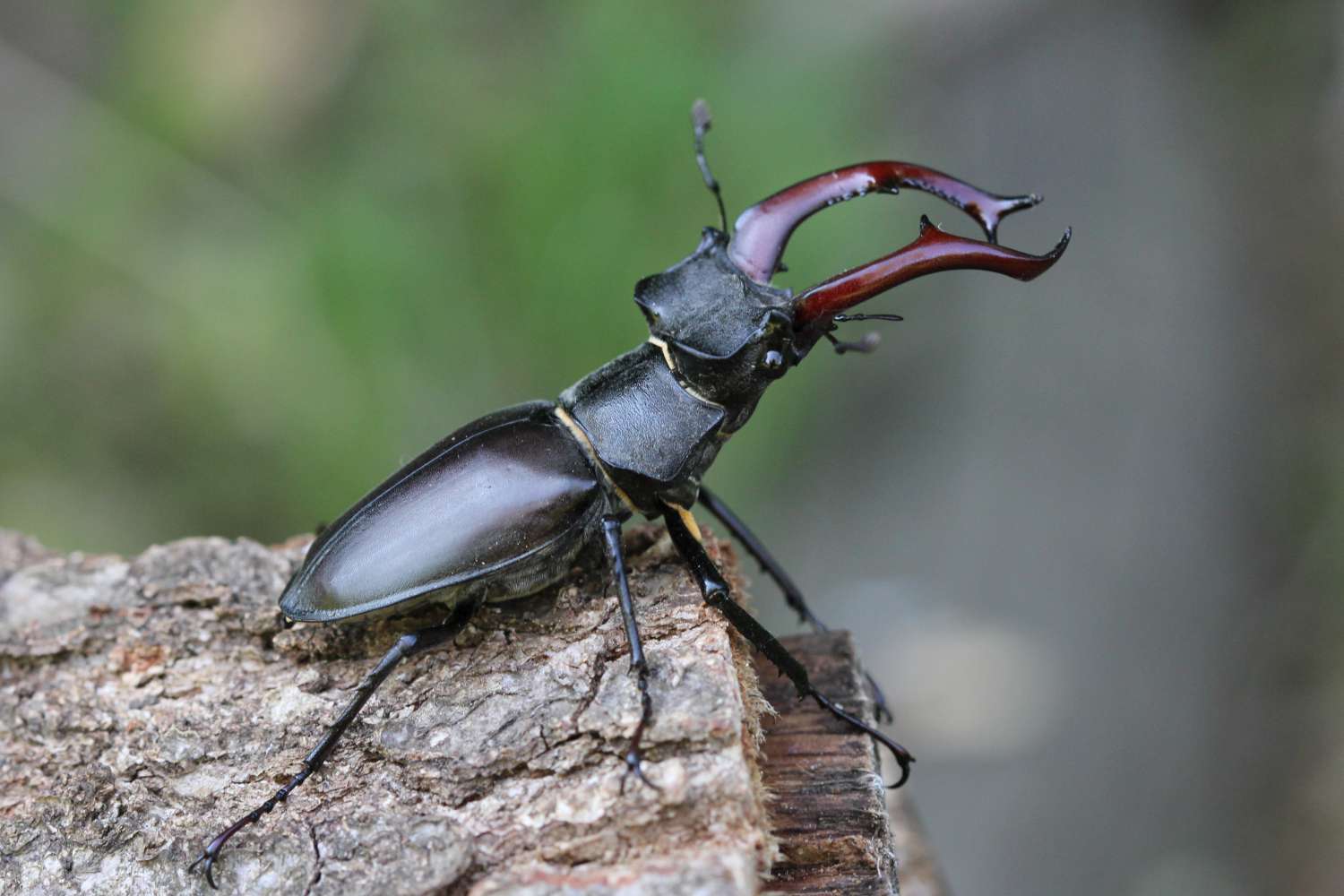
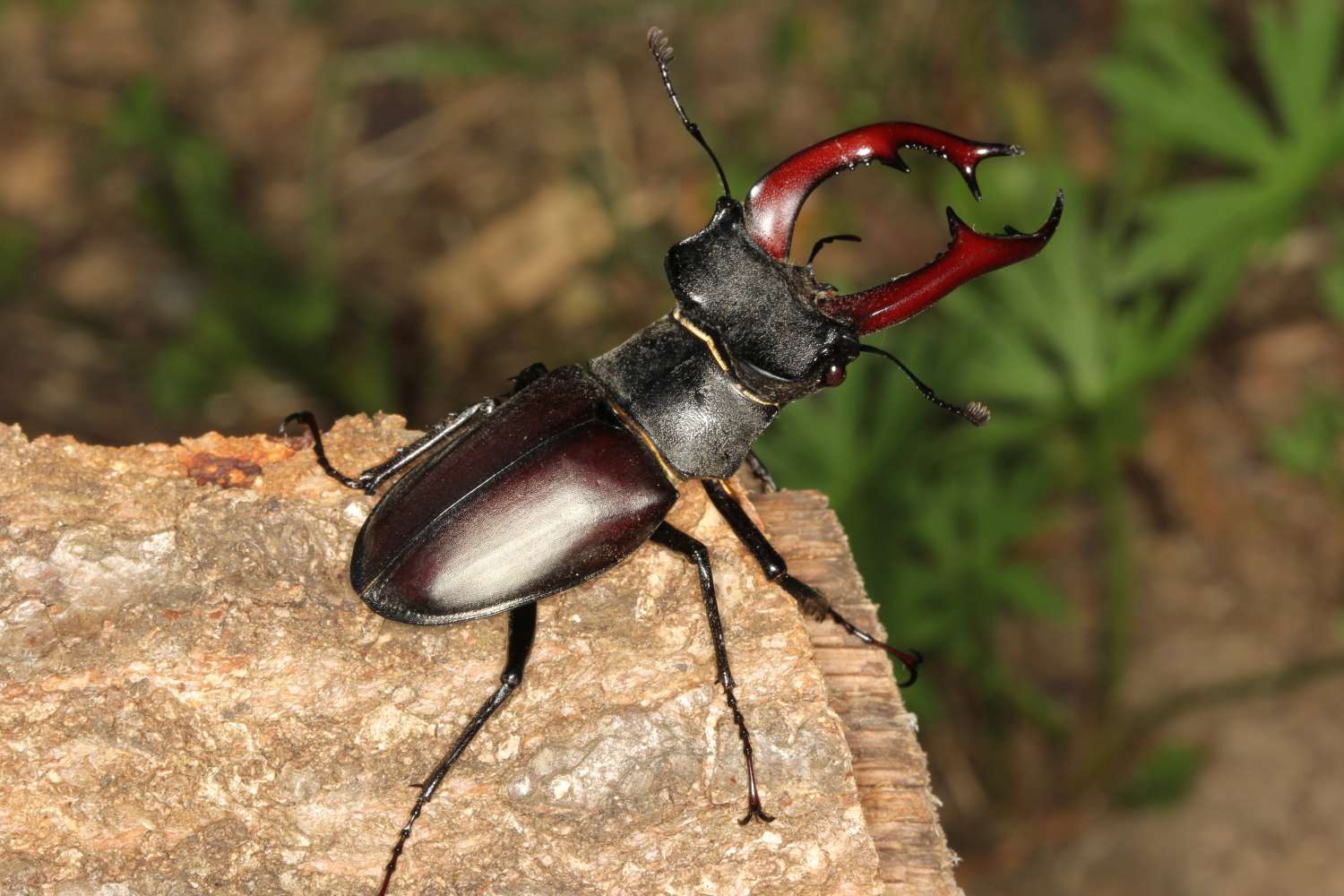
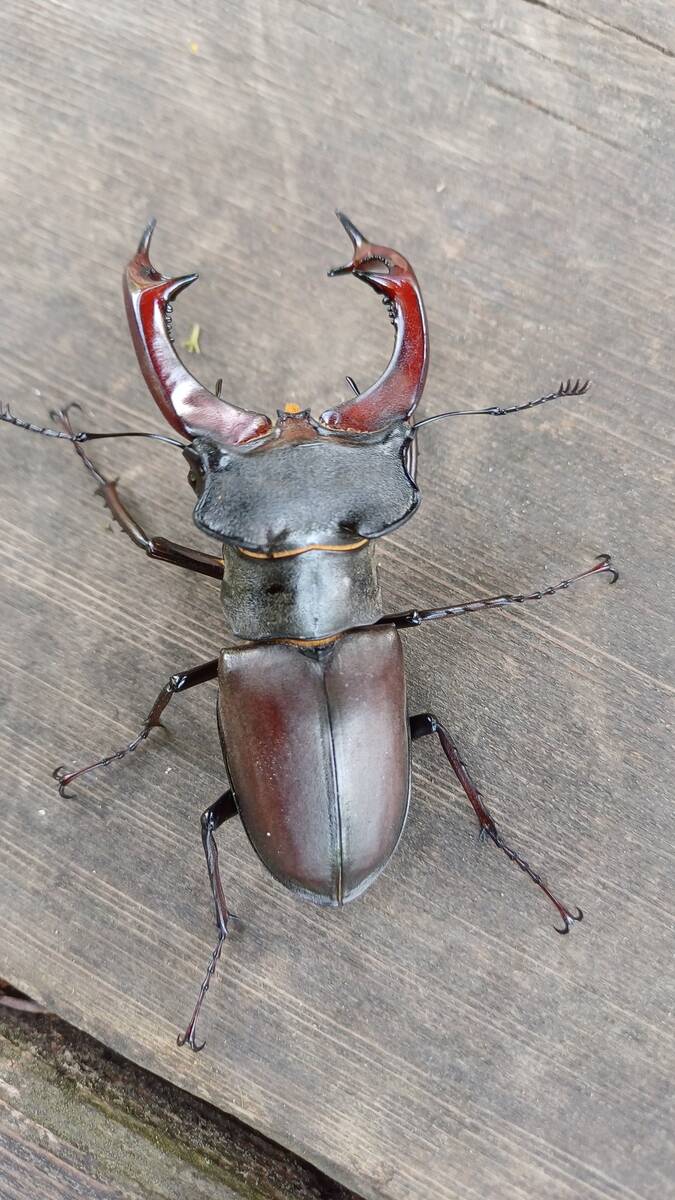
The stag beetle is the largest beetle in Central Europe. Only the males have “antlers.” The membranous hind wings are folded beneath the hard elytra. Despite their size, they are capable of flight, though they are rather poor fliers.
Did you know?
The horn-like structures on the males have developed from the upper jaw. They use these pincers in combat to pin their opponents down.
| Order | Beetle |
| Family | Schröter |
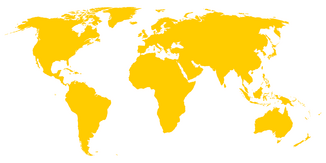
| Distribution | Europe |
| Habitat |   |
| Food | Larvae, decaying wood, adult beetles, plant sap, and fermenting fruit |
| Activity | Beetles, mainly from mid-May through the end of June |
| Weight | 2.5 to 5.5 g |
| Size | 2.8 – 8.6 cm |
| Service life | 4 to 8 years as a larva in the wood; the hatched beetle lives only a few weeks |
| Reproduction | Females attract males with pheromones. The female lays about 20 eggs in the soil beneath a dead or dying tree. |
| Risk |  |
| Enemies | Birds |
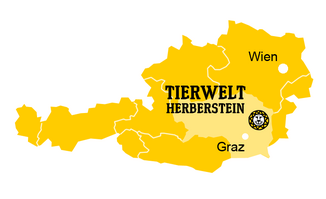
Tierwelt Herberstein
Steirischer Landestiergarten GmbH
A 8223 Stubenberg am See
Buchberg 50
Phone: +43 3176 80777
Fax: +43 3176 80777 20
Email: info (at) tierwelt-herberstein. at