







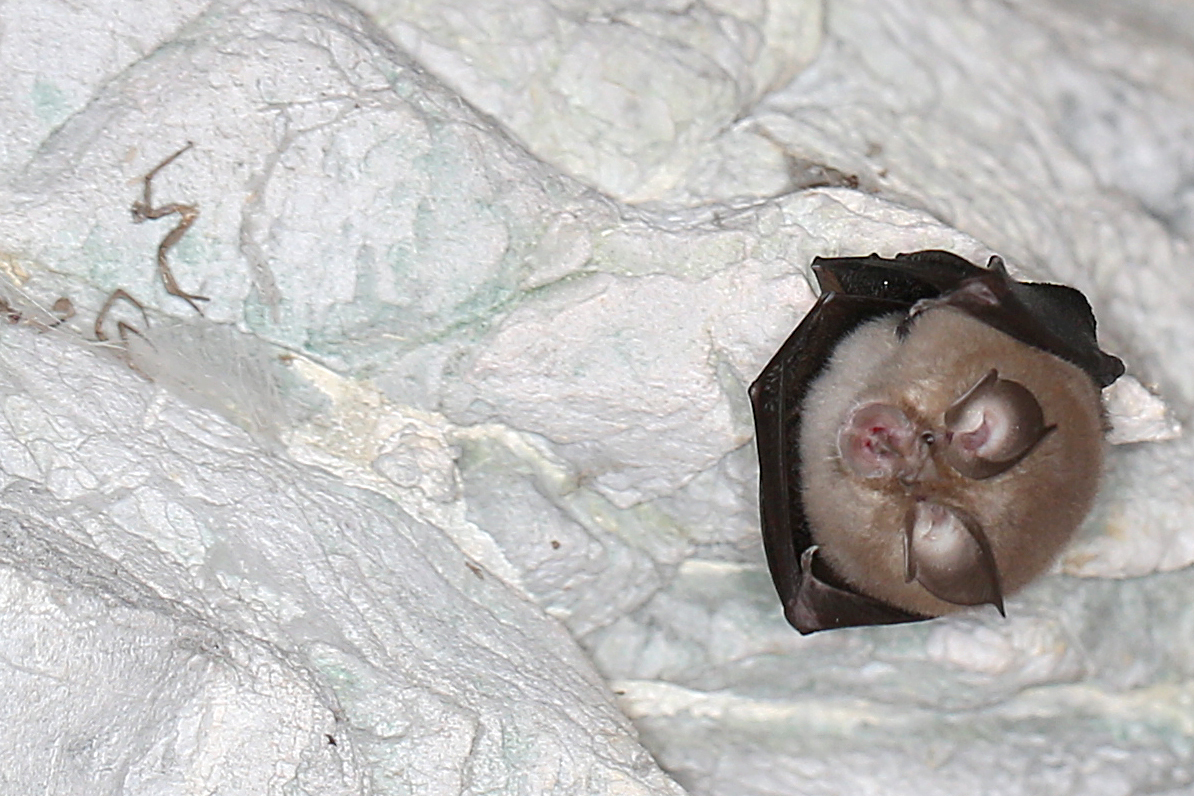
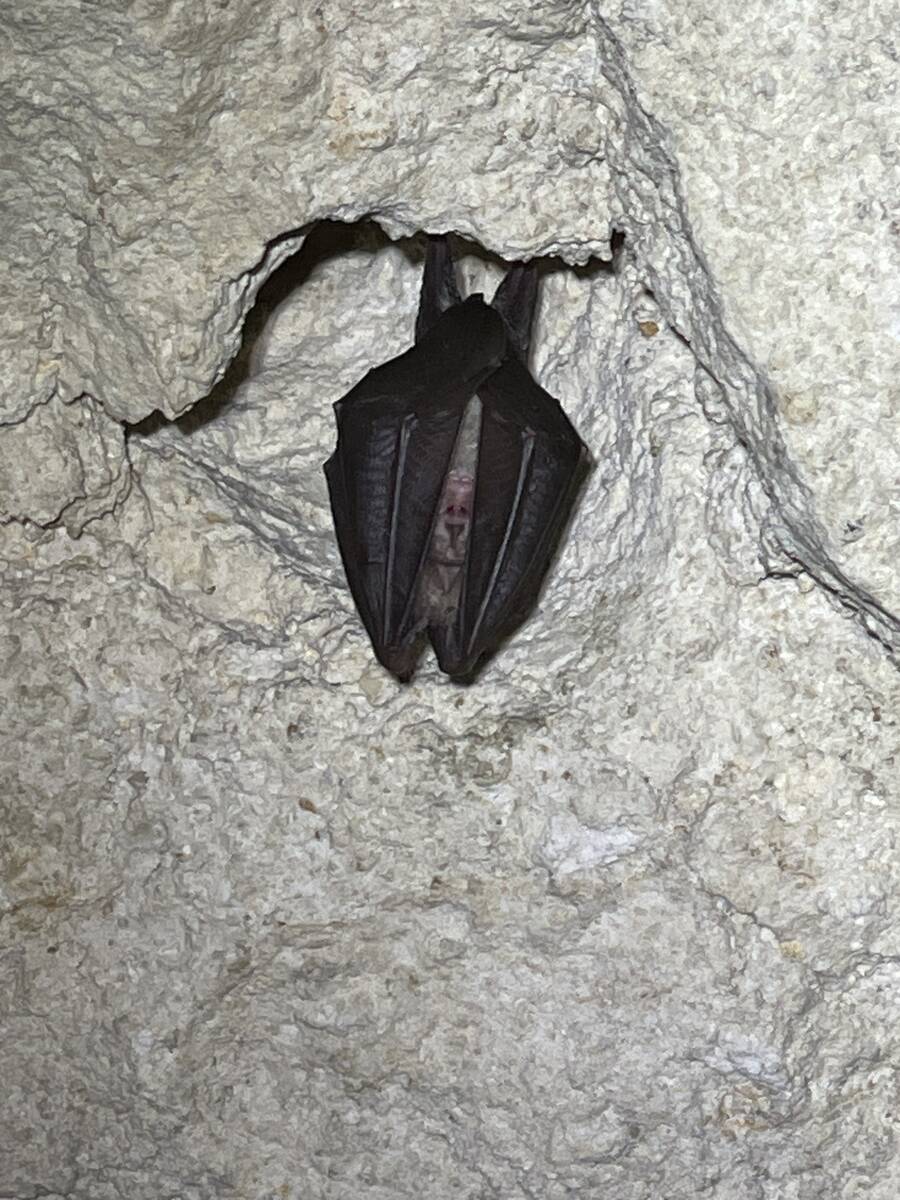
Lesser Horseshoe Bat
Rhinolophus hipposideros
Hunters of the Night
One of the smallest native bat species. Its name comes from the horseshoe-shaped structure on its nose. These bats navigate in the dark using echolocation. To do so, the lesser horseshoe bat emits very high-frequency sounds in the range above 100 kHz. These sounds are inaudible to humans (we can hear frequencies up to a maximum of 20 kHz).
Did you know?
Female bats give birth to their young in what is known as a maternity roost. In our part of the world, this is often a draft-free attic in a large building. In the Feistritz Gorge, Herberstein Castle serves as a roost.
| Order | Bats |
| Family | Horseshoe bats |
| Distribution | Southern and Central Europe, North Africa, Asia Minor |
| Habitat | A landscape rich in variety, open forests, orchard meadows |
| Food | Moths, net-winged insects, midges, and other insects |
| Activity |  |
| Weight | 4–7 g |
| Size | 3.7–4.5 cm, wingspan 19–25 cm |
| Service life | up to 20 years |
| Reproduction | They reach sexual maturity in their second fall; mating occurs while hanging freely in the fall or in the spring while still in their winter quarters; one young is born between June and mid-July, and after 6–8 weeks, the young are independent |
| Risk |  |
| Enemies | Owls, domestic cats |

Tierwelt Herberstein
Steirischer Landestiergarten GmbH
A 8223 Stubenberg am See
Buchberg 50
Phone: +43 3176 80777
Fax: +43 3176 80777 20
Email: info (at) tierwelt-herberstein. at