







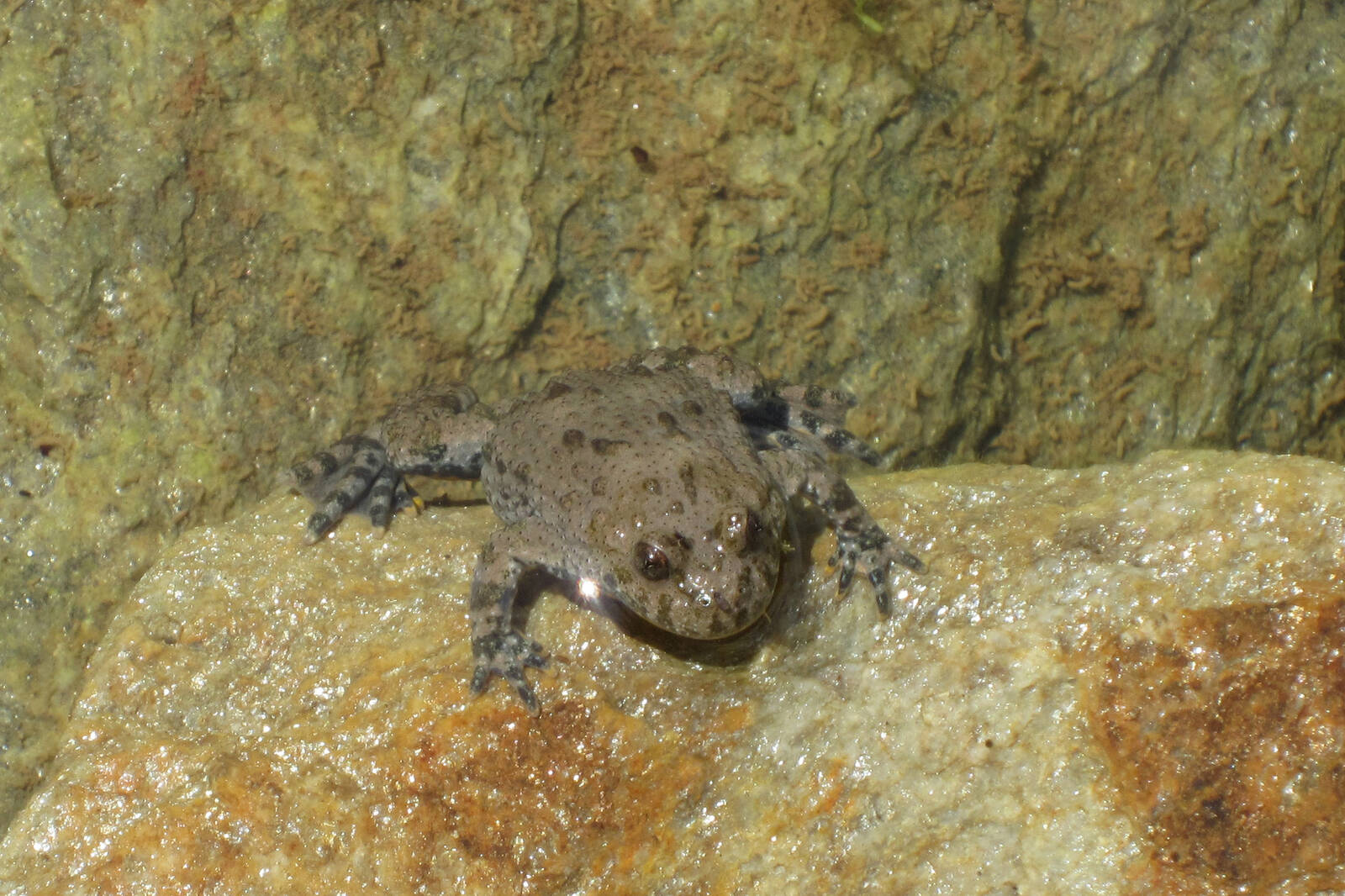
Yellow-bellied Toad
Bombina variegata
Deterrence Through the Fear Reflex
When threatened, the toads assume what is known as the “boat position”: they roll onto their backs and arch their backs. This reveals the bright yellow warning coloration on their throats, bellies, and the insides of their legs. This warns predators of the toads’ skin toxin.
Did you know?
The yellow-bellied toad is closely related to the fire-bellied toad. The western limit of the fire-bellied toad’s range is in eastern Austria. This is where the ranges of the two species overlap. In addition to the coloration of their bellies, the species also differ in that the males of the fire-bellied toad have vocal sacs.
| Order | Frogs |
| Family | Toads and Barbour's frogs |
| Distribution | From France to western Ukraine, from northern Germany to northern Italy and the Balkans |
| Habitat | Forest edge habitats with shaded areas and bare, unvegetated soil; a typical pioneer species in ponds and pools with muddy bottoms |
| Food | Insects, spiders, larvae, worms, and other invertebrates |
| Activity |    |
| Weight | 6 g |
| Size | 5 cm |
| Service life | outdoors until age 15 |
| Reproduction | The males’ mating calls—a muffled “uh… uh… uh…” in rapid succession—can be heard in late spring and early summer. The female lays several eggs in clusters on suitable objects such as branches and leaves in the water. The tadpoles hatch after just 2–3 days. |
| Risk |  |
| Enemies | Birds such as jackdaws, magpies, and blackbirds; snakes; and dragonfly nymphs |

Tierwelt Herberstein
Steirischer Landestiergarten GmbH
A 8223 Stubenberg am See
Buchberg 50
Phone: +43 3176 80777
Fax: +43 3176 80777 20
Email: info (at) tierwelt-herberstein. at