








Alpaca
Alpaca
Lama pacos
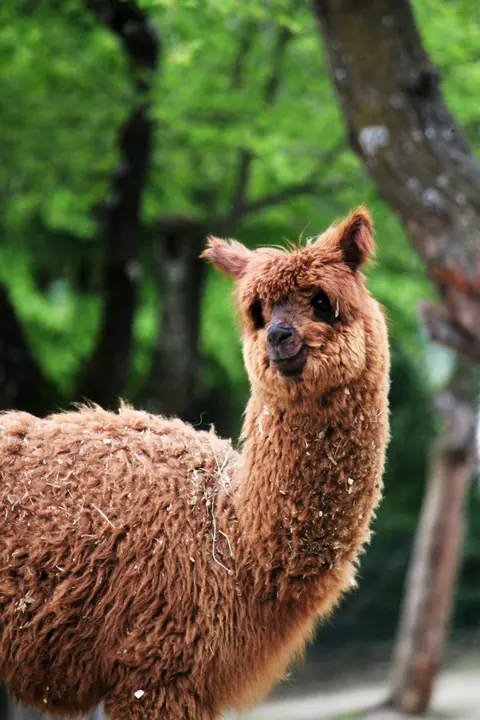
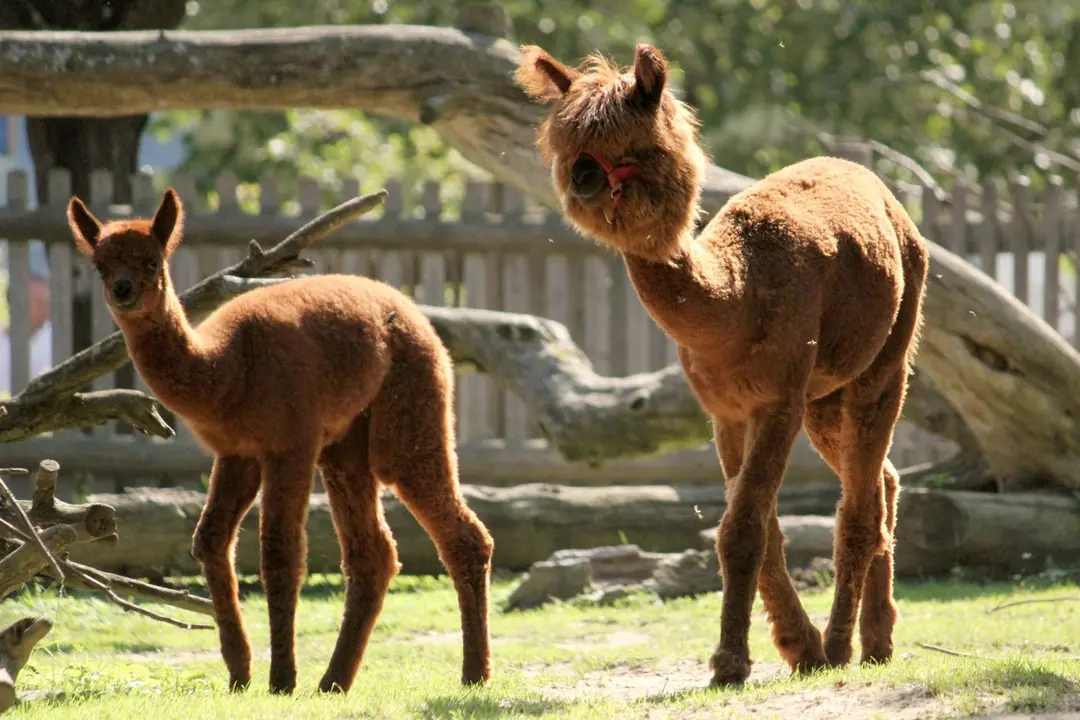
Its coat is long and thick, and its face is almost completely covered. The Z-shaped angle of its hip and thigh bones gives the alpaca a rounded appearance from behind, and its low-set tail adds to its impression of roundness and cuddliness.
Alpacas and llamas are among the oldest domesticated animals; they were bred by the indigenous peoples of South America as early as about 6,000 years ago.
Did you know?!
Alpacas produce the highest-quality wool among camelids.
| Order | Pair-hoofed animals |
| Family | Camel-like |
| Distribution | These animals are native to Peru, Bolivia, Argentina, and Chile. |
| Habitat |    |
| Food |  |
| Activity |  |
| Weight | 50–80 kg |
| Size | Shoulder height: 110 cm |
| Service life | 20 years |
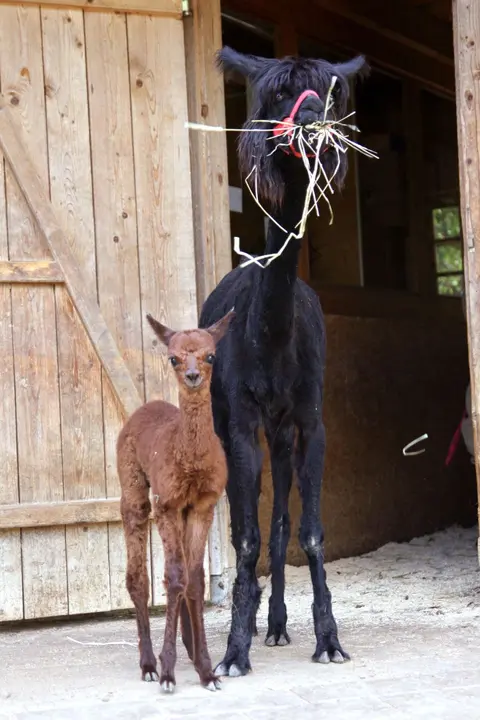
| Reproduction | Alpacas reach sexual maturity at about 2 years of age, and a young alpaca is born after 11 months. |
| Risk |  |
| Enemies | Large predators such as the puma. |

Tierwelt Herberstein
Steirischer Landestiergarten GmbH
A 8223 Stubenberg am See
Buchberg 50
Phone: +43 3176 80777
Fax: +43 3176 80777 20
Email: info (at) tierwelt-herberstein. at