


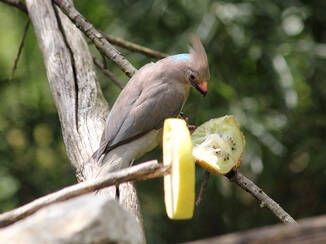





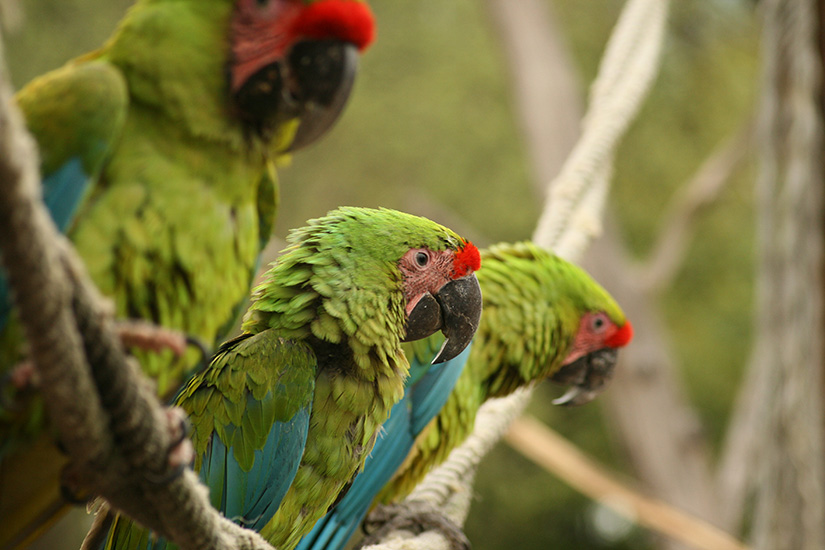
Great Military Macaw in the Tierwelt Herberstein
Buffon's Macaw
Ara ambigua
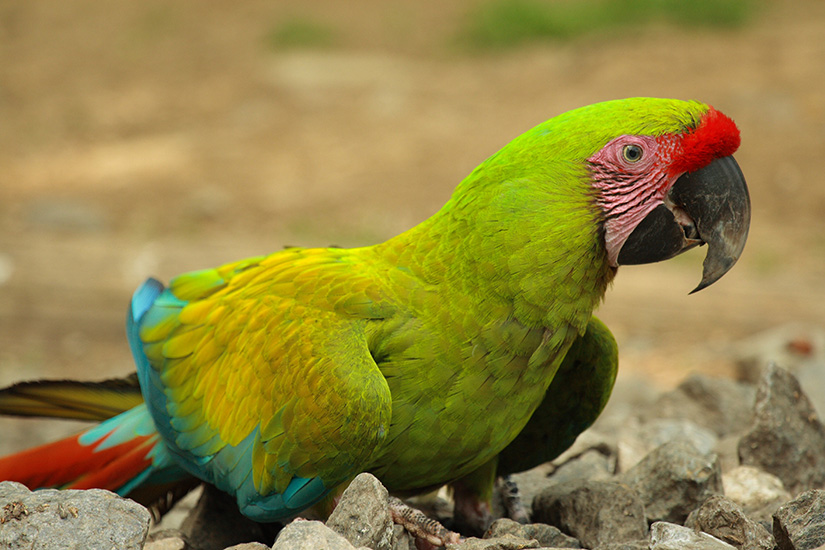
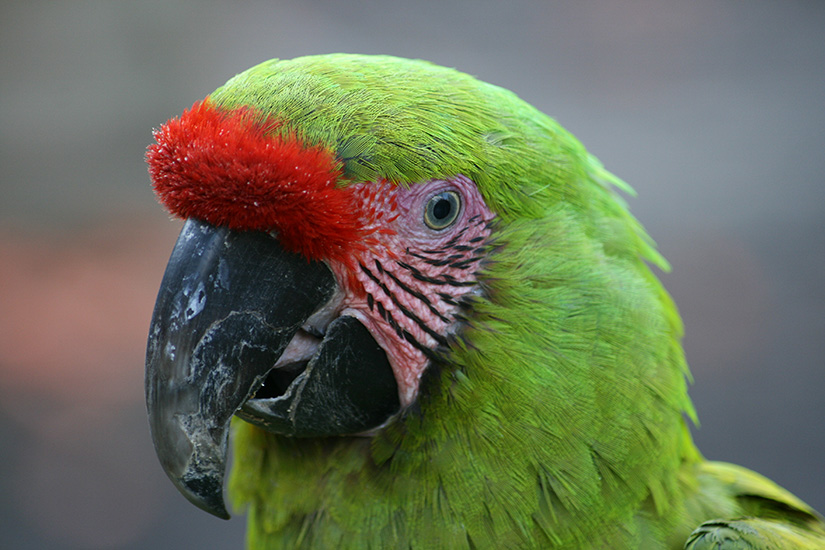
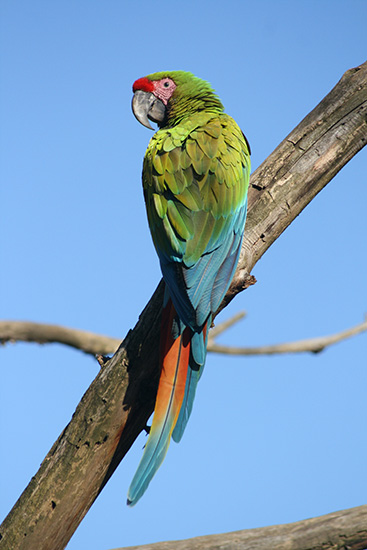
Soldier macaws usually roam the lowland forests in pairs in search of food, but they can also be found at elevations of up to 2,500 meters above sea level. The macaws’ beak, which they use to crack even the hardest nuts, is an adaptation to these birds’ predominantly climbing mode of movement; it is used as an additional “foot.” Males and females are indistinguishable in appearance.
Did you know?
Great military macaws are critically endangered, and breeding them is not easy, but it is achieved regularly in Herberstein. Trade in these animals is strictly regulated by the “Convention on International Trade in Endangered Species of Wild Fauna and Flora (CITES)” and is permitted only in exceptional cases (for example, for breeding purposes at a zoo).
| Order | Parrots |
| Family | True parrots |
| Distribution | Central and South America (southern Honduras to Ecuador) |
| Habitat |  |
| Food |  |
| Activity |  |
| Weight | 1.2–2.6 kg |
| Size | 85 cm |
| Service life | 40 years (zoo: 50 years) |
| Reproduction | Aras nest in tree hollows. The clutch consists of an average of 1–3 eggs, which are incubated for 26–28 days. |
| Risk |  |
| Enemies | Birds of Prey, Ocelot, Human |

Tierwelt Herberstein
Steirischer Landestiergarten GmbH
A 8223 Stubenberg am See
Buchberg 50
Phone: +43 3176 80777
Fax: +43 3176 80777 20
Email: info (at) tierwelt-herberstein. at