



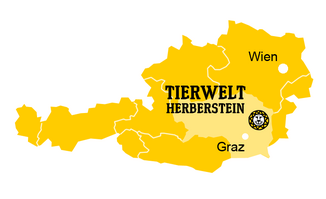


Capybara in the Tierwelt Herberstein
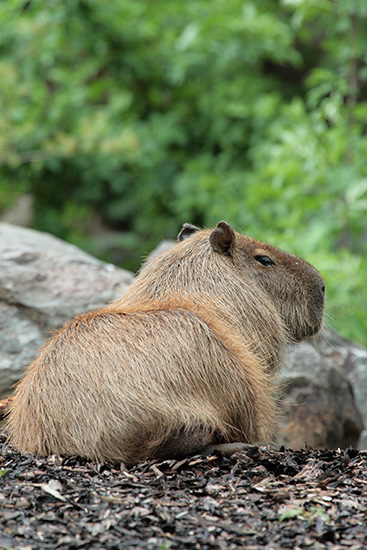
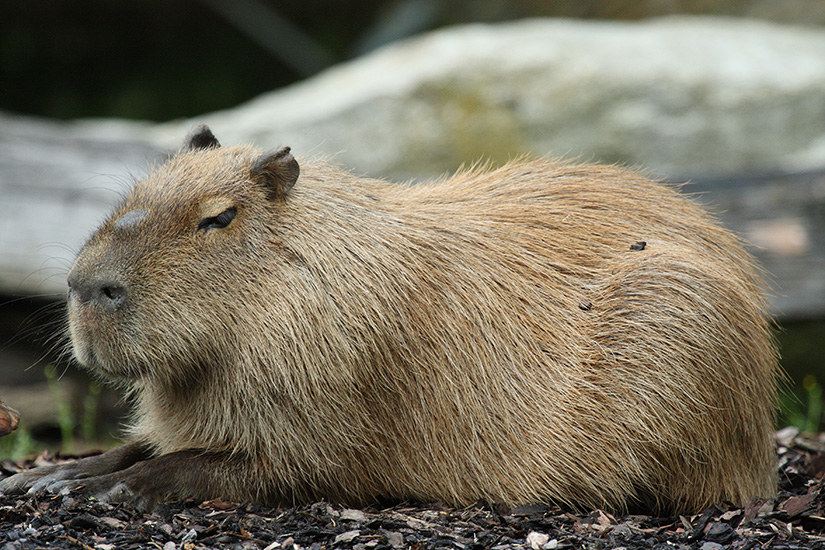
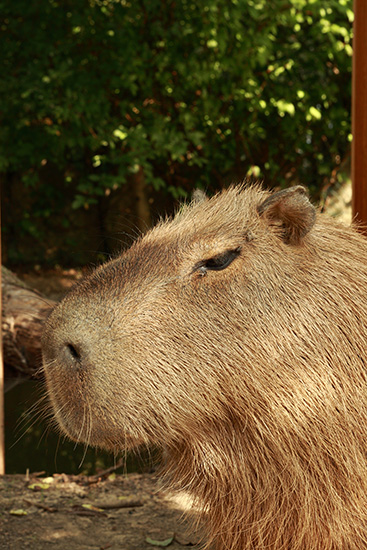
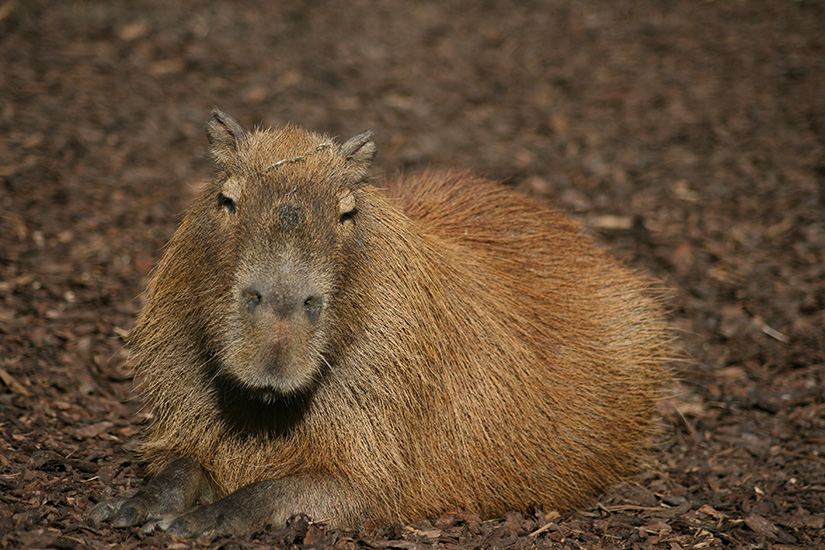
Capybara
Hydrochoerus hydrochaeris
Giant rodents with webbed feet
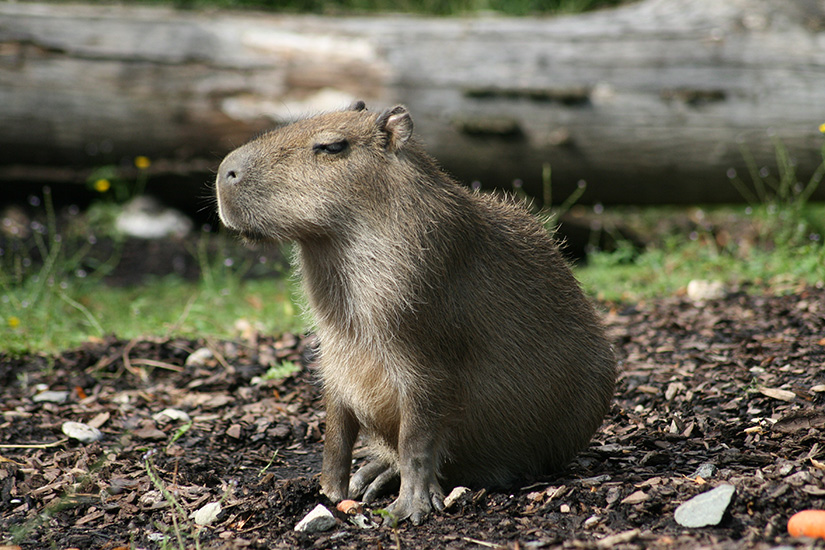
It might be easy to be misled about the capybara’s classification, since its other name is “water pig.” But its appearance gives it away—it is actually a relative of the guinea pig.
It does, however, have webbed feet, which suggests that its rather clumsy movements on land are not its preferred mode of locomotion. Its natural habitat is the water, where it can drift almost unnoticed among aquatic plants. Its ears, eyes, and nostrils are aligned in a straight line, so that only a narrow strip of its body protrudes from the water. If that’s still too risky, it simply dives—for up to 5 minutes.
Did you know?
Weighing up to 65 kg, the capybara is the largest rodent on Earth and about 10,000 times heavier than the smallest mouse.
| Order | Rodents |
| Family | Guinea pigs |
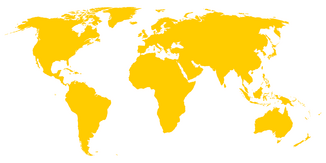
| Distribution | From Colombia and Venezuela to northeastern Argentina |
| Habitat |    |
| Food |  |
| Activity |  |
| Weight | 35–65 kg |
| Size | Body length 105–135 cm, shoulder height 50–60 cm |
| Service life | 10 years (zoo: 12 years) |
| Reproduction | The mating season peaks in April and May. After a gestation period of about 120–150 days, females typically give birth to a litter of 1–8 young per year. |
| Risk |  |
| Enemies | Jaguar, caiman, snake (in young animals), human |
Tierwelt Herberstein
Steirischer Landestiergarten GmbH
A 8223 Stubenberg am See
Buchberg 50
Phone: +43 3176 80777
Fax: +43 3176 80777 20
Email: info (at) tierwelt-herberstein. at