




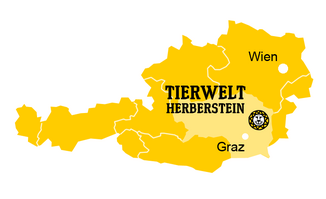


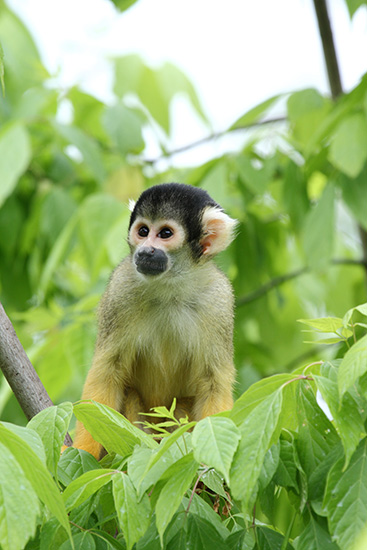
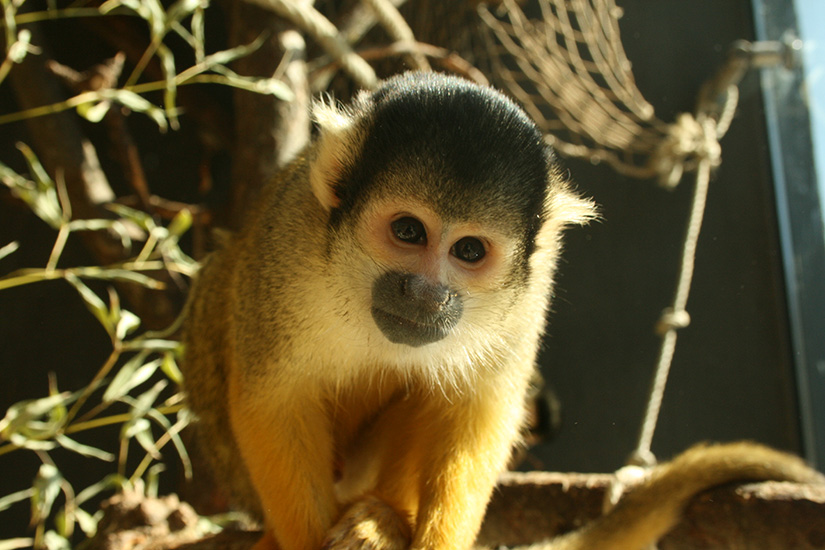
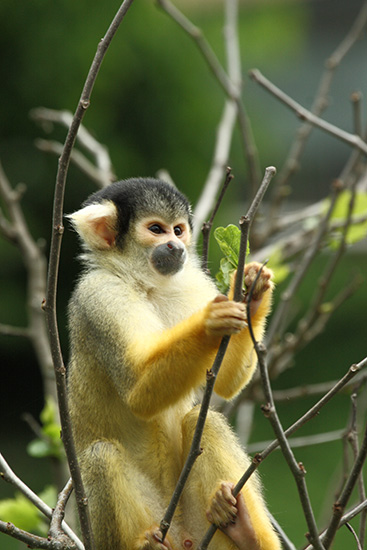
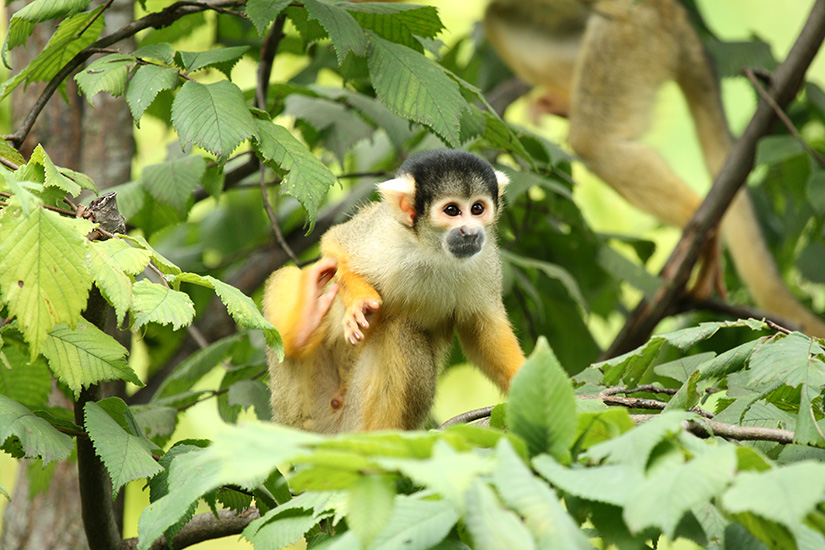
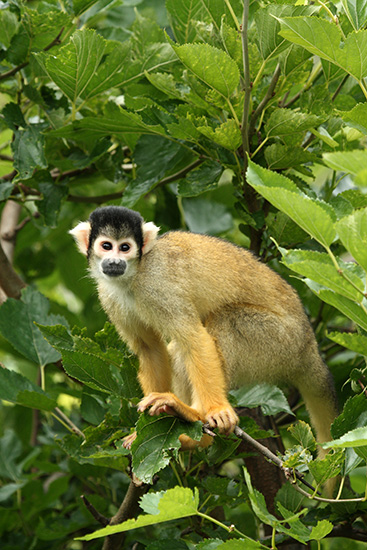
Bolivian squirrel monkey in the Tierwelt Herberstein
Bolivian Squirrel Monkey
Saimiri boliviensis boliviensis
Cheeky – even cheeker – squirrel monkey
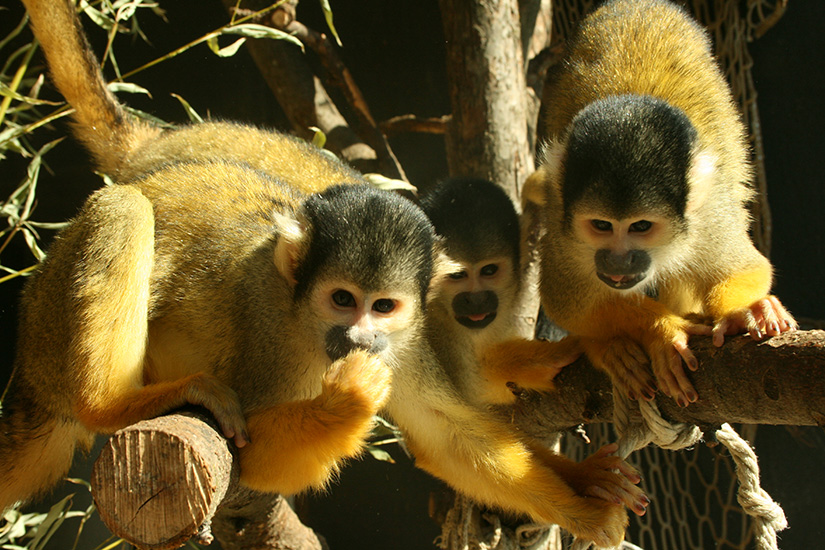
Pippi Longstocking’s little monkey “Mr. Nilsson” is a common squirrel monkey and thus a close relative of the Bolivian squirrel monkeys, which are at least as cheeky and nimble. Herding a sack of fleas is probably no harder than keeping the little group from Tierwelt Herberstein in check. It’s no coincidence that these little ones are called “squirrel monkeys” in English. No branch is too far away, no trunk too steep for them to reach their destination. Endlessly curious and not the least bit shy, the whole gang literally sticks to the window as soon as there’s any movement outside. All that’s left behind are the deceptive, damp fingerprints. These aren’t from sweaty hands, though! No—they urinate on their hands and feet to constantly mark their territory. In this strictly hierarchical group, even lower-ranking members are marked in this way, as the higher-ranking ones wipe their fingers on the others’ fur. This makes it crystal clear who’s in charge here.
Did you know?
A Bolivian squirrel monkey has the largest brain mass relative to its body size among primates—including humans. As a result, its reflexes are so sharp that it can even catch insects in mid-air.
| Order | Monkeys |
| Family | Capuchin-like |
| Distribution | South America (Brazil, Bolivia, Peru) |
| Habitat |  |
| Food |  |
| Activity |  |
| Weight | M 0.6–1.1 kg, W 0.4–0.8 kg |
| Size | Body length 23–37 cm, tail length 37–47 cm |
| Service life | 20 years |
| Reproduction | After a gestation period of 5 months, they give birth to a young. |
| Risk |  |
| Enemies | Birds of Prey, Cats, Humans |
Tierwelt Herberstein
Steirischer Landestiergarten GmbH
A 8223 Stubenberg am See
Buchberg 50
Phone: +43 3176 80777
Fax: +43 3176 80777 20
Email: info (at) tierwelt-herberstein. at