






Spectacled Bear in the Tierwelt Herberstein
Spectacled Bear
Tremarctos ornatus
The Bear with Glasses
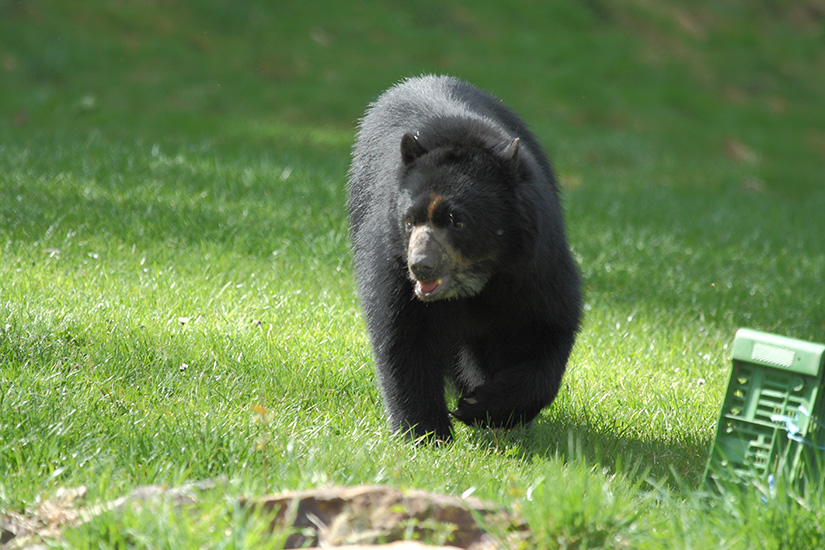
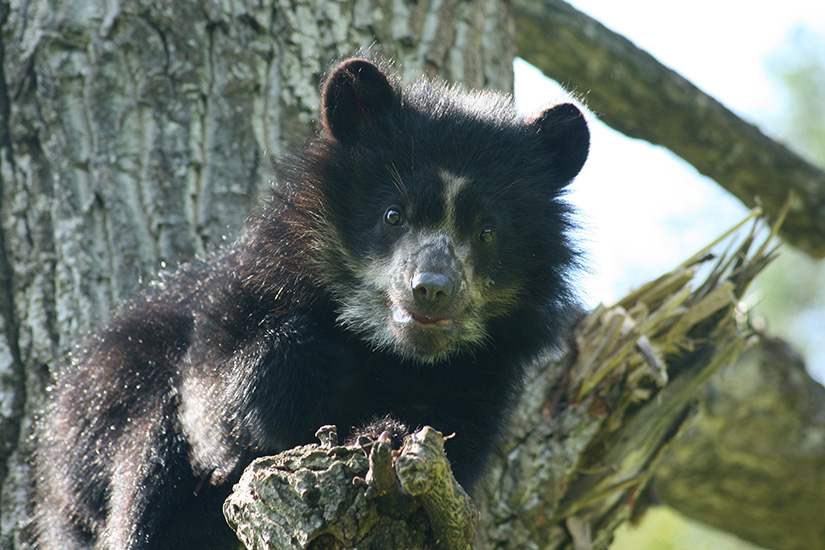
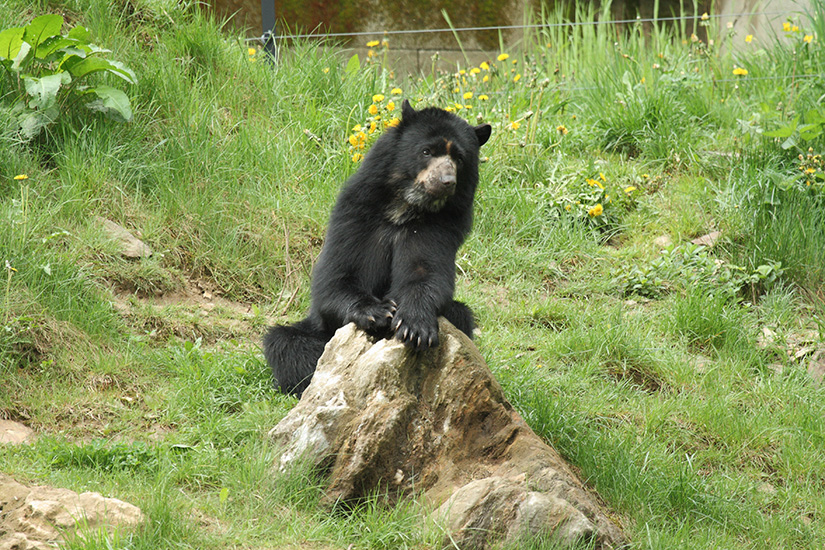
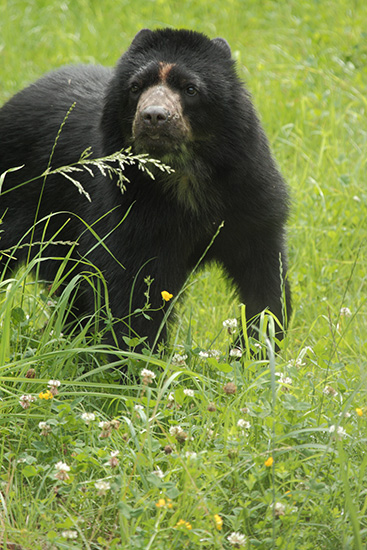
Spectacled bears get their name from the white-to-beige facial markings, which are usually shaped like spectacles around the eyes and extend down to the neck. These markings are unique and likely serve as a means of mutual recognition. However, there are also spectacled bears that have no markings at all and are therefore entirely black, which is why it was long believed that these were a separate species.
In fact, spectacled bears are the only large bears in South America. Since they are found exclusively in the Andean countries, they are also called “Andean bears.” They are most commonly found in the humid mountain forests at around 2,500 meters above sea level, but they can also be found in treeless high-altitude areas at around 4,500 meters above sea level and in the desert-like lowlands of Peru.
If you want to harvest them, you have to have a head for heights
Spectacled bears are solitary animals, but when there is an ample supply of fruit, they can also be found feeding peacefully side by side.
Bears are generally omnivores. Depending on their range and the availability of food, their diet consists of varying proportions of animal and plant matter.
Up to 96% of the spectacled bear’s diet consists of a wide variety of fruits and plants, which it finds in abundance year-round in the Andes of South America. This is one of the reasons why it does not need to hibernate. The remaining 4% consists of protein sources ranging from mice to deer. Its favorite food, however, is plant-based—and harvesting it isn’t exactly easy. It consists of various types of bromeliads, which usually grow high up in the trees.
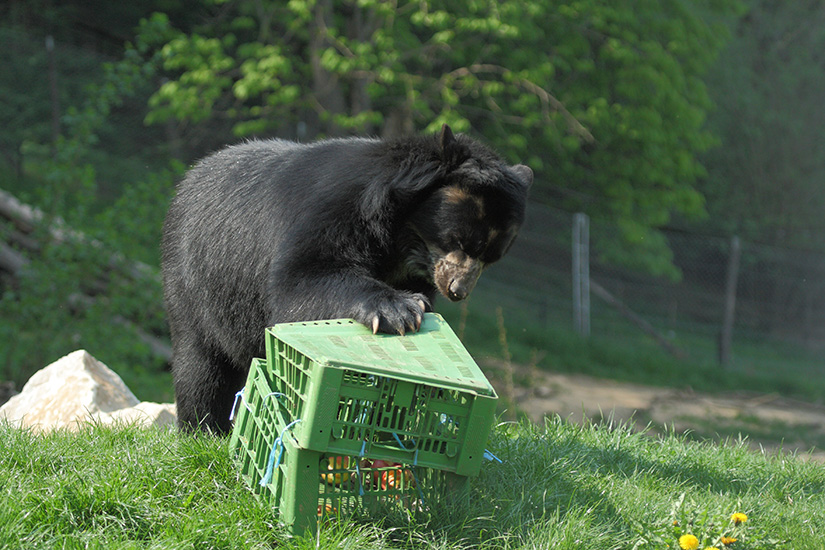
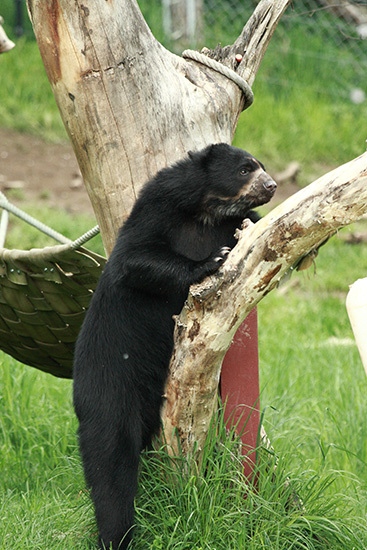
Just like mistletoe in our part of the world, these rosette-shaped plants grow on branches as so-called “epiphytes” and do not fall off like ripe fruit. Therefore, despite its weight (males can weigh up to 175 kg), a spectacled bear must climb up to pick them. Particularly long and sharp claws and slightly elongated hind legs help it work its way up the trunk.
Did you know?
To reinforce thinner branches and gain a better foothold, the spectacled bear builds feeding platforms out of broken twigs. These can also be expanded into full-fledged nests, which are perfect for taking a nap in the branches.
| Order | Carnivores (Carnivora) |
| Family | Bears (Ursidae) |
| Distribution | The Andes (from Panama to Bolivia) and the Macarena Mountains (Colombia) |
| Habitat |   |
| Food |  |
| Activity |    |
| Weight | Men: 100–175 kg, Women: 60–80 kg |
| Size | Body length 130–200 cm, shoulder height 70–90 cm |
| Service life | > 20 years (zoo: > 30 years) |
| Reproduction | Like all bears, spectacled bears are solitary outside of the mating season. Only during the mating season (April through June) do males and females live together for an average of one week. Births (November through February) occur after a gestation period of 240–255 days, with 1–2 cubs—sometimes as many as 3—typically being born. |
| Risk |  |
| Enemies | Jaguar, Human |
Corporate Sponsorships
Tax Consulting Mag. Doris Jauk-Prettenthaler
Petersgasse 128a, 8010 Graz
www.steuerberatung-jauk.at
0316 / 47 80 - 0
Spectacled Bear

Tierwelt Herberstein
Steirischer Landestiergarten GmbH
A 8223 Stubenberg am See
Buchberg 50
Phone: +43 3176 80777
Fax: +43 3176 80777 20
Email: info (at) tierwelt-herberstein. at