


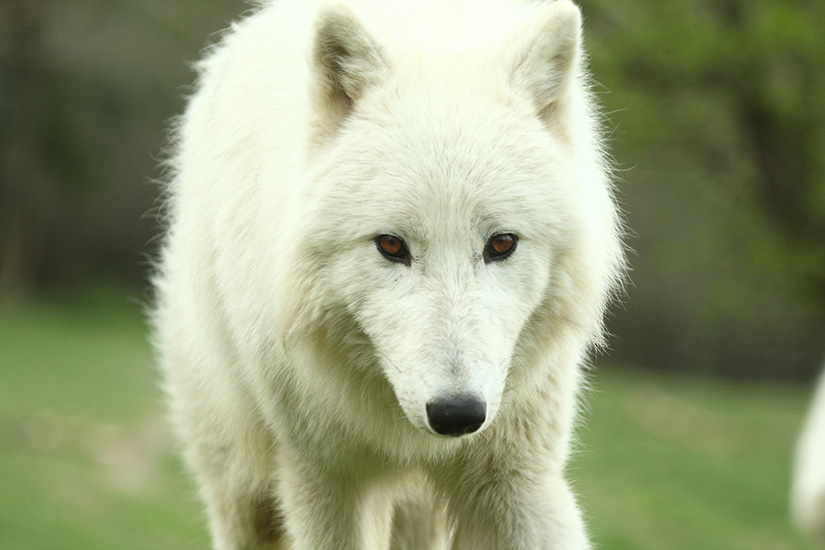
Arctic Wolf in the Tierwelt Herberstein
Arctic Wolf
Canis lupus arctos
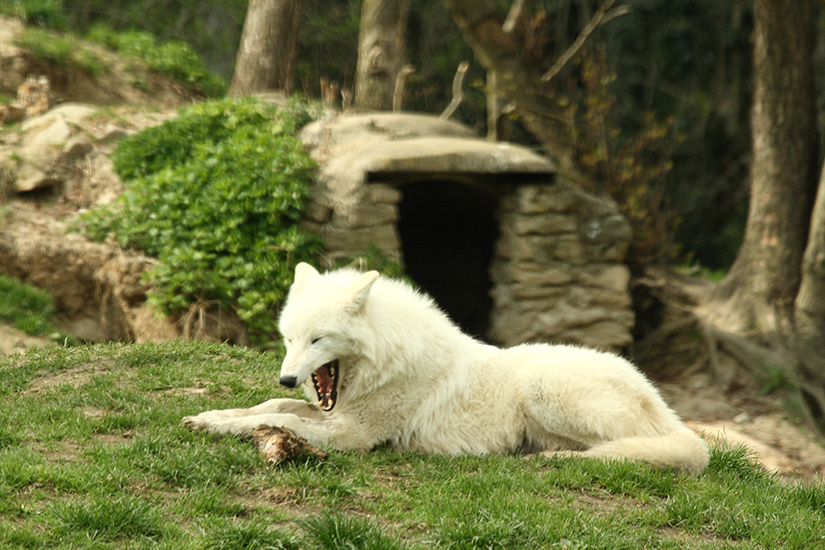
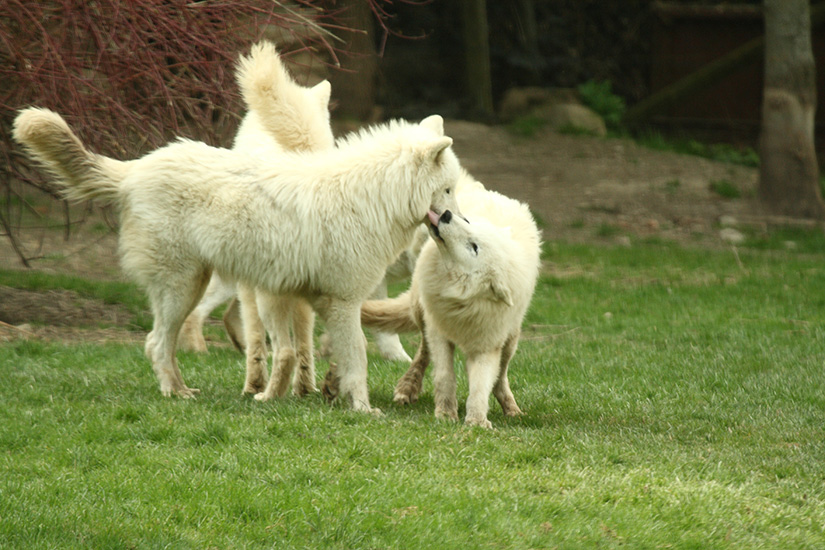
Among male and female polar wolves, there are separate hierarchies that are reestablished each fall through fighting. Only the highest-ranking individuals form the so-called alpha pair, which has pups together. Later in life, lower-ranking wolves display submissiveness toward higher-ranking ones, adopting a crouched posture with their tails tucked between their legs. The lowest-ranking wolf (the omega wolf) experiences the most aggression and must also wait in line at the back when eating.
Did you know?
Wolves may howl at different pitches so that other packs can estimate their numbers. Only large packs howl regularly to announce that a territory is already occupied and has enough members to defend it.
| Order | Predators |
| Family | Dogs |
| Distribution | Canadian Arctic Islands, Greenland |
| Habitat |   |
| Food |  |
| Activity |  |
| Weight | 35–80 kg |
| Size | Body length 100–145 cm, shoulder height 70–80 cm |
| Service life | 10 years (zoo: 20 years) |
| Reproduction | Mating takes place in February. After a gestation period of 2 months, 2–8 cubs are born, and the entire pack cares for them. Up to 75% of the cubs do not survive their first year. |
| Risk |  |
| Enemies | Human |
Corporate Sponsorships

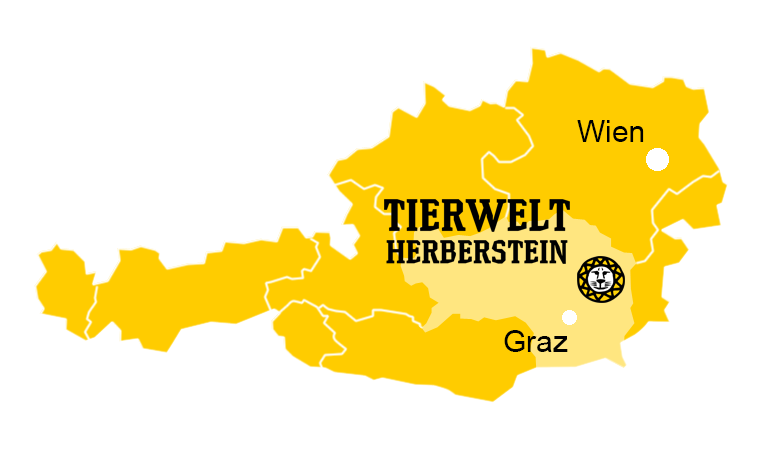
Tierwelt Herberstein
Steirischer Landestiergarten GmbH
A 8223 Stubenberg am See
Buchberg 50
Phone: +43 3176 80777
Fax: +43 3176 80777 20
Email: info (at) tierwelt-herberstein. at