


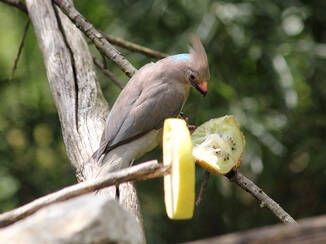





Nandu in the Tierwelt Herberstein
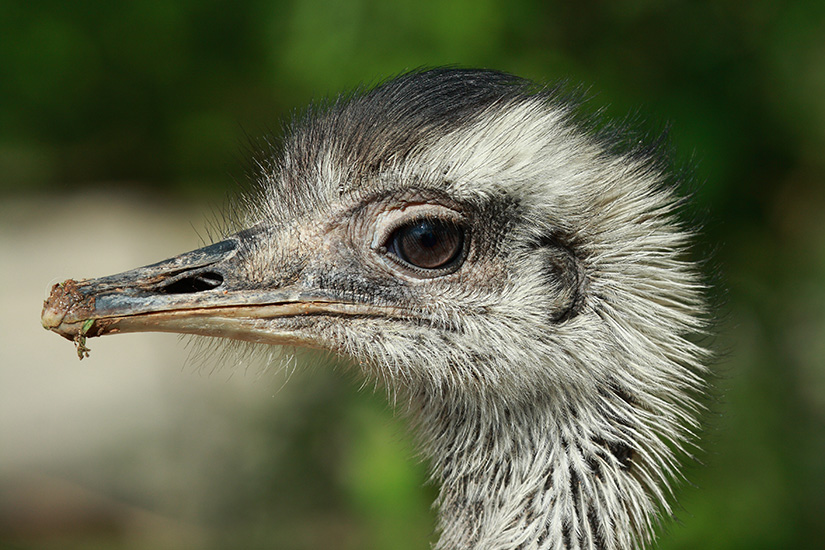
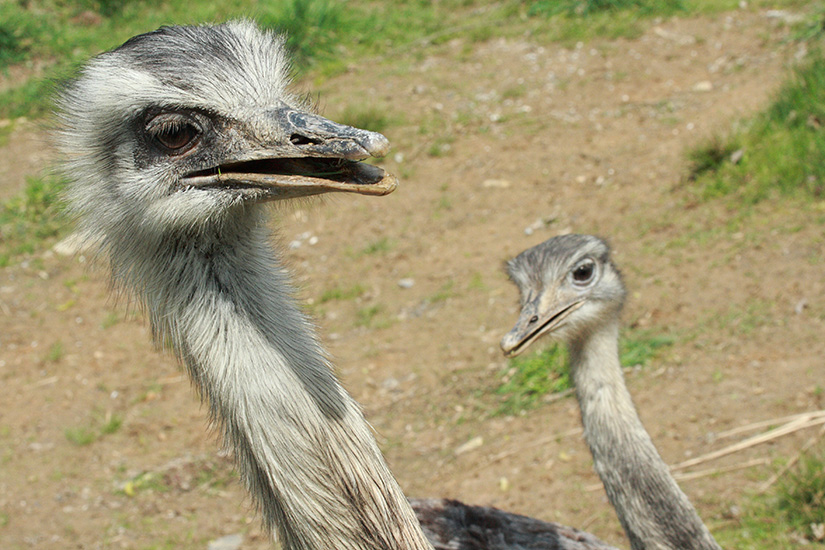
Greater Rhea
Rhea americana
A bird that can't fly
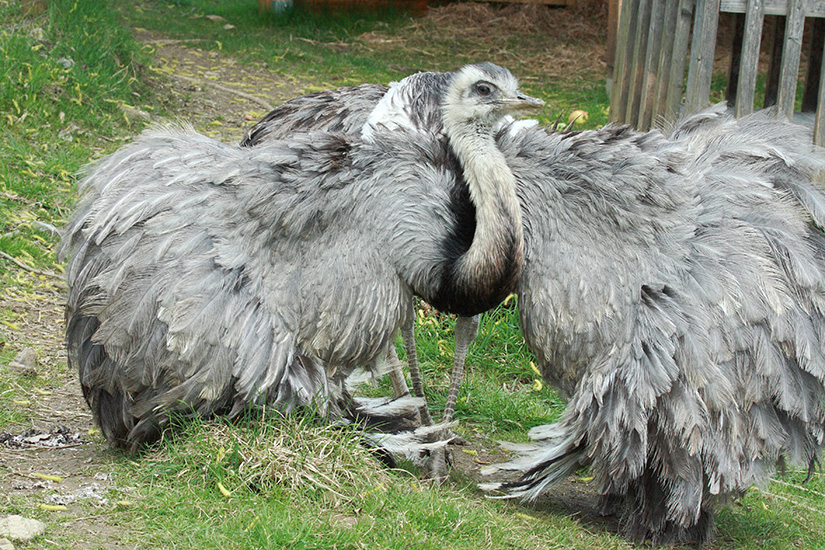
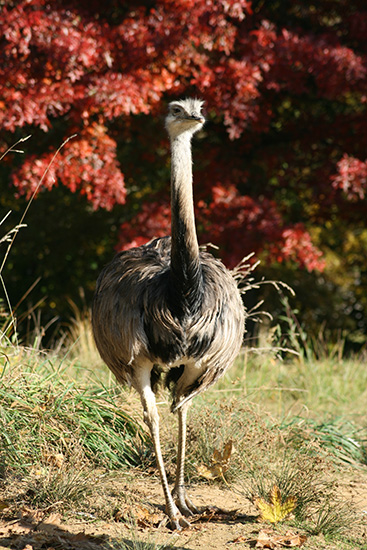
Nandus are the flightless birds of South America. Although nandus have the longest wings of any flightless bird, they are still unable to fly. Their wings are used only for courtship or for steering when they need to make sharp turns during their rapid flight, which can reach speeds of up to 60 km/h. Their large body mass and poorly developed chest muscles prevent them from taking flight.
In addition, the nandu's feathers hang down loosely, like hair. This prevents the formation of an air cushion that would propel the birds skyward. However, they do serve as protection against heat and cold.
Did you know?
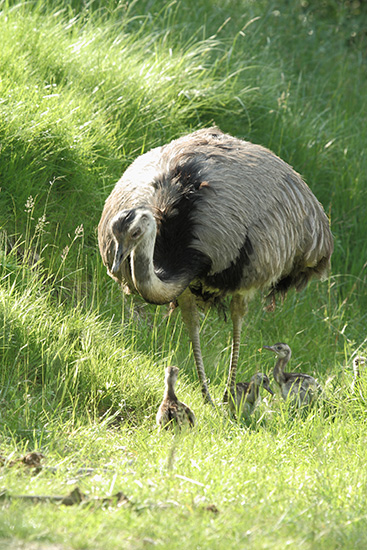
Egalitarianism reigns among the rheas! Several hens lay all their light yellow eggs in a single large nest—which can hold up to 60 eggs. A single rooster eventually incubates them and is solely responsible for raising the chicks.
| Order | Running Birds |
| Family | Nandus |
| Distribution | Eastern South America (eastern Brazil to northeastern Argentina) |
| Habitat |  |
| Food |  |
| Activity |  |
| Weight | 20–25 kg |
| Size | Height: 160 cm |
| Service life | 20–25 years |
| Reproduction | The breeding season runs from September through December. The rooster builds a nest in the ground, hiding it as well as possible, and incubates about 5 eggs for approximately 40 days. The chicks grow quickly and are cared for by the rooster for another 5 weeks before the hens rejoin the flock. |
| Risk |  |
| Enemies | Humans, pumas, jaguars, other predators, and birds of prey for young animals |

Tierwelt Herberstein
Steirischer Landestiergarten GmbH
A 8223 Stubenberg am See
Buchberg 50
Phone: +43 3176 80777
Fax: +43 3176 80777 20
Email: info (at) tierwelt-herberstein. at