


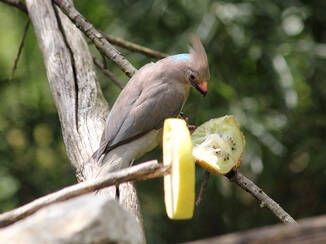





Präriehund in the Tierwelt Herberstein
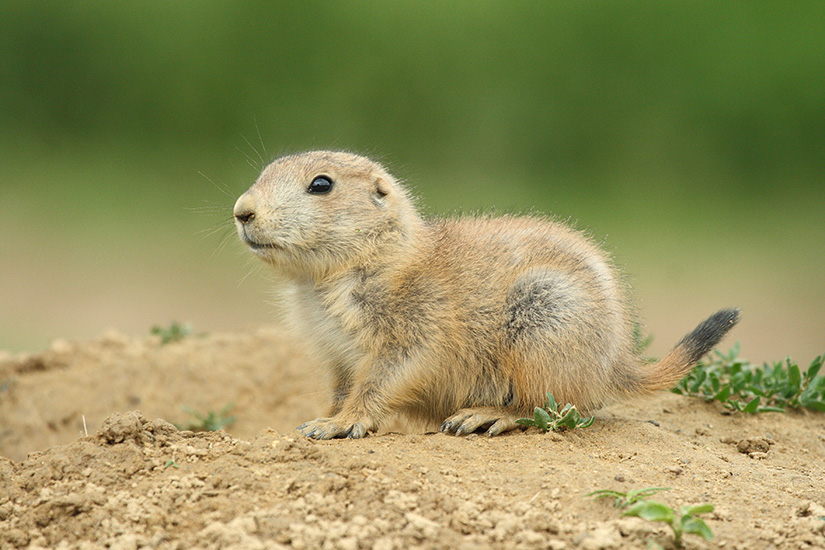
Black-tailed Prairie Dog
Cynomys ludovicianus
Clever Subtenants
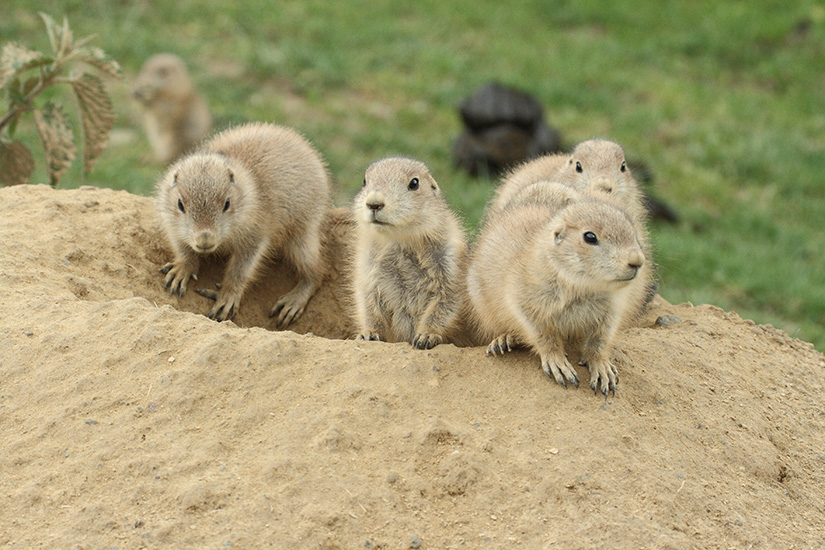
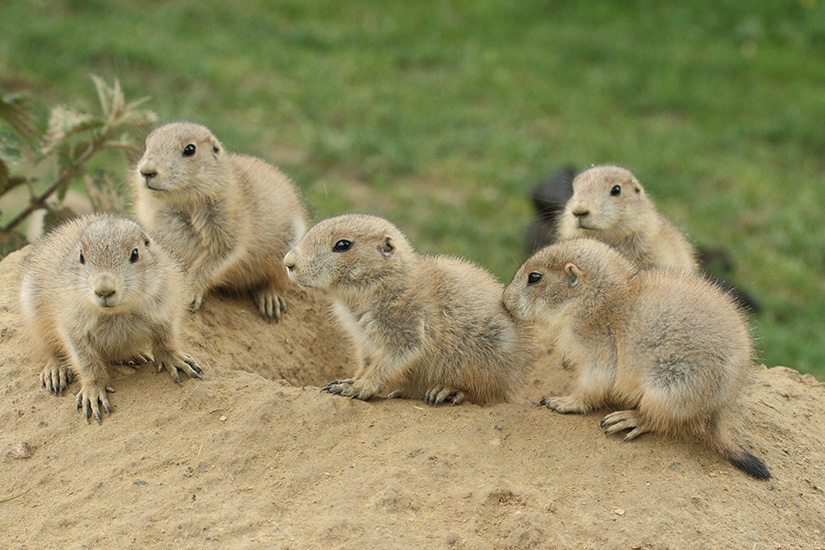
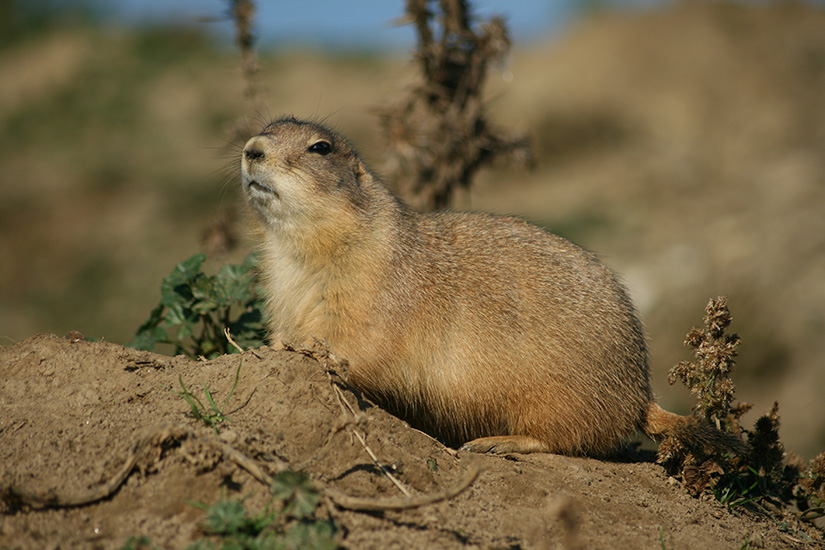
“Look over there, a meerkat!” is something you often hear when eager sentinels sit upright on the rim of the burrows, intensely on the lookout for enemies. However, this is a case of mistaken identity—prairie dogs are North American rodents, not African predators! They belong to the ground squirrel family and are therefore related to the European ground squirrel and the marmot.
These rodents are native to the American shortgrass prairies. At the “ Tierwelt Herberstein ,” however, they pay no heed to continental boundaries. Smart enough to know that ungulates won’t harm them, they have moved out of their original enclosure and are enjoying the amenities in the communal enclosures shared by Asian antelopes and deer, as well as mountain zebras and wildebeests.
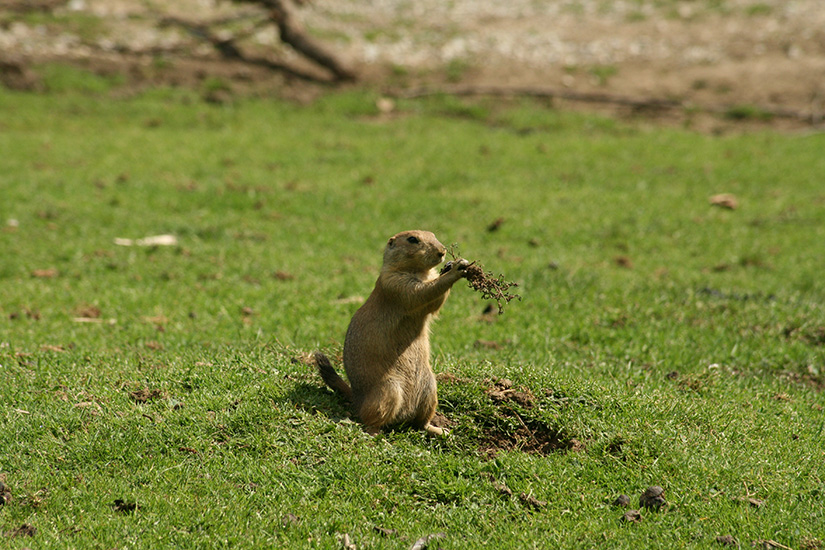
Since crested porcupines prefer very short grass to maintain a better view, they benefit from their grass-eating roommates. As the days grow shorter, you can watch them busily preparing for winter.
Here, too, they help themselves generously to their landlords' property. With their mouths stuffed full of stolen hay or feathers dropped by ducks and geese, they set about padding their nests.
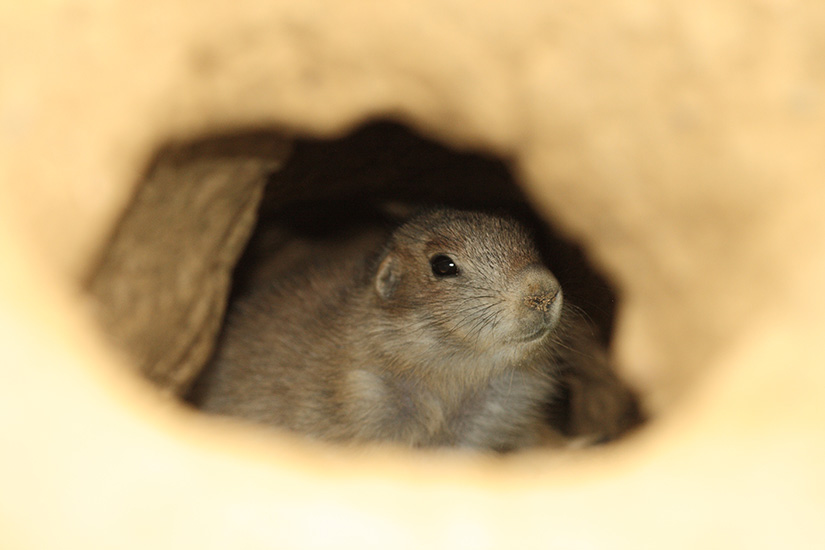
Black-tailed prairie dogs only rest during particularly harsh weather in winter; they do not go into a deep hibernation. They wake up regularly to eat and occasionally stick their heads out of their burrows.
Masters of Urban Planning
Given the large number of burrows in a colony, it is often referred to as a prairie dog town. It can have several thousand, if not millions, of inhabitants. Within the individual burrows, however, life is a closed community.
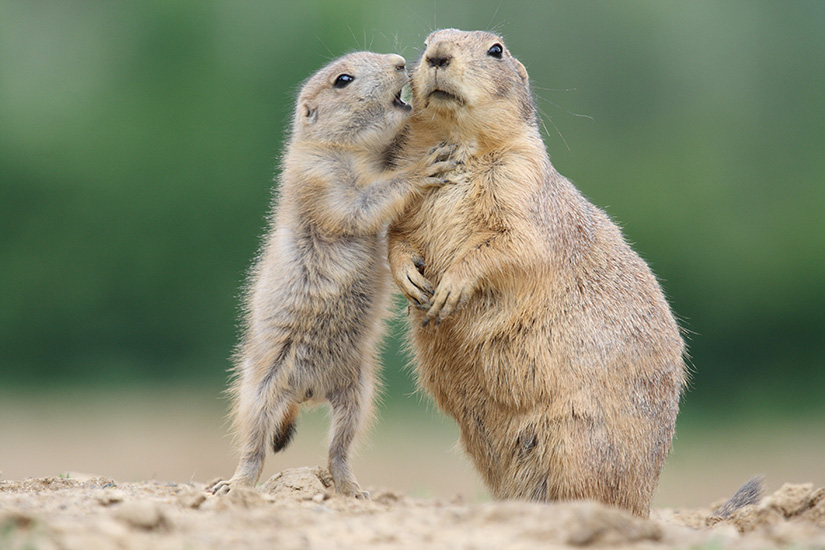
Only members of their own family—which consists of several females, one or two territorial males, and their offspring—are allowed entry. Young males leave the family at the age of 2, while the females are allowed to stay.
Did you know?
Ground squirrels got the first part of their name, “prairie dog,” because of their habitat, and the second part because of the warning calls they make when danger approaches.
| Order | Rodents |
| Family | Croissant |
| Distribution | Southern Canada to Northern Mexico |
| Habitat |    |
| Food |  |
| Activity |  |
| Weight | 0.7–1.7 kg |
| Size | Body length 35–42 cm |
| Service life | 8 years |
| Reproduction | After a gestation period of 1 month, 1–6 pups are born; they open their eyes after 35 days. Prairie dogs remain with their parents for about 2 years and reach sexual maturity at 3 years of age. |
| Risk |  |
| Enemies | Birds of prey, black-footed ferrets, rattlesnakes, humans |
Prairie dogs

Tierwelt Herberstein
Steirischer Landestiergarten GmbH
A 8223 Stubenberg am See
Buchberg 50
Phone: +43 3176 80777
Fax: +43 3176 80777 20
Email: info (at) tierwelt-herberstein. at