







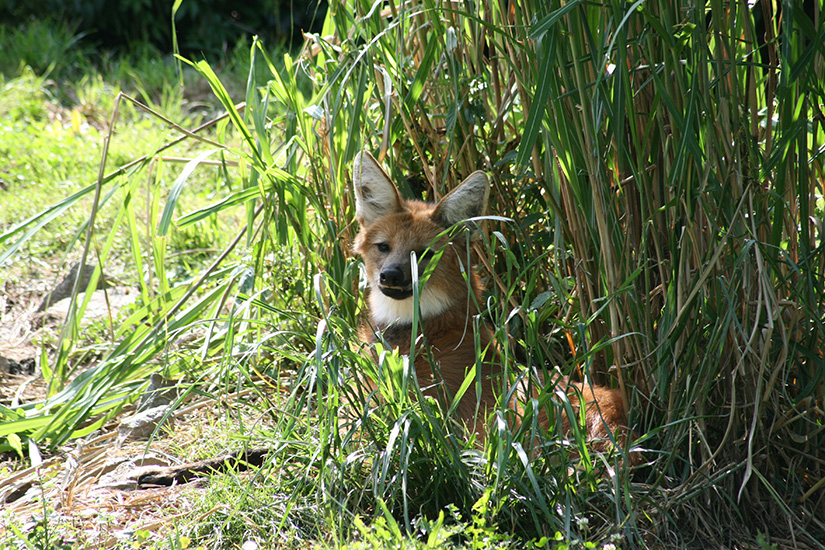
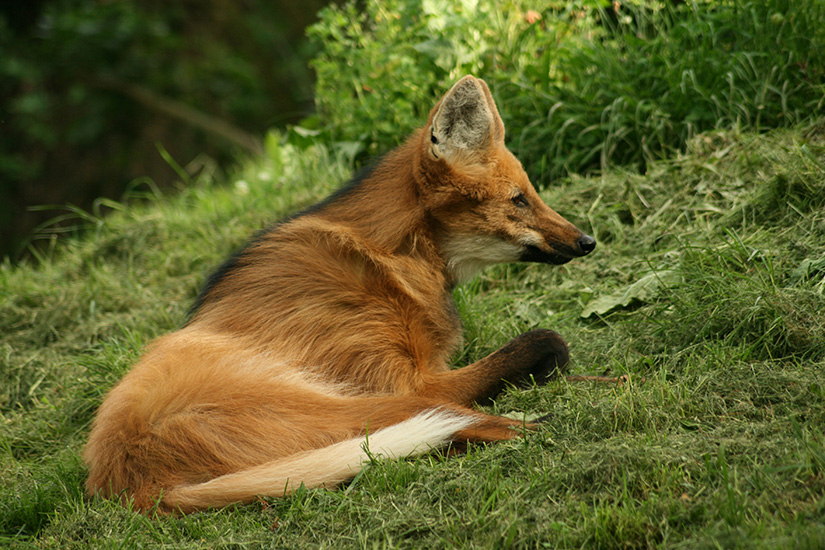
Maned Wolf in the Tierwelt Herberstein
Maned Wolf
Chrysocyon brachyurus
A wolf who breaks character
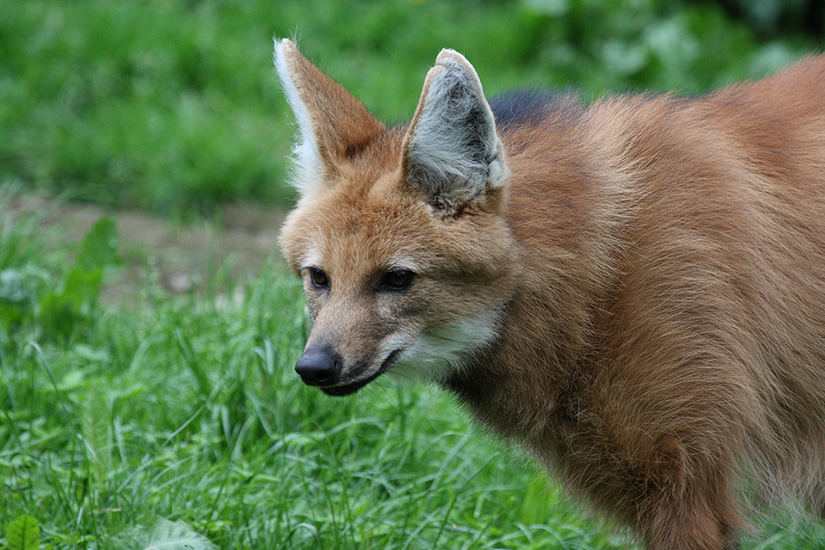
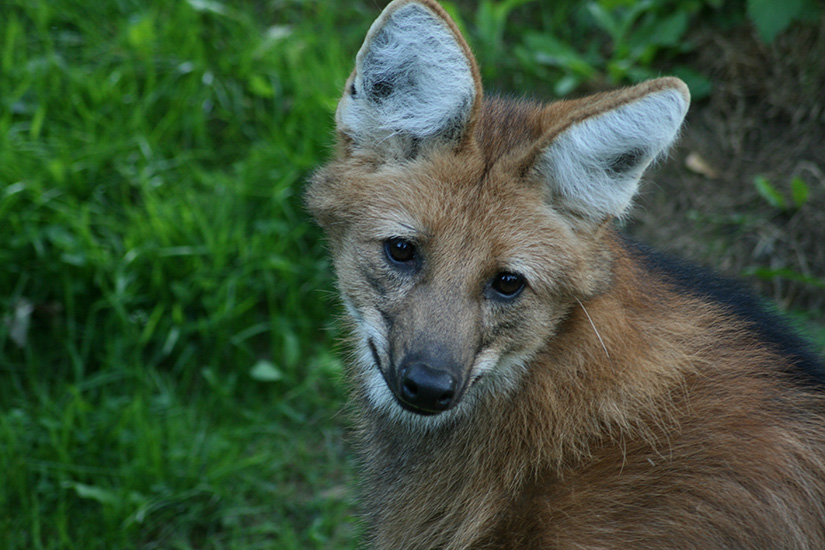
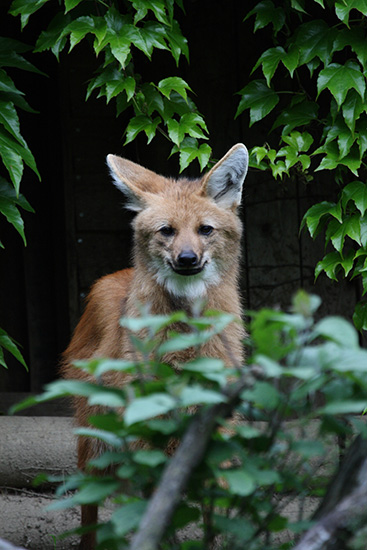
Despite its name, the maned wolf is not a true member of the wolf family. It is a solitary animal, nocturnal, and half of its diet consists of fruit. Its Paraguayan name, “aguara guazu,” which translates to “big fox,” is actually a bit closer to the truth. Not only does its appearance resemble that of a fox on stilts, but its hunting style is also very similar to that of a fox.
With a little luck, during the full moon tour, you can watch our maned wolves as they set out in quick strides, their ears pricked up in alertness, in search of food. If you don’t see them, you’ll probably at least catch a whiff of their strong scent marks from a distance.
Did you know?
A maned wolf walks like a camel—in a pas de chasse! In this gait, the front and hind legs on the same side of its body move forward at the same time, resulting in a rocking gait.
| Order | Predators |
| Family | Dogs |
| Distribution | Central and South America (Brazil, Bolivia, Argentina, Paraguay, Uruguay) |
| Habitat |     |
| Food |  |
| Activity |   |
| Weight | 20–25 kg |
| Size | Body length 105–130 cm, shoulder height 80–90 cm |
| Service life | Zoo: Ages 12–15 |
| Reproduction | Maned wolves live in pairs during the breeding season. After a gestation period of 2 months, 2 to 5 pups are born, which are raised by both parents. |
| Risk |  |
| Enemies | Human |

Tierwelt Herberstein
Steirischer Landestiergarten GmbH
A 8223 Stubenberg am See
Buchberg 50
Phone: +43 3176 80777
Fax: +43 3176 80777 20
Email: info (at) tierwelt-herberstein. at