


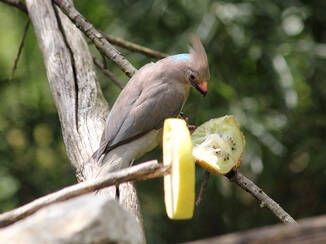





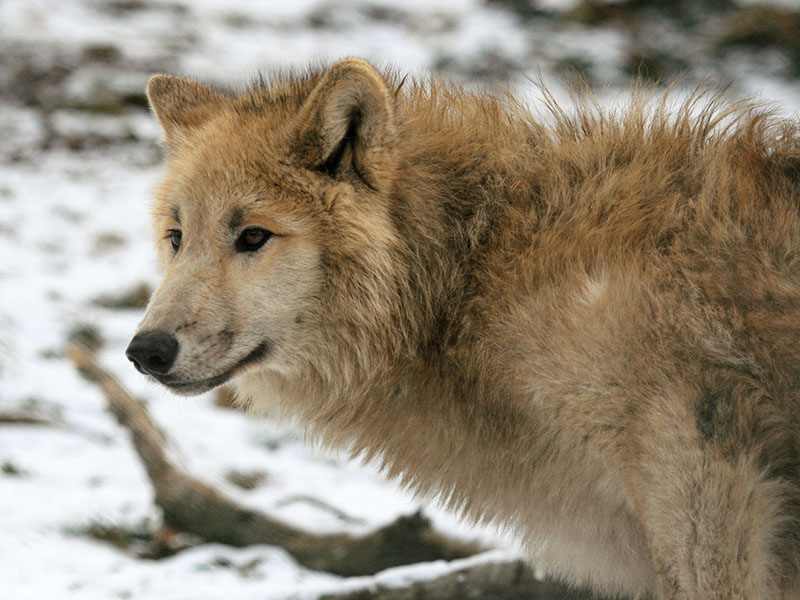
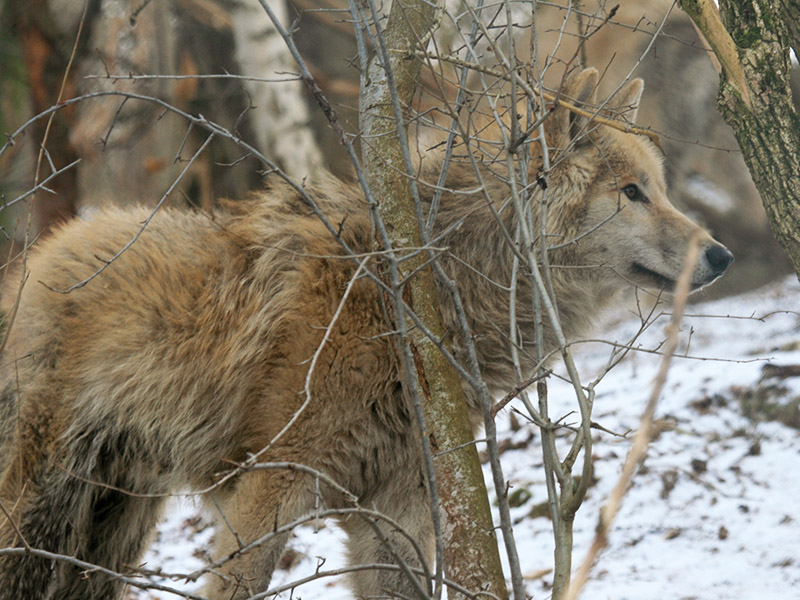
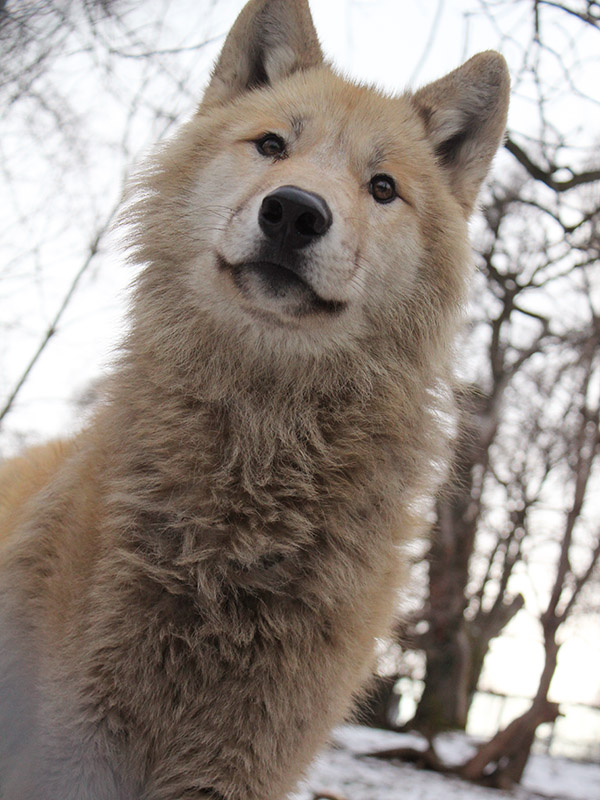
Hudson Bay Wolf in the Tierwelt Herberstein
Hudson Bay Wolf
Canis lupus hudsonicus
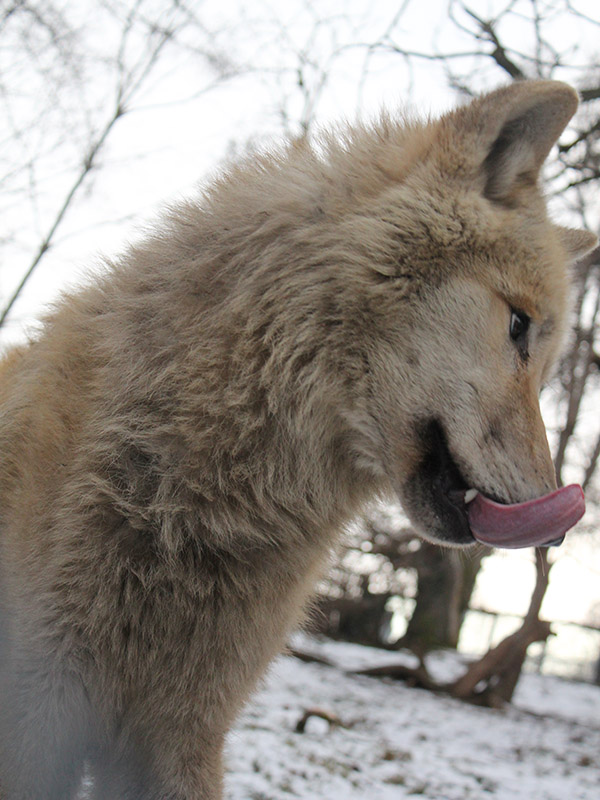
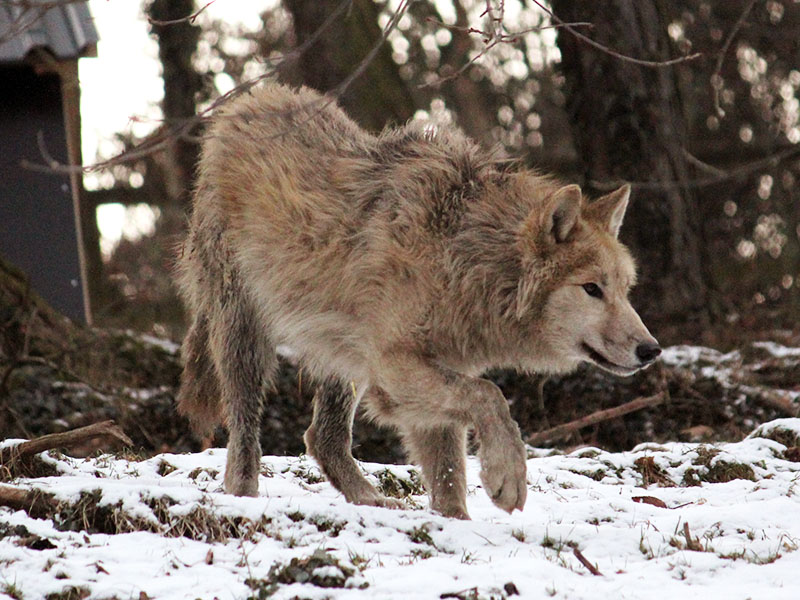
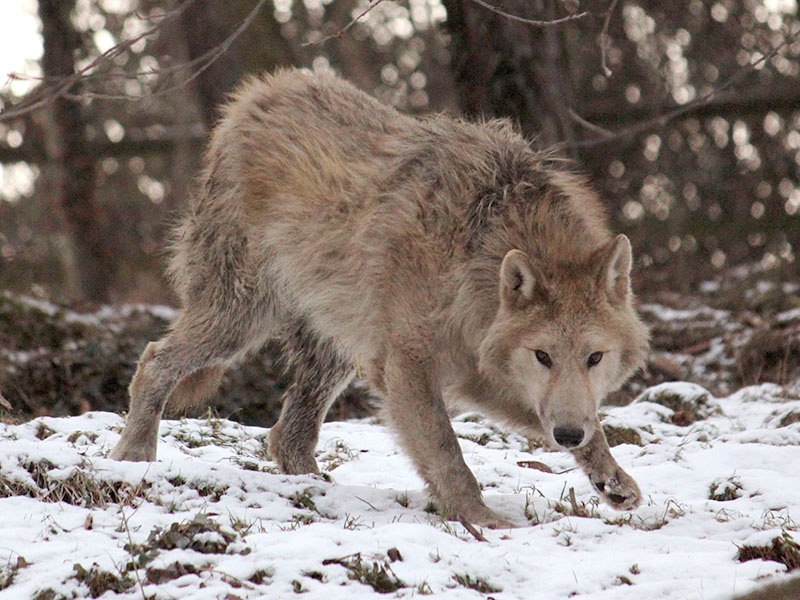
The long-legged Hudson Bay wolf is sometimes also referred to as the tundra wolf. Although it resembles polar wolves in appearance, it and its conspecifics constitute a distinct subspecies. These light gray to nearly white animals live in small packs, with pack size depending on the availability of prey. Their main food source is the North American reindeer, or caribou, which forms huge herds seasonally. The wolves follow these herds on their annual fall migrations to warmer regions.
Did you know?
On full moon nights, wolves especially love to howl. The reason is simple: it’s so bright even at night that the wolves can go hunting. So the howling serves as a way to coordinate and get in the mood for hunting together!
| Order | Predators |
| Family | Dogs |
| Distribution | Canada west of Hudson Bay (Manitoba, Nunavut, Northwest Territories) |
| Habitat |   |
| Food |  |
| Activity |  |
| Weight | 40–70 kg |
| Size | Body length 120–140 cm, shoulder height 70–90 cm |
| Service life | 10 years (zoo: 20 years) |
| Reproduction | After a gestation period of 2 months, 2–6 young are born. |
| Risk | The conservation status of Hudson Bay wolves has not been determined. |
| Enemies | Human |
Corporate Sponsorships
DIANA Pharmacy
Mag. pharm. Dr. Gerda
8402 Werndorf, Bundesstrasse 114
https://www.diana-apotheke.at/
03135 / 51992

Tierwelt Herberstein
Steirischer Landestiergarten GmbH
A 8223 Stubenberg am See
Buchberg 50
Phone: +43 3176 80777
Fax: +43 3176 80777 20
Email: info (at) tierwelt-herberstein. at