







Puma in the Tierwelt Herberstein
Puma, Cougar
Puma concolor
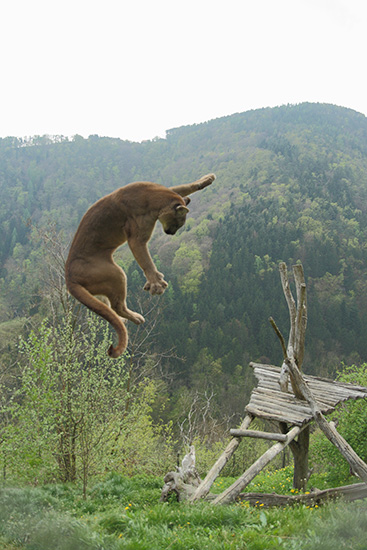
The Elegant Master Jumper
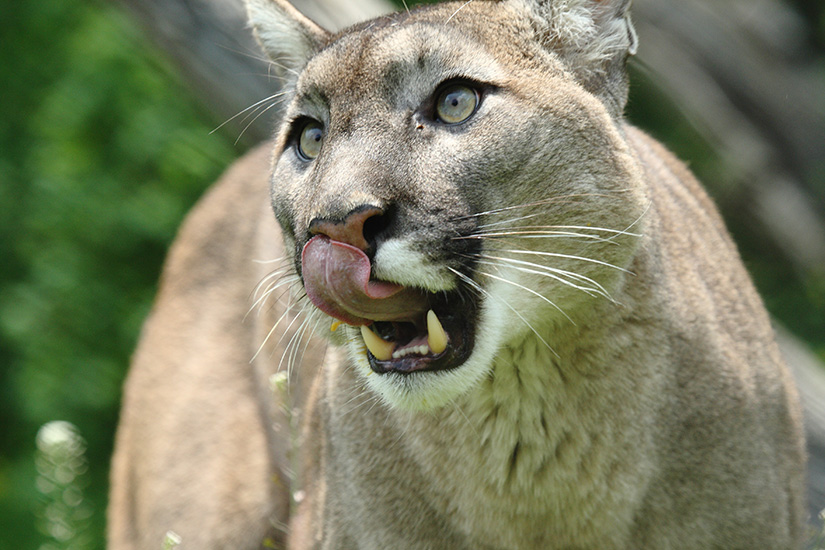
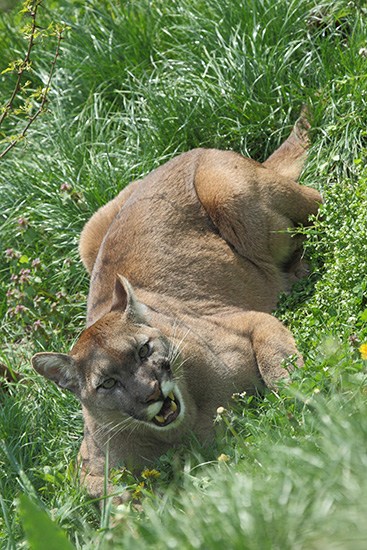
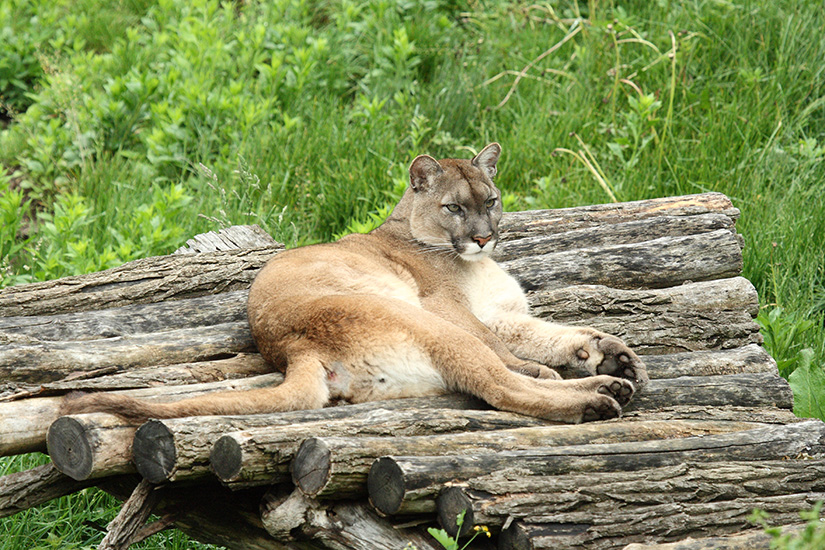
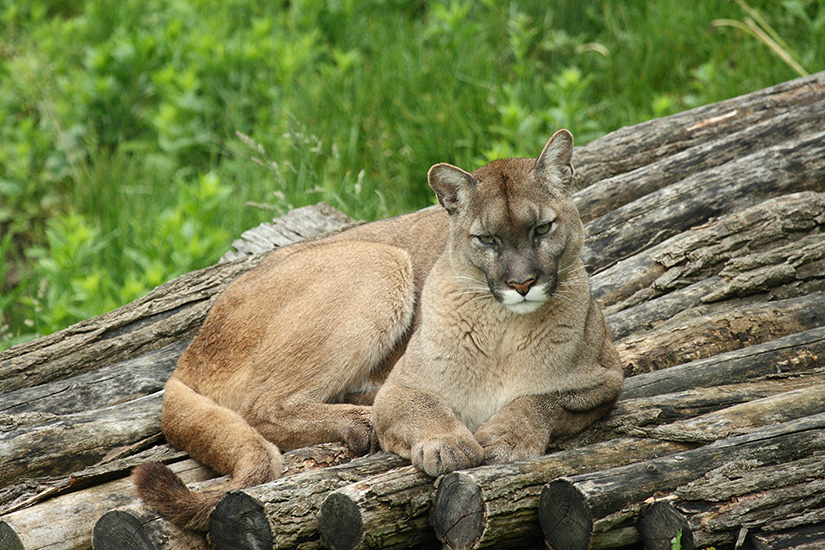
The puma is a true all-rounder and is therefore less endangered than many other felines. Although it prefers mountain forests (which is why it’s also called the “mountain lion”), it can be found in a wide range of habitats, from semi-deserts to rainforests.
It eats everything that catches its sharp eye, from mice to wapiti deer (though it spurns reptiles and carrion). At the “ Tierwelt Herberstein ,” visitors can marvel live at the record-holding leaper’s typical hunting strategy when its prey is presented dangling from a fishing line three meters above the ground. He leaps purposefully toward the prey and then, through skillful use of his long tail, lands safely back on the ground with all four paws.
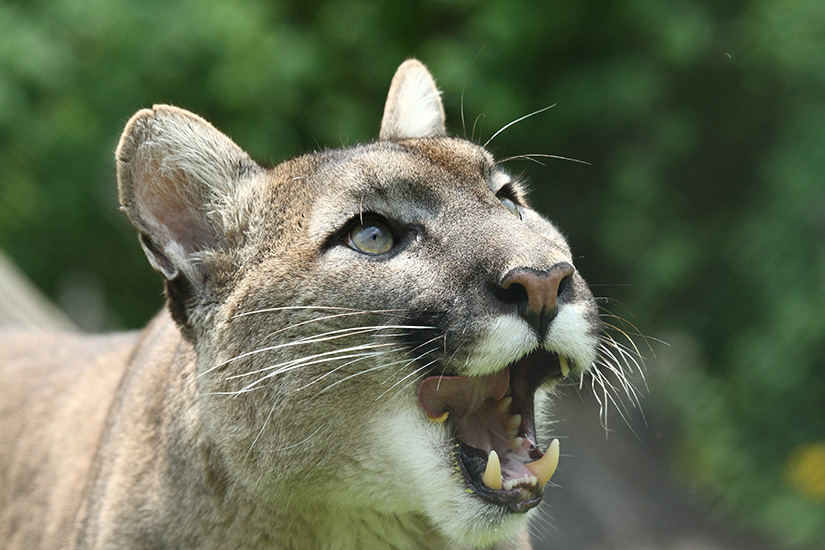
This precise jumping is made possible by the extensive overlap of the visual fields of both eyes, since they are directed forward. Only in this way is three-dimensional vision—and thus an accurate estimation of distances—possible. In animals that are prone to fleeing, the eyes are located on the sides of the head, which gives them an almost panoramic view.
Did you know?
The puma is the largest of the small cats. What characterizes this group is not their size, but the fact that, because their hyoid bone is completely ossified, they can purr but cannot roar.
| Order | Predators |
| Family | Cats |
| Distribution | Southwestern Canada through the western United States, Central America, and South America (except western Peru and eastern Argentina) |
| Habitat |     |
| Food |  |
| Activity |  |
| Weight | Men: 36–110 kg, Women: 30–65 kg |
| Size | Body length 105–180 cm |
| Service life | 18 years (zoo: more than 20 years) |
| Reproduction | Mating is not tied to any specific season. After a gestation period of 3 months, 3 to 4 young are usually born in a moss-lined den, where they are fed exclusively on their mother's milk for 5 weeks. |
| Risk |  |
| Enemies | Human |
Corporate Sponsorships


Tierwelt Herberstein
Steirischer Landestiergarten GmbH
A 8223 Stubenberg am See
Buchberg 50
Phone: +43 3176 80777
Fax: +43 3176 80777 20
Email: info (at) tierwelt-herberstein. at