







Liszt's monkey
Cotton-top Tamarin
Saguinus oedipus
A little monkey the size of a squirrel
If you happen to be near our Liszt monkeys, you should keep your ears open! What you might think is birdsong could actually be the calls of these little monkeys. When the group is out in the trees searching for insects or other treats, the members constantly keep each other updated on their whereabouts. Once you spot one, the next one is sure to be nearby.
Nothing about these lively creatures is calm or deliberate. They leap nimbly and deftly from branch to branch—a fall is highly unlikely. That’s because these squirrel-sized primates belong to the marmoset family, the only monkeys that have claws instead of fingernails. Only their big toe has a broad nail. Their sharp claws give them a particularly good grip. They also have a fairly long tail that serves as a balancing pole.
Babysitter Wanted
List monkeys are usually found in groups consisting of several males and females. However, an adult female typically has only one offspring with her mate. She actively and quite aggressively prevents other females from mating as well.
The stress this causes—and likely also the pheromones released by the dominant female—further prevent the other females from even becoming fertile. But what is the point of all this? Liszt’s macaque mothers simply need the help of other group members to raise their offspring.
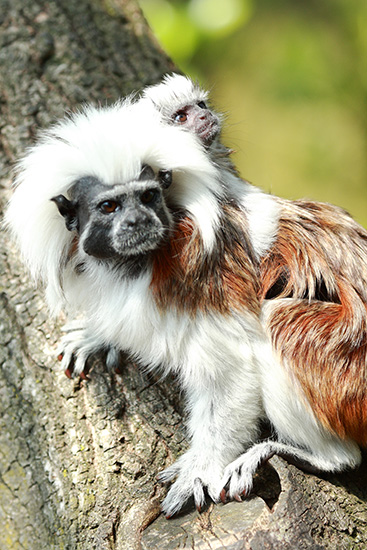
A baby Liszt’s monkey already weighs 20% of its mother’s body weight at birth. That’s quite a lot, considering it has to be carried constantly during the early days. One alone would already be heavy enough. But there’s an additional factor: Liszt’s monkeys usually give birth to twins.
Fathers, uncles, aunts, cousins—and even non-relatives—all pitch in to help with babysitting. Often, the babies are passed from one person to another, and are brought to their mother only to be breastfed. What a relief!
Did you know?
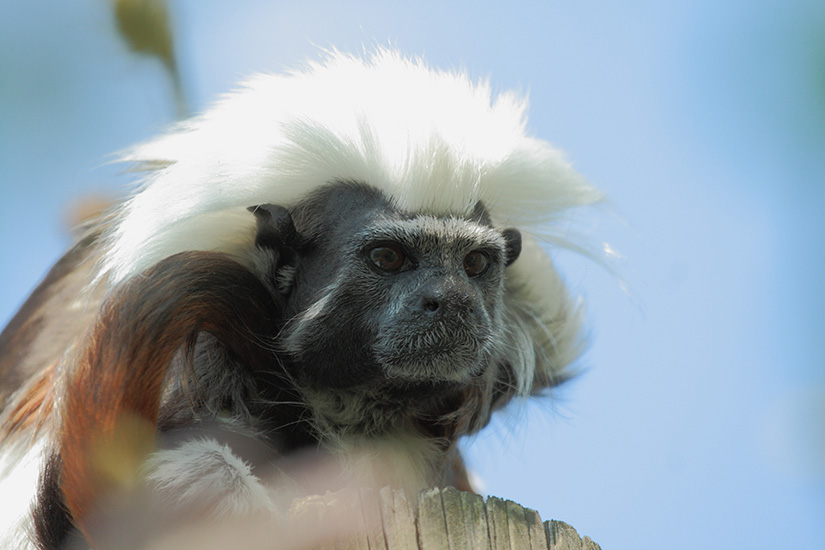
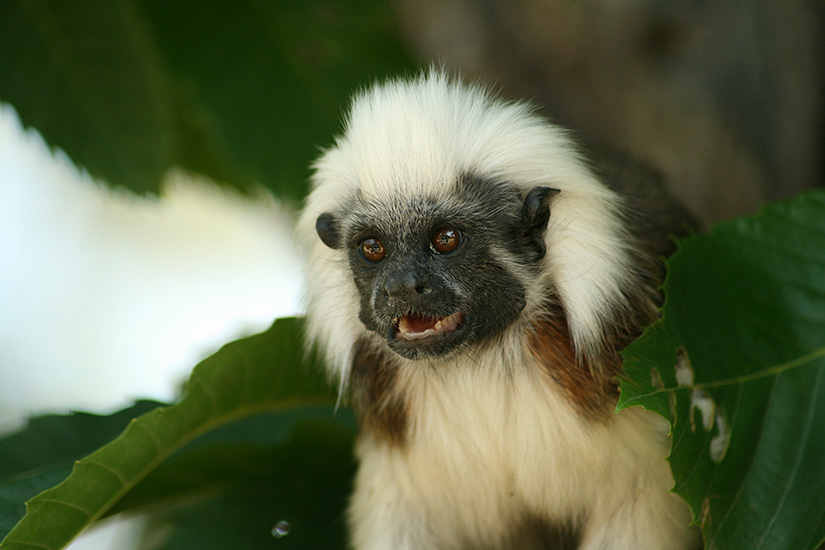
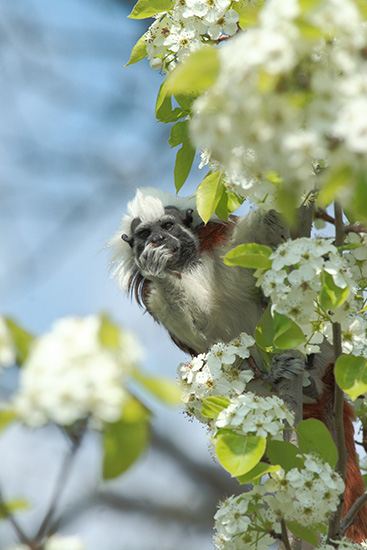
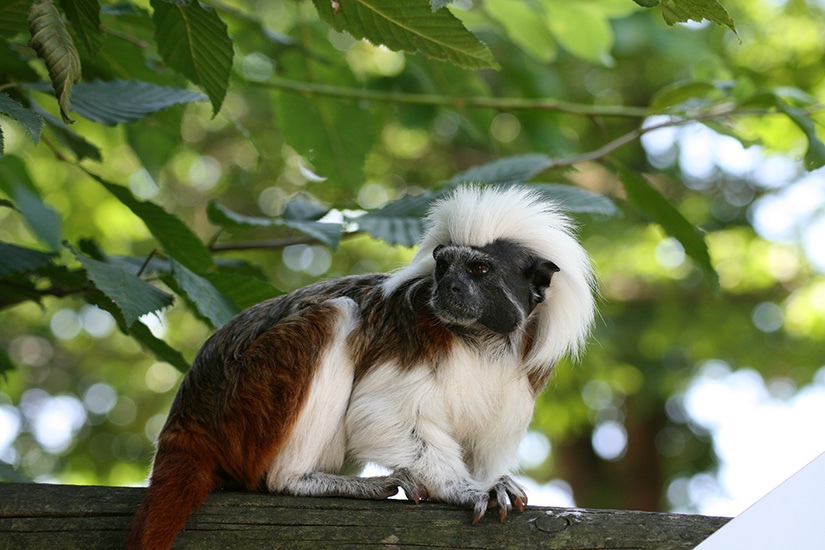
These marmosets got the name “Listzaffen” because of their hairstyle, which resembles that of the Hungarian composer Ferenc (Franz) Liszt. In English, they’re called “cotton-top tamarins”—a very fitting name!
| Order | Monkeys |
| Family | Clawed monkeys |
| Distribution | Northwestern Colombia |
| Habitat |   |
| Food |  |
| Activity |  |
| Weight | 350–450 g |
| Size | Body length 21–26 cm, tail length 33–41 cm |
| Service life | over 10 years (zoo: over 20 years) |
| Reproduction | After a gestation period of 4.5 months, 1 to 3 young are born, though usually twins. |
| Risk |  |
| Enemies | Various cats, mustelids, birds of prey |

Tierwelt Herberstein
Steirischer Landestiergarten GmbH
A 8223 Stubenberg am See
Buchberg 50
Phone: +43 3176 80777
Fax: +43 3176 80777 20
Email: info (at) tierwelt-herberstein. at