


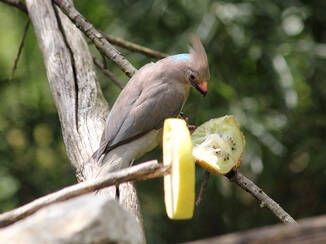





Two-toed sloth in the Tierwelt Herberstein
Two-toed Sloth
Choloepus didactylus
The name says it all
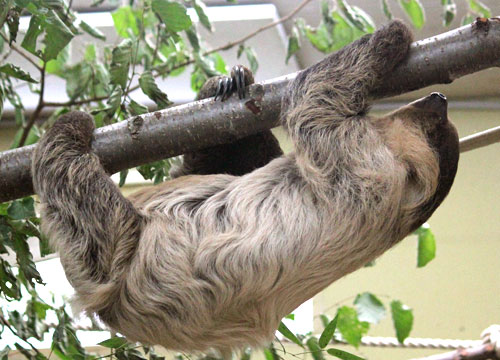
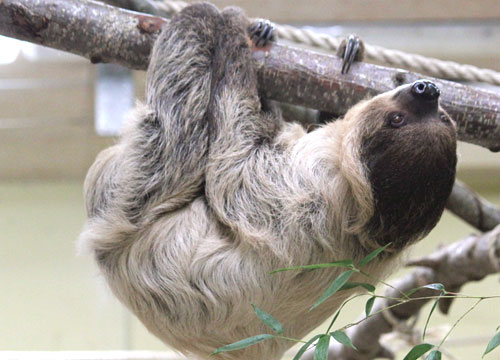
High above the heads of its housemates, a strange animal is frolicking in the South America House—although “frolicking” might be a bit of an exaggeration, since almost nothing happens quickly with a two-toed sloth!
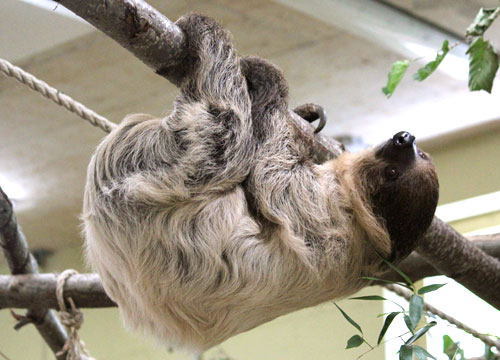
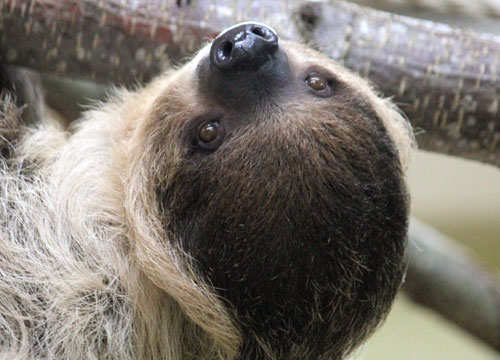
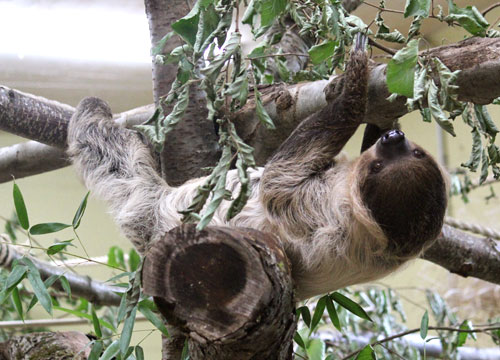
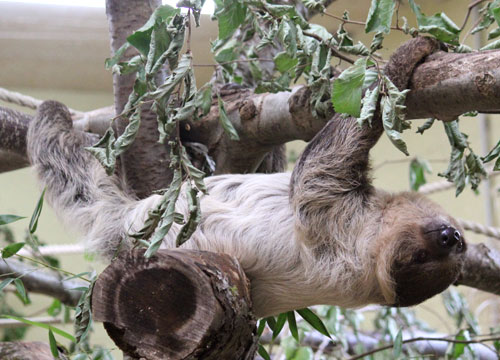
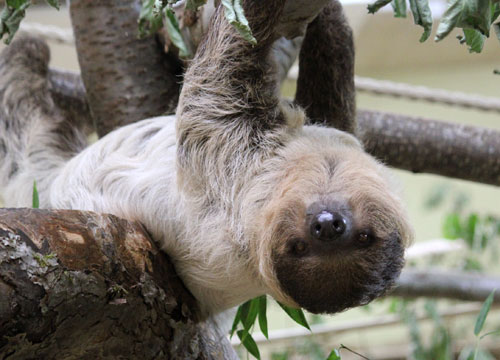
It spends most of the day hanging upside down from a rope or in one of the sleeping boxes on the walls. It holds on with its long, curved claws. During its prolonged sleep—which can last up to 20 hours—it would naturally become easy prey for predators in the wild if it didn’t have a trick up its sleeve: blue-green algae grow in its fur, making the sloth look like a large clump of lichen and thus rendering it unappealing as prey.
A sloth rarely ventures to the ground—usually only to defecate. However, in areas where entire forests have been cleared and it is no longer possible to make one’s way from one tree to the next through the branches, the sloth is forced to cover some distances on the ground. This, however, presents a pitiful sight, as it moves extremely awkwardly on its wrists and forearms.
Did you know?
Unlike other mammals, the sloth does not have its tail on its back but on its belly, which helps rainwater run off when it is hanging upside down from a branch.
| Order | Toothless |
| Family | Two-toed sloths |
| Distribution | Northern South America to Brazil, north of the Amazon River |
| Habitat |  |
| Food |  |
| Activity |   |
| Weight | 4–10 kg |
| Size | Body length: 50–85 cm |
| Service life | up to 40 years old |
| Reproduction | Females reach sexual maturity at about 3 years of age, while males do not reach sexual maturity until 4–5 years of age. Mating occurs year-round; after a gestation period of 7–10 months (dormancy), the female gives birth to a single young. The young actively climbs onto its mother’s belly, where it spends the next 9–10 months. It is weaned at about 5 months of age. It reaches full maturity at about 2.5 years of age. |
| Risk |  |
| Enemies | Jaguar, coati, anaconda, harpy eagle, human |
Corporate Sponsorships


Tierwelt Herberstein
Steirischer Landestiergarten GmbH
A 8223 Stubenberg am See
Buchberg 50
Phone: +43 3176 80777
Fax: +43 3176 80777 20
Email: info (at) tierwelt-herberstein. at