







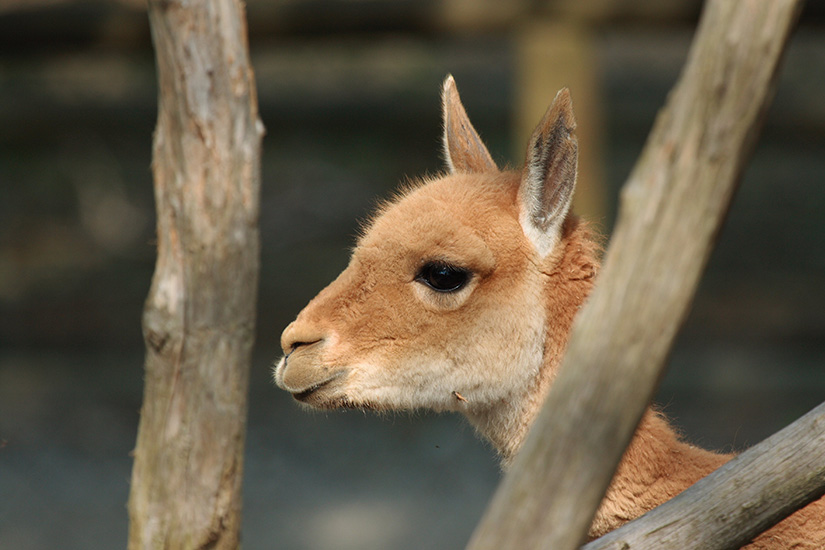
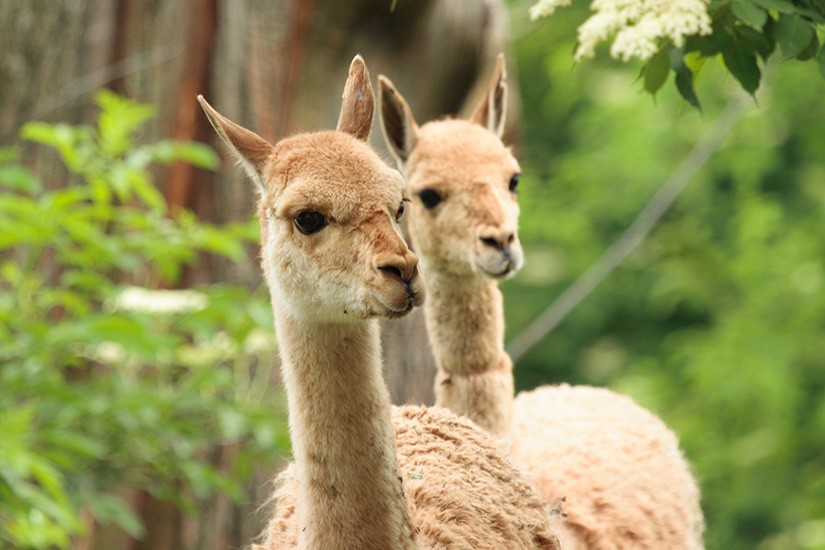
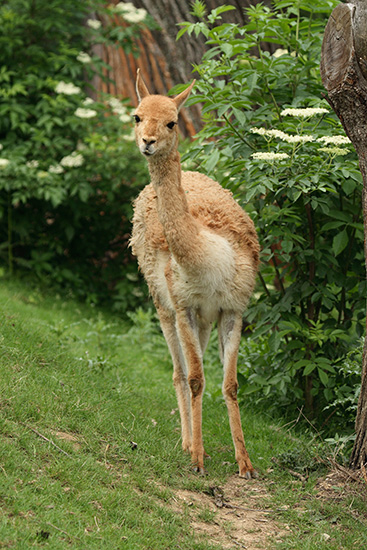
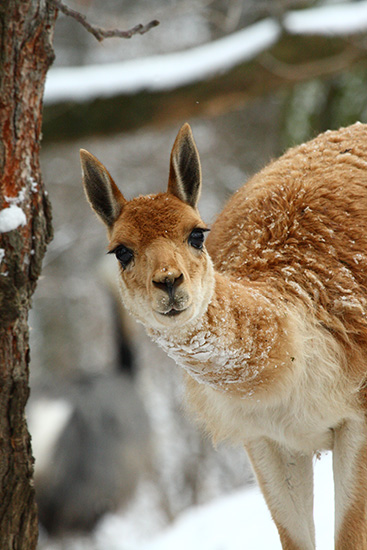
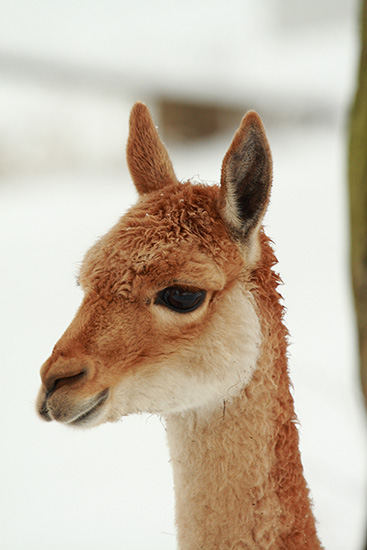
Vicuña in the Tierwelt Herberstein
Vicugna
Vicugna vicugna
A Real Camel, Even Without Humps
When you think of a camel, images of caravans of two-humped dromedaries immediately come to mind. But who would have thought that the vicuñas—which have no humps at all—are actually the camels of South America? The smallest members of the camel family inhabit the Puna highlands of the Andes and, despite the harsh conditions caused by the thin air at high altitudes, are extremely resilient. Compared to an animal of the same size living in the lowlands, they have a heart twice as large and a high number of red blood cells, which are also specially shaped to improve oxygen transport.
Did you know?
Like all camels, the vicuña only spits when it feels threatened and is about to attack. However, it doesn’t spit conventional saliva, but rather partially digested food. So while it smells very bad, it otherwise has no consequences for the person it hits.
| Order | Pair-hoofed animals |
| Family | Camels |
| Distribution | Western South America: The Andes (from Peru to northern Argentina) |
| Habitat |   |
| Food |  |
| Activity |  |
| Weight | 45–55 kg |
| Size | Body length 125–190 cm, shoulder height 75–95 cm |
| Service life | 15–20 years (zoo: 25 years) |
| Reproduction | After a gestation period of 11 months, a young animal is usually born in February or March and is nursed for 6–8 months. |
| Risk |  |
| Enemies | Puma, human, (Magellanic fox) |

Tierwelt Herberstein
Steirischer Landestiergarten GmbH
A 8223 Stubenberg am See
Buchberg 50
Phone: +43 3176 80777
Fax: +43 3176 80777 20
Email: info (at) tierwelt-herberstein. at