





Mara in the Tierwelt Herberstein
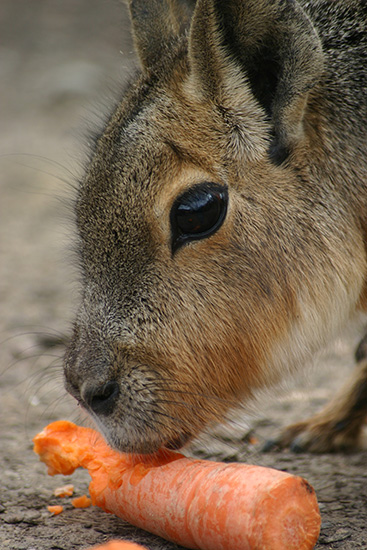
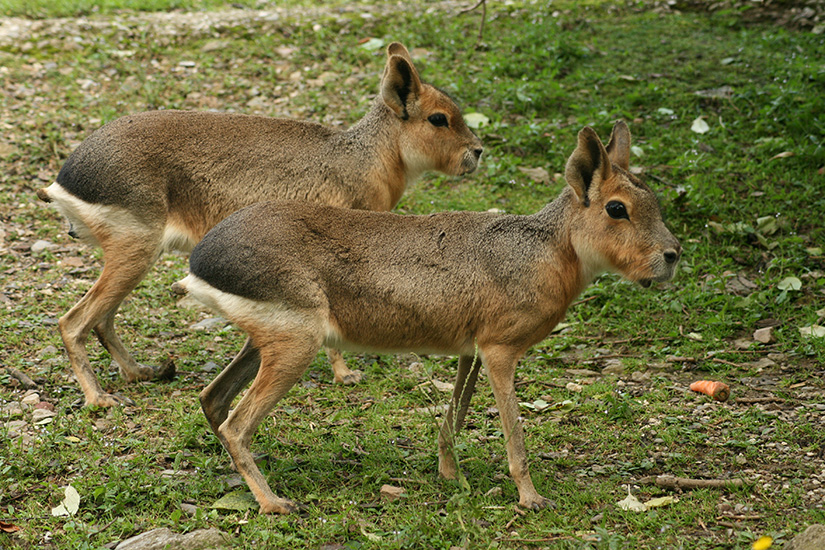
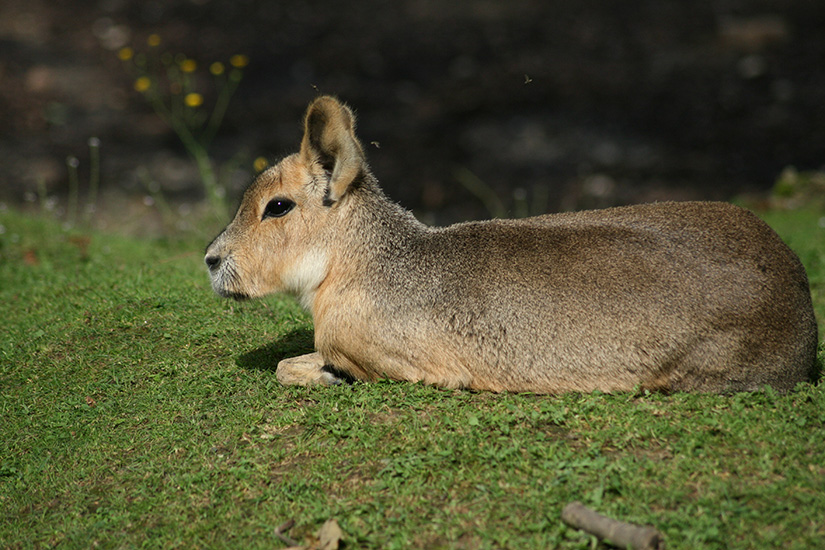
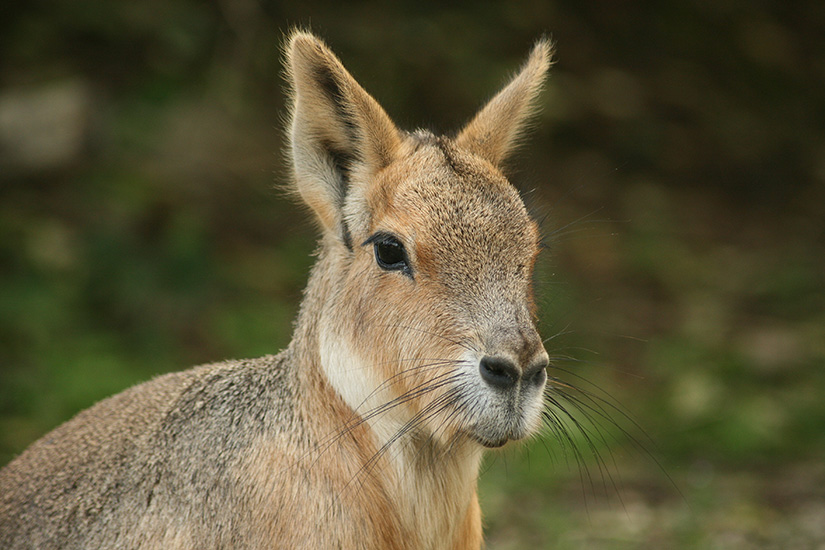
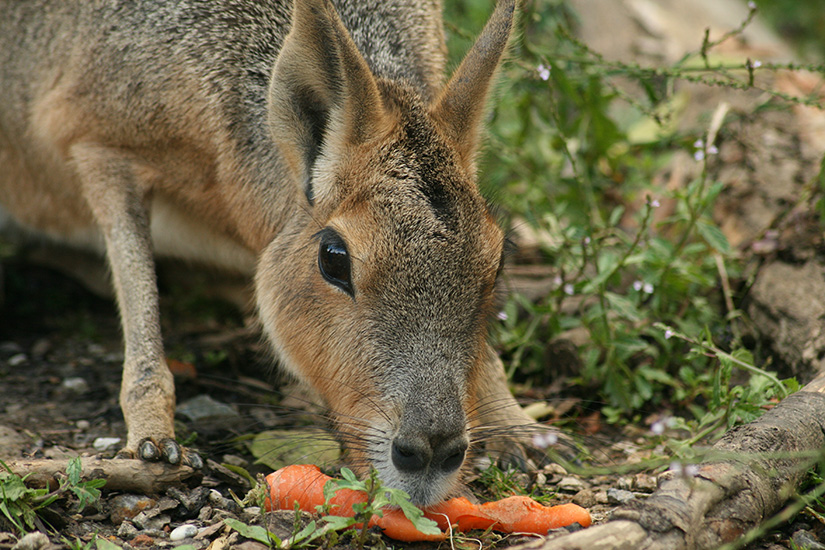
Mara / Patagonian Cavy
Dolichotis patagonum
Trust is good, but control is better!
While other rodents aren't particularly faithful, the mara is monogamous. If a compatible pair finds each other in the Pampa, the grasslands of Patagonia, they stay together for life.
The female, however, is followed everywhere she goes by her mate. The reasons for this male control are not based on unfounded jealousy. Since the female is fertile only twice a year for a few hours at a time, he simply cannot afford to have another male around during that time.
Did you know?
Although maras form monogamous pairs, several of them share a communal burrow. While each mother takes care to nurse only her own young by recognizing them by scent, every now and then a foreign young one manages to get a sip as well.
| Order | Rodents |
| Family | Guinea pigs |
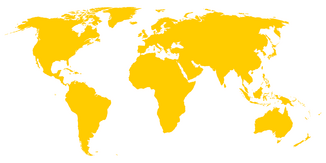
| Distribution | Central and Southern Argentina |
| Habitat |  |
| Food |  |
| Activity |  |
| Weight | 8–16 kg |
| Size | Body length: 65–75 cm |
| Service life | 15 years |
| Reproduction | After a gestation period of 3 months, 1–3 young are born, which remain with their mother for about 9 months. Maras nurse their young while sitting. |
| Risk |  |
| Enemies | Puma, various other predators (fox, mustelids), humans |
Tierwelt Herberstein
Steirischer Landestiergarten GmbH
A 8223 Stubenberg am See
Buchberg 50
Phone: +43 3176 80777
Fax: +43 3176 80777 20
Email: info (at) tierwelt-herberstein. at