


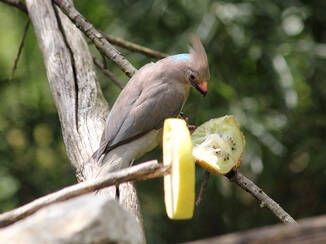





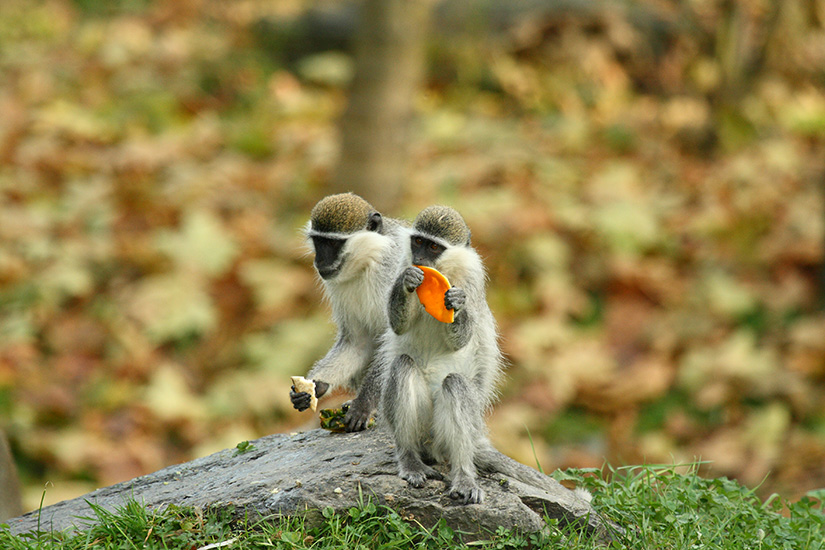
Green monkey in the Tierwelt Herberstein
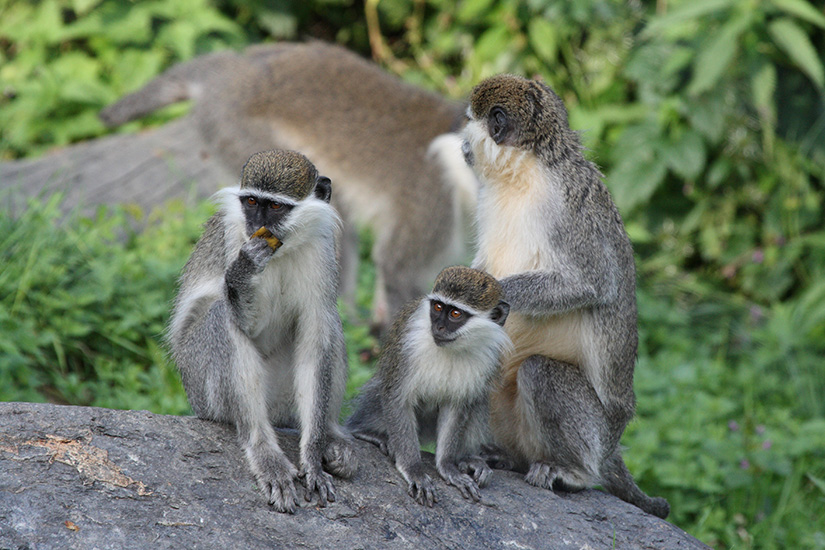
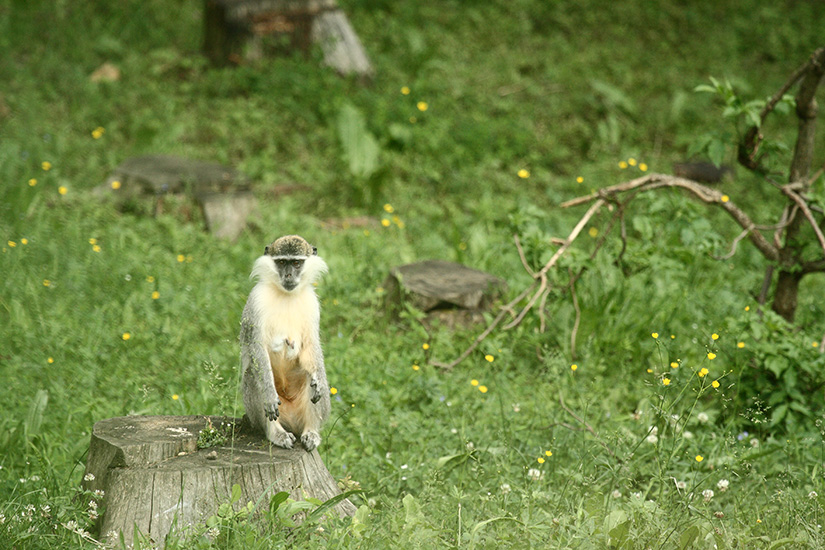
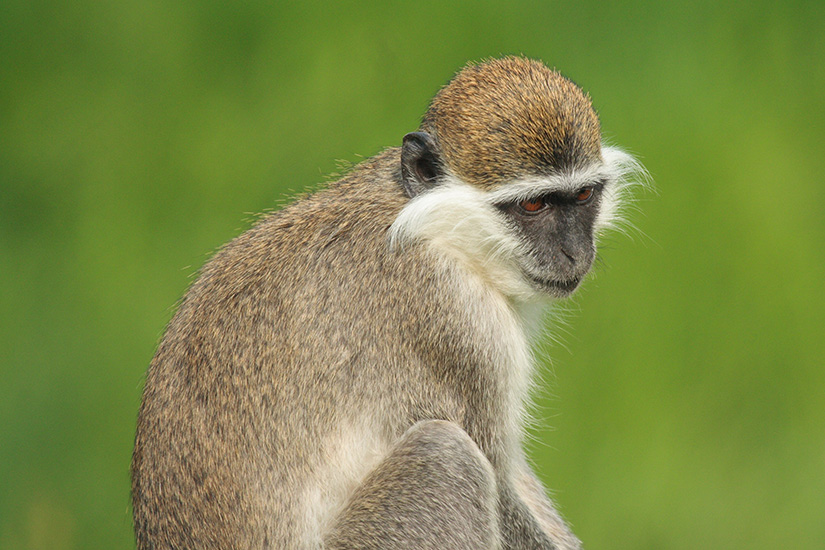
Green Monkey, Vervet Monkey
Chlorocebus sp.
A Sophisticated Early Warning System
Green monkeys emit different warning calls depending on the type of predator. They distinguish between snakes, leopards, and birds of prey. The other group members—as well as other monkey species in the vicinity that can also interpret the calls—respond accordingly. When they hear “Snake!”, they scan the ground; when they hear “Leopard!”, they all dash to the thinnest tree branches; and when they hear “Bird of prey!”, they hide under the thick foliage near the tree trunk.
Did you know?
The name "meerkat" likely arose from a sound shift and is derived from the Old Indian word "markata," which means "monkey." In addition, the fur of green meerkats has an olive-green sheen.
| Order | Monkeys |
| Family | Cheek-pouch monkeys |
| Distribution | The Gambia to Ghana; East Africa: Kenya to South Africa |
| Habitat |   |
| Food |  |
| Activity |  |
| Weight | M 4–8 kg, W 3–5 kg |
| Size | Body length (M): 42–60 cm, Body length (W): 30–50 cm |
| Service life | 30 years |
| Reproduction | After a gestation period of 5 months, a young animal is born. |
| Risk |  |
| Enemies | Big cats, canids, birds of prey, baboons, snakes, humans |
Green Monkeys

Tierwelt Herberstein
Steirischer Landestiergarten GmbH
A 8223 Stubenberg am See
Buchberg 50
Phone: +43 3176 80777
Fax: +43 3176 80777 20
Email: info (at) tierwelt-herberstein. at