





Collar Lizard
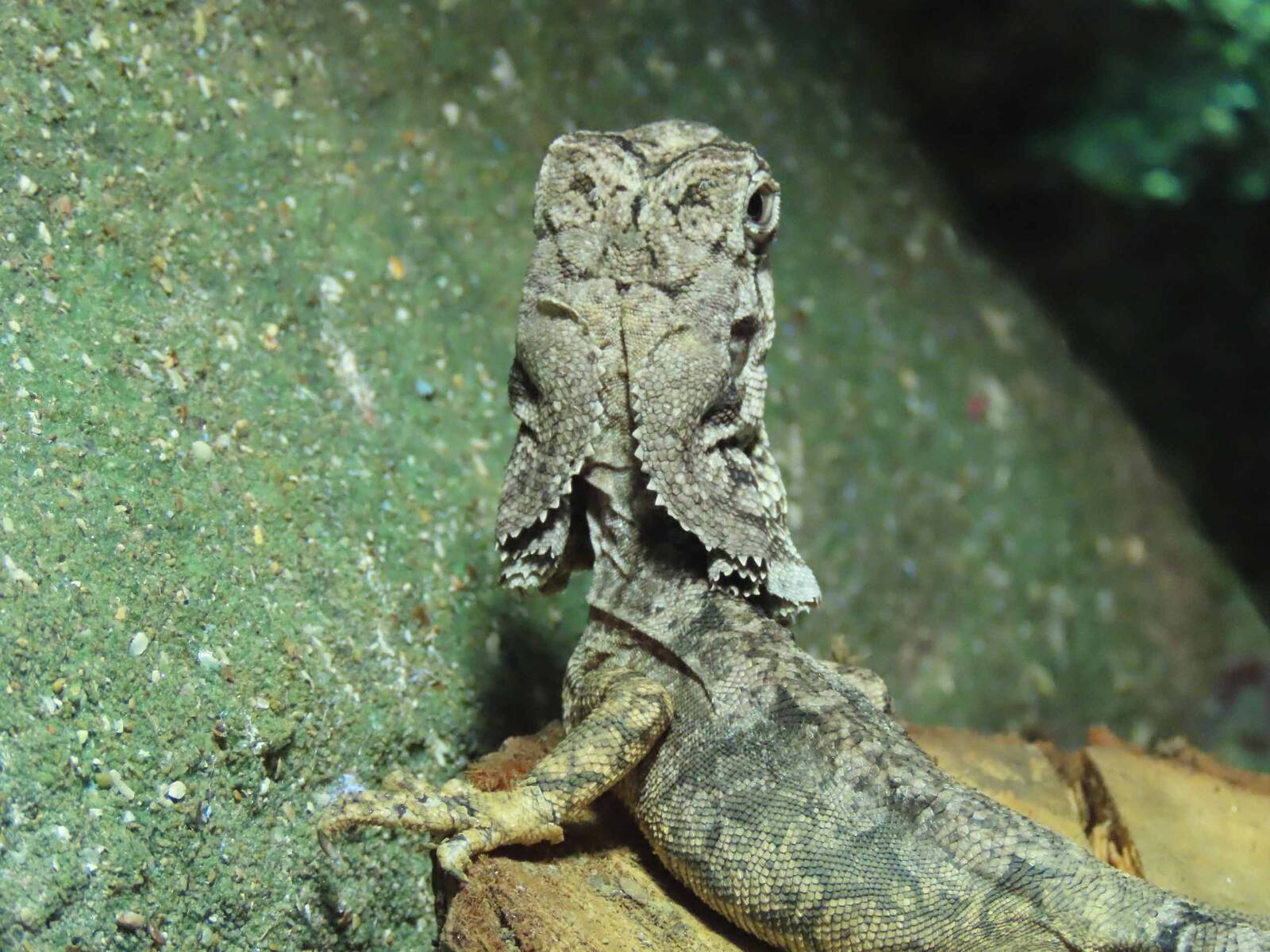
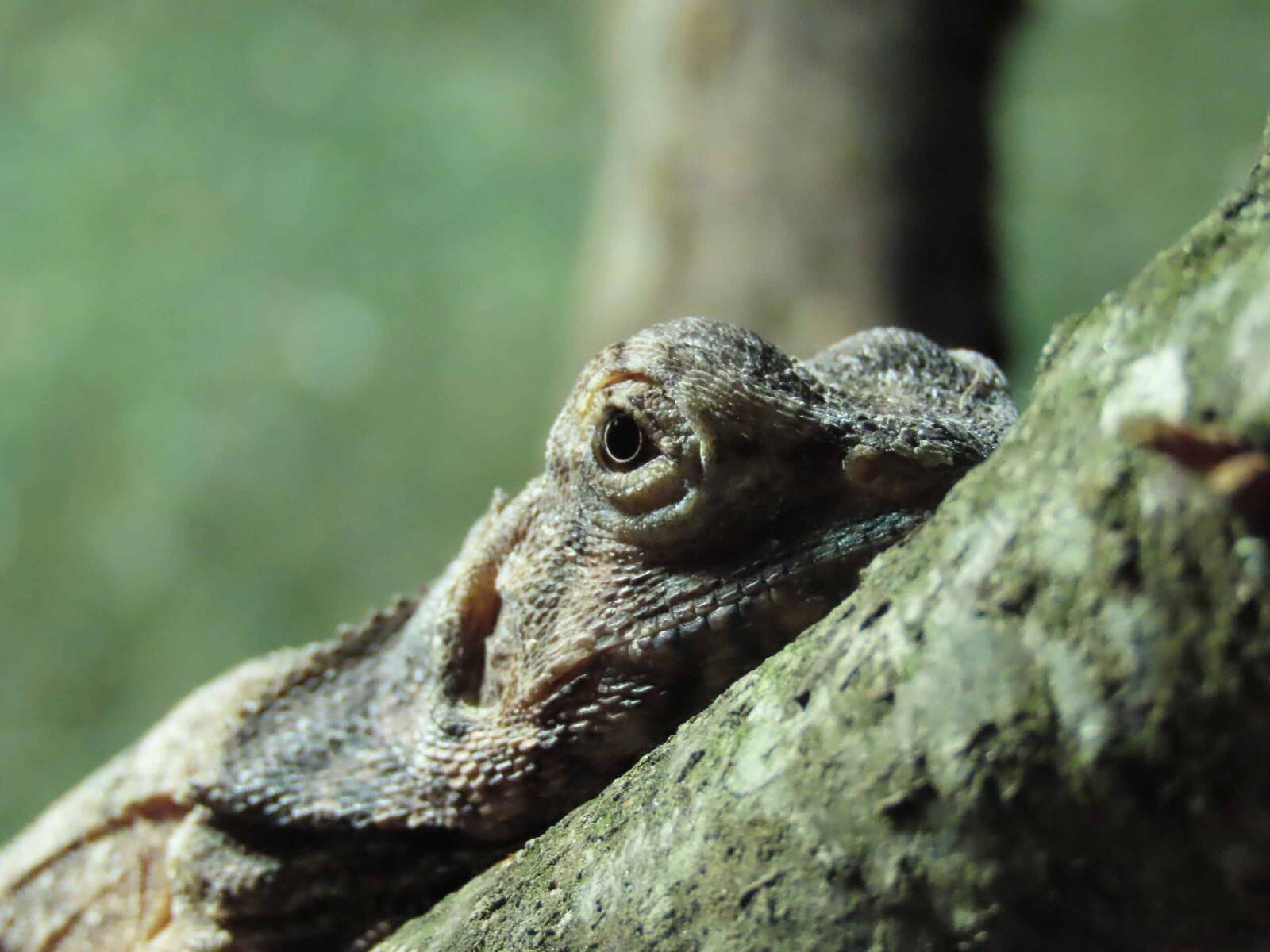
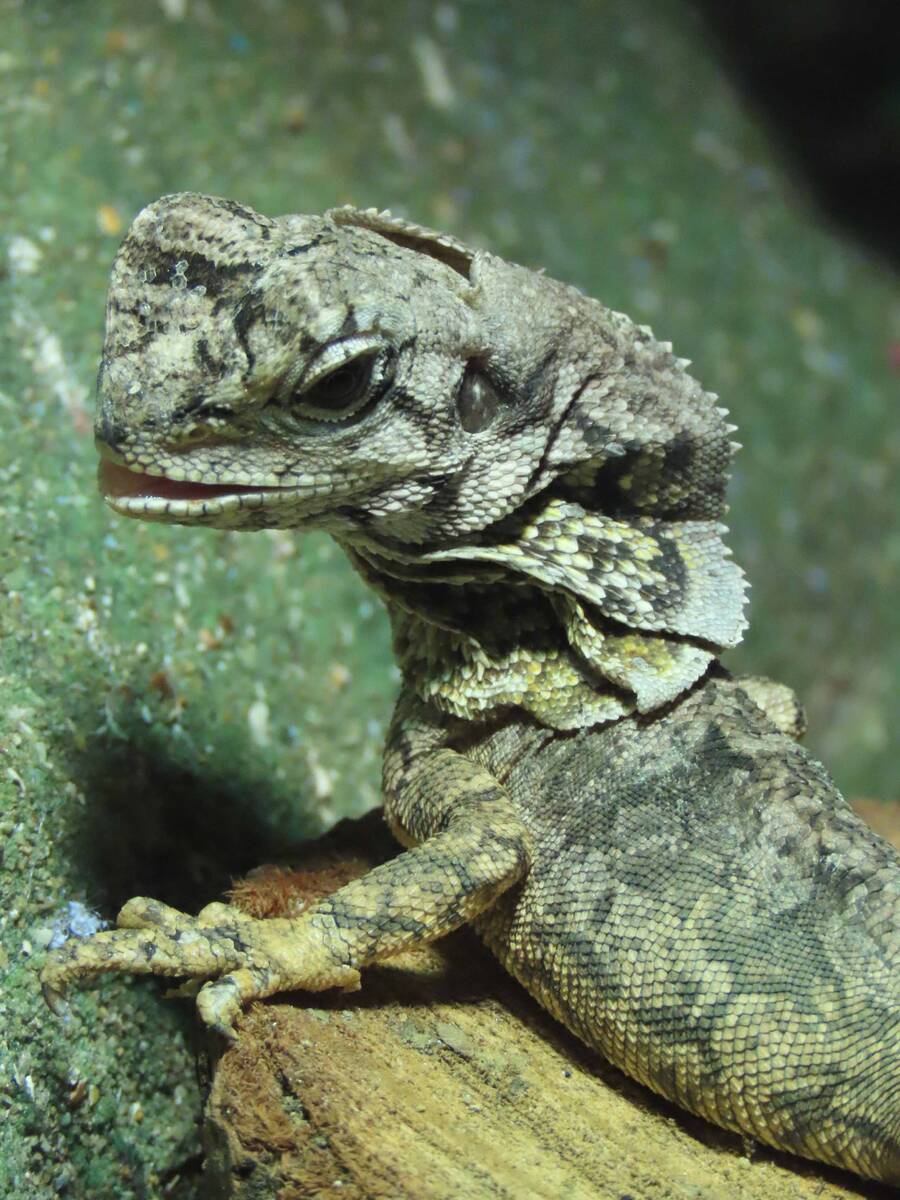
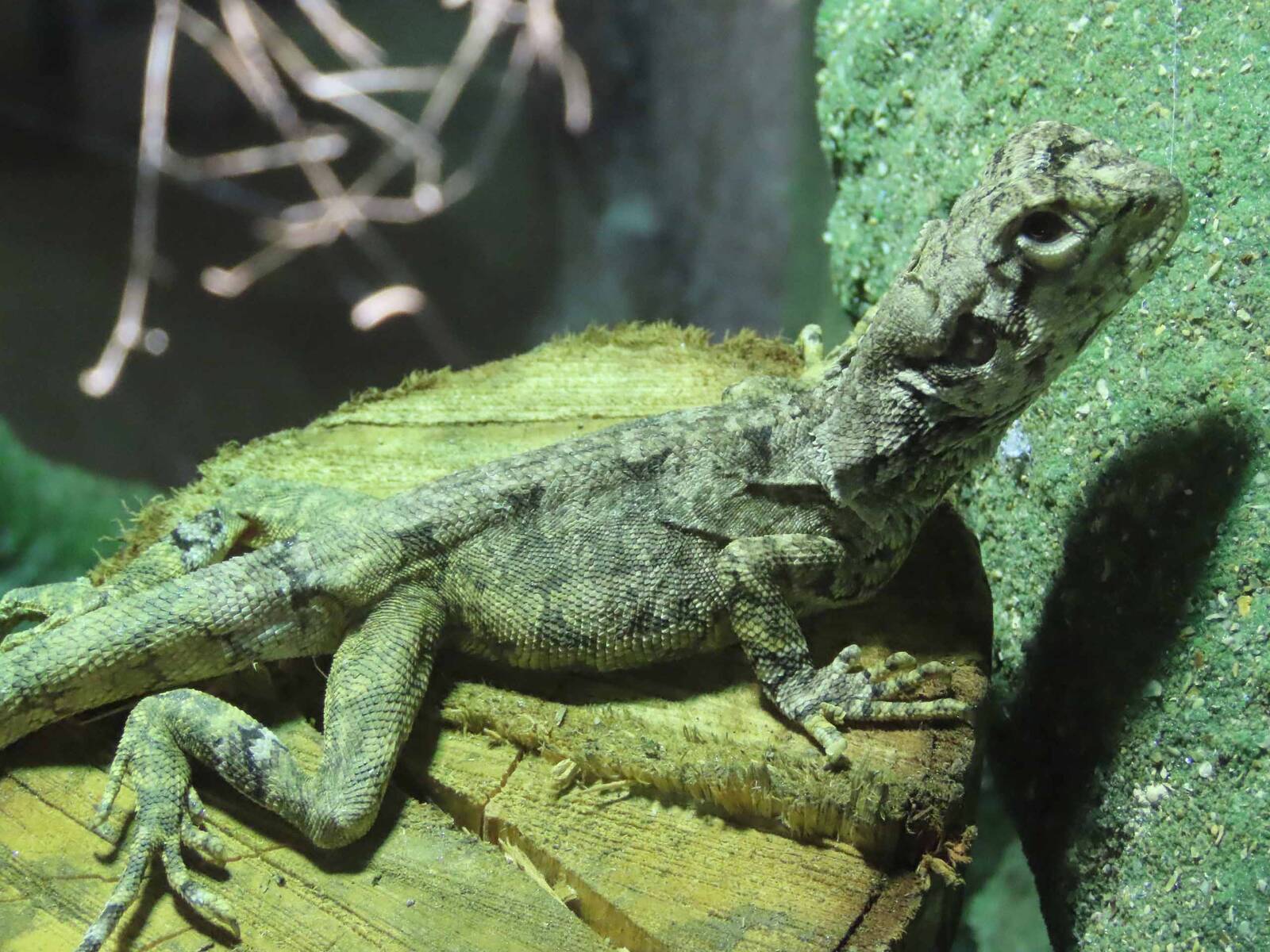
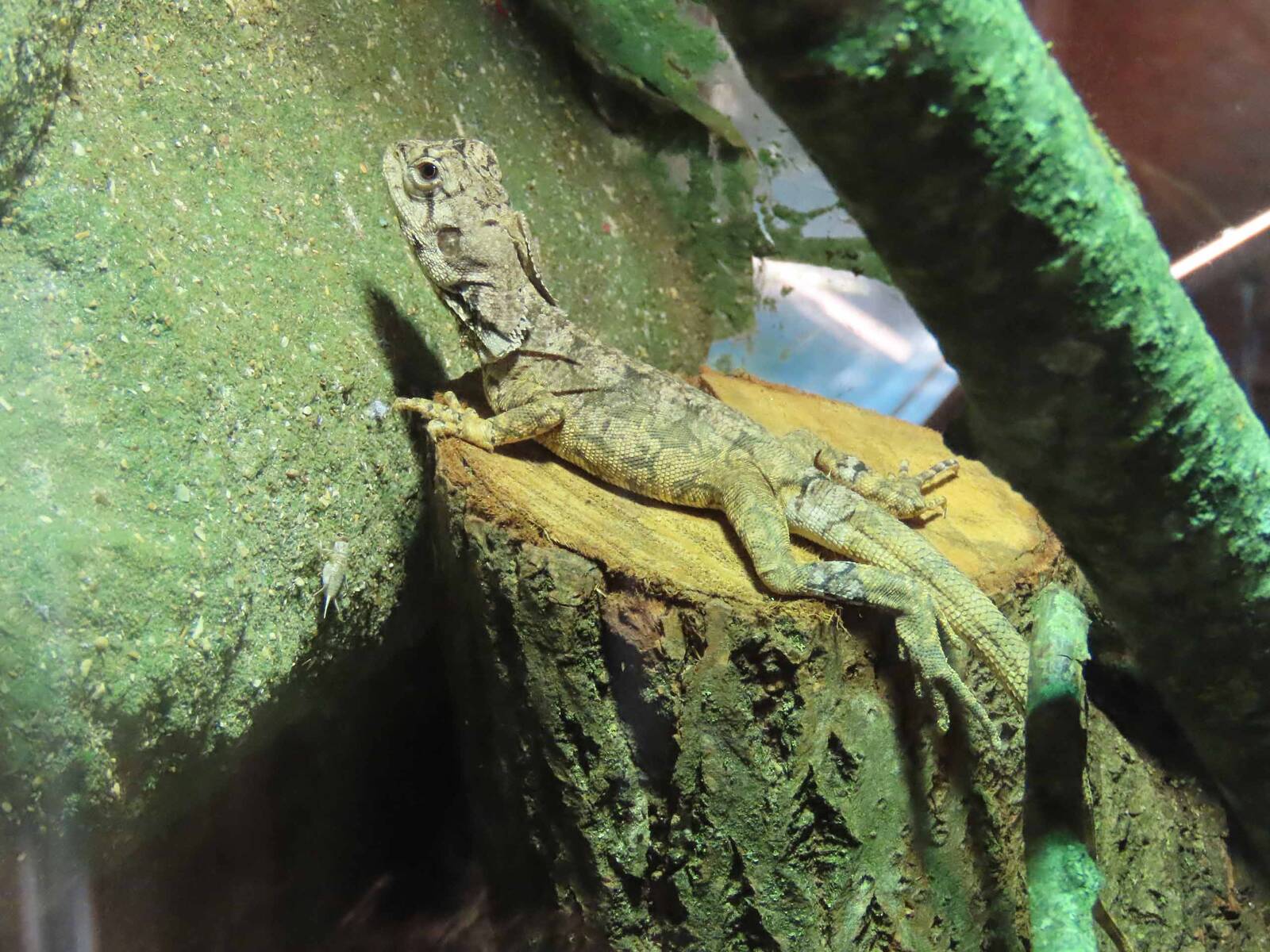
Frilled lizard
Chlamydosaurus kingii
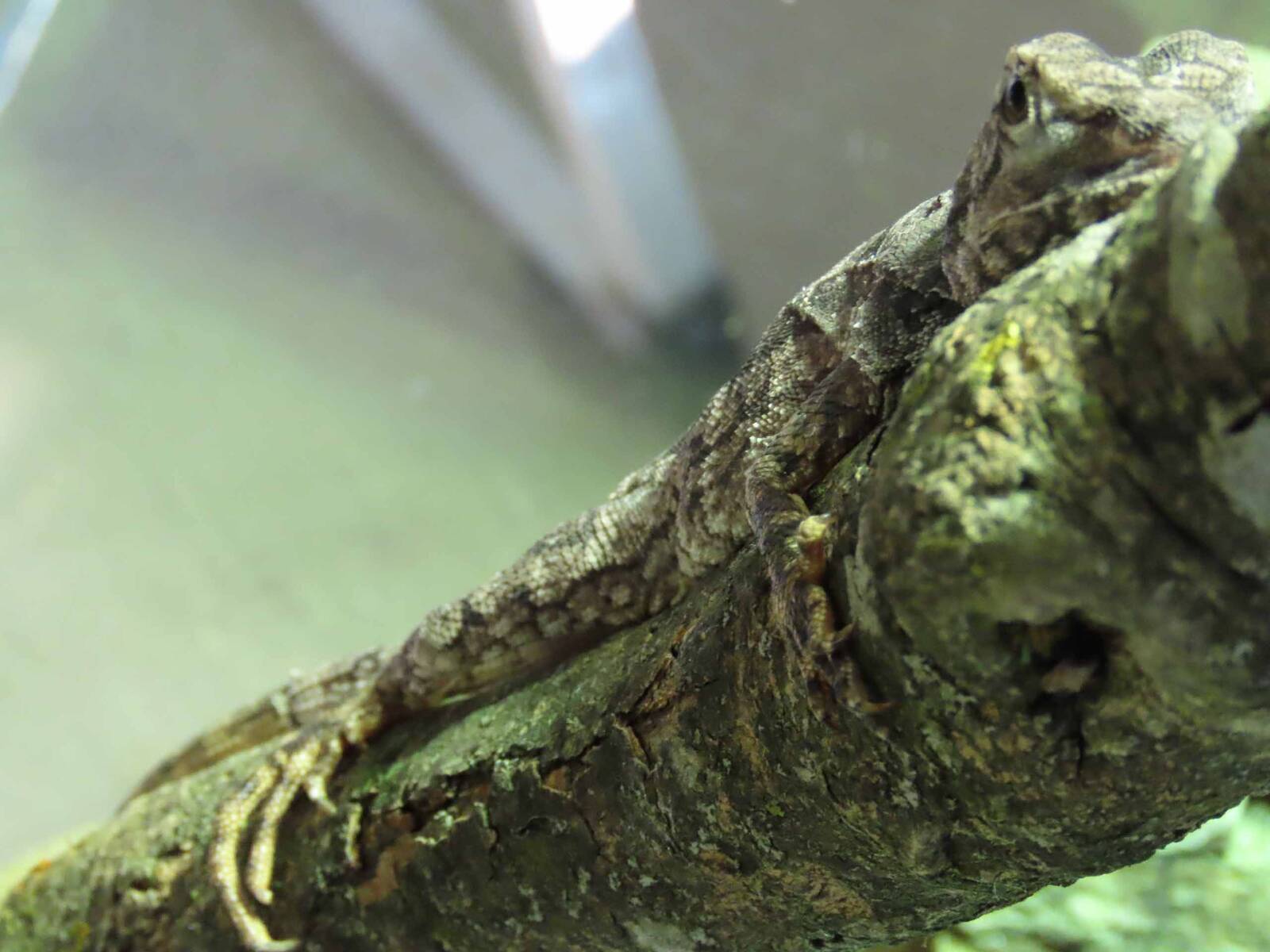
Collared lizards usually rest vertically on tree trunks or branches, where their color and markings provide perfect camouflage. If they are spotted by a predator, they raise their collars to an impressive size. Accompanied by loud hissing and a lashing tail, the animals try to scare off predators. If they can capitalize on the element of surprise, they flee by running on their hind legs or sometimes leap several meters away.
As with many other reptile species, soil temperature is the decisive factor in determining the sex of young collared lizards. Within a certain temperature range, only males hatch; outside that range, only females hatch.
Did you know?
It gets its name from a flap of skin on the neck. When threatened, this flap is spread out like an umbrella with the help of cartilaginous bars and muscles. But the collar isn’t used only in times of danger; it’s also part of the courtship ritual. Males use it to attract the attention of females.
| Order | Scaled Reptiles (Squamata) |
| Family | Agamidae (agamas) |
| Distribution | Northern and Northwestern Australia, Indonesia, Papua New Guinea |
| Habitat |     |
| Food |  |
| Activity |  |
| Weight | 400–900 grams |
| Size | Head-to-body length up to 26 cm, total length up to 90 cm |
| Service life | 5–7 (Zoo: up to 20) |
| Reproduction | |
| Risk |  |
| Enemies | Waran, snake, dingo, human |
Tierwelt Herberstein
Steirischer Landestiergarten GmbH
A 8223 Stubenberg am See
Buchberg 50
Phone: +43 3176 80777
Fax: +43 3176 80777 20
Email: info (at) tierwelt-herberstein. at