


Zebra in the Tierwelt Herberstein
Hartmann's Mountain Zebra
Equus zebra hartmannae
Stripes make zebras
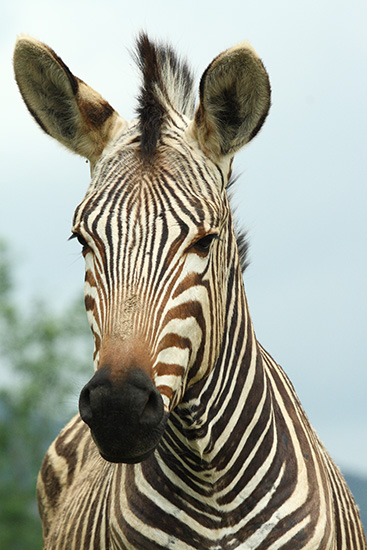
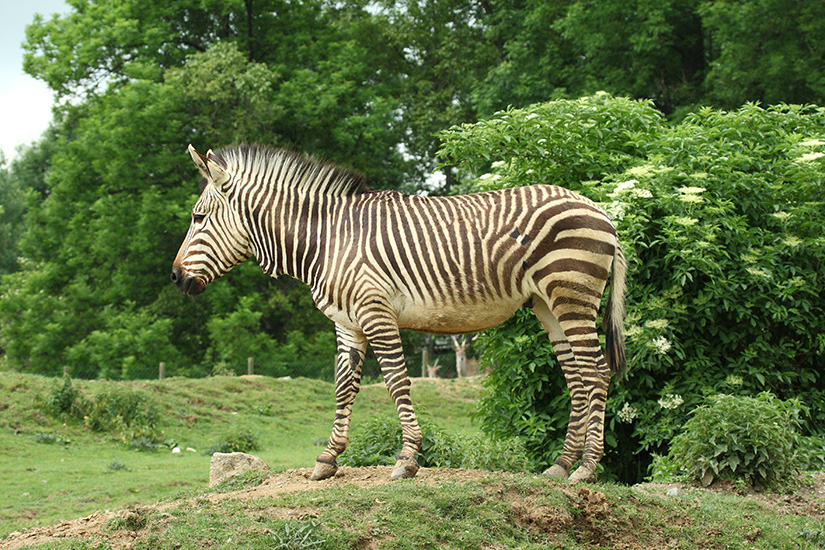
There are three species of zebra: the plains zebra, the Grevy’s zebra, and the mountain zebra. The Tierwelt Herberstein is home to the Hartmann’s mountain zebras, one of two subspecies of mountain zebra. They all have stripes, but upon closer inspection, you can see differences.
The classic zebra is probably best represented by the plains zebra. Snow-white stripes alternate with deep black, relatively wide stripes that almost touch each other on the underside of the belly. The other two zebra species have white bellies.
Grevy's zebras are the most elegant of all zebras; with their narrow stripes, they look as if they're wearing pinstripes.
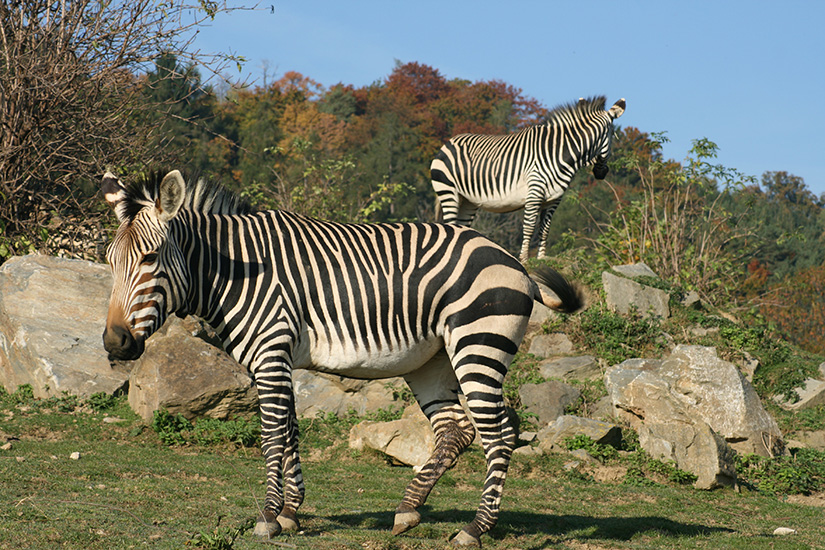
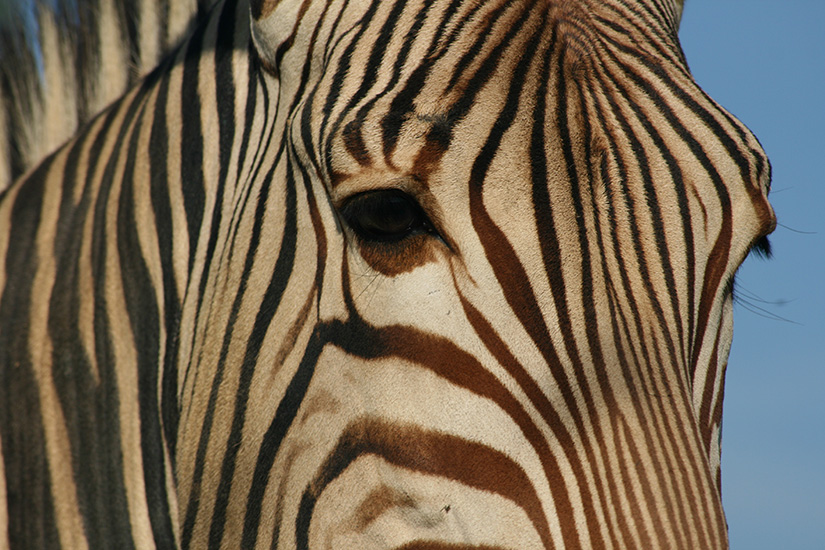
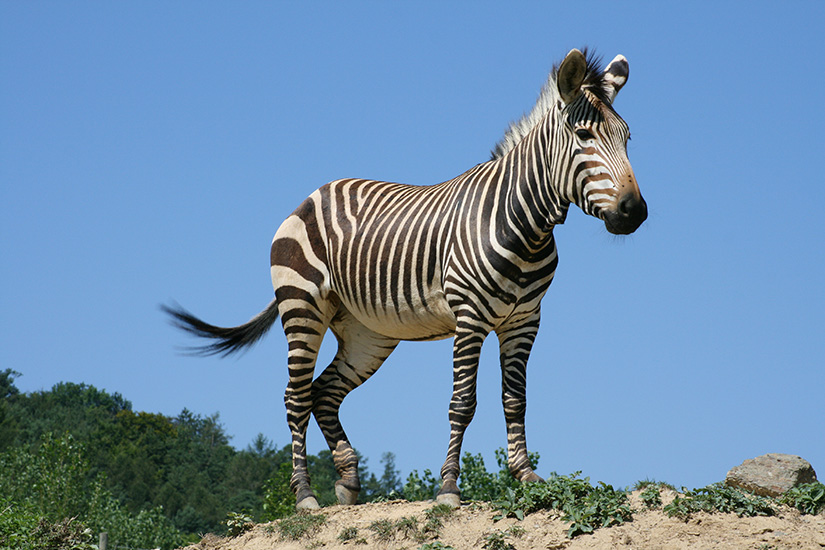
The mountain zebra, on the other hand, always looks a little dusty, but in reality, its stripes are more dark brown-beige than black and white. This, however, does not detract from the striped appearance.
The Black-and-White Mystery
There are numerous theories about the function of stripes. On the one hand, they serve a purpose within the group by blurring the outline of an individual animal and allowing it to blend in with the rest of the pride. A vast mass of stripes is not a suitable target even for a full-grown lion.
Another effect becomes apparent in the heat of the savanna. When the hot air begins to shimmer over the vast plains, the zebras seem to simply vanish into thin air.
The third theory posits that biting insects have difficulty discerning the surface of these striped animals with their compound eyes and therefore struggle to land on them. As a result, zebras are bitten less often and thus avoid many communicable diseases.
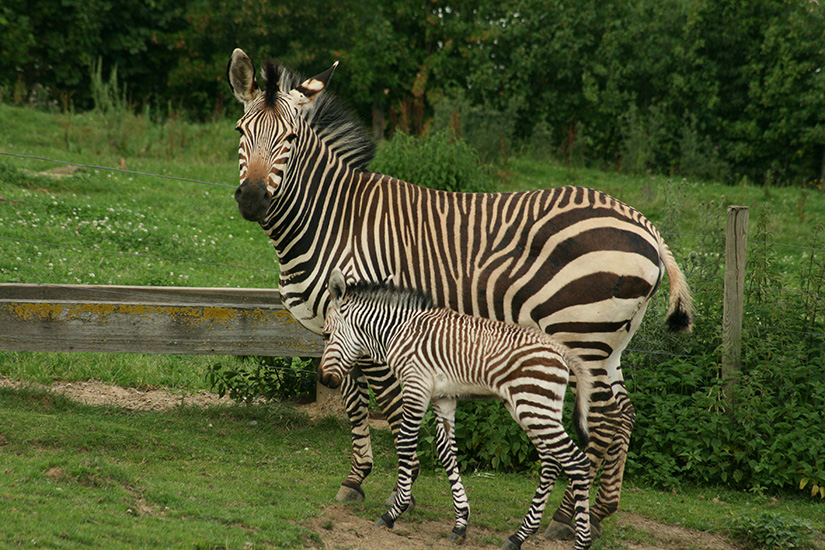
It is highly likely that the stripes serve social functions. For example, after giving birth, a mare isolates her foal from the herd for a few weeks so that it can memorize its mother’s unique pattern and immediately recognize her again later within the herd.
Did you know?
Mountain zebras live in the mountainous regions of South Africa. To navigate rocky terrain with sure footing, they have sturdy hooves: they have the hardest hooves of any zebra.
| Order | odd-toed ungulates |
| Family | Horses |
| Distribution | Southwest Africa (from Namibia to Angola; reintroduced in the Western and Eastern Cape) |
| Habitat |   |
| Food |  |
| Activity |  |
| Weight | 240–370 kg |
| Size | Body length 210–260 cm, shoulder height 115–150 cm |
| Service life | 20 years (up to 29 years in captivity) |
| Reproduction | The breeding season is not tied to any specific time of year. After a gestation period of 1 year, the mare gives birth to a foal that is able to follow its mother after just a few minutes. |
| Risk |  |
| Enemies | Lion, leopard, cheetah, hyena, human |
Tierwelt Herberstein
Steirischer Landestiergarten GmbH
A 8223 Stubenberg am See
Buchberg 50
Phone: +43 3176 80777
Fax: +43 3176 80777 20
Email: info (at) tierwelt-herberstein. at