







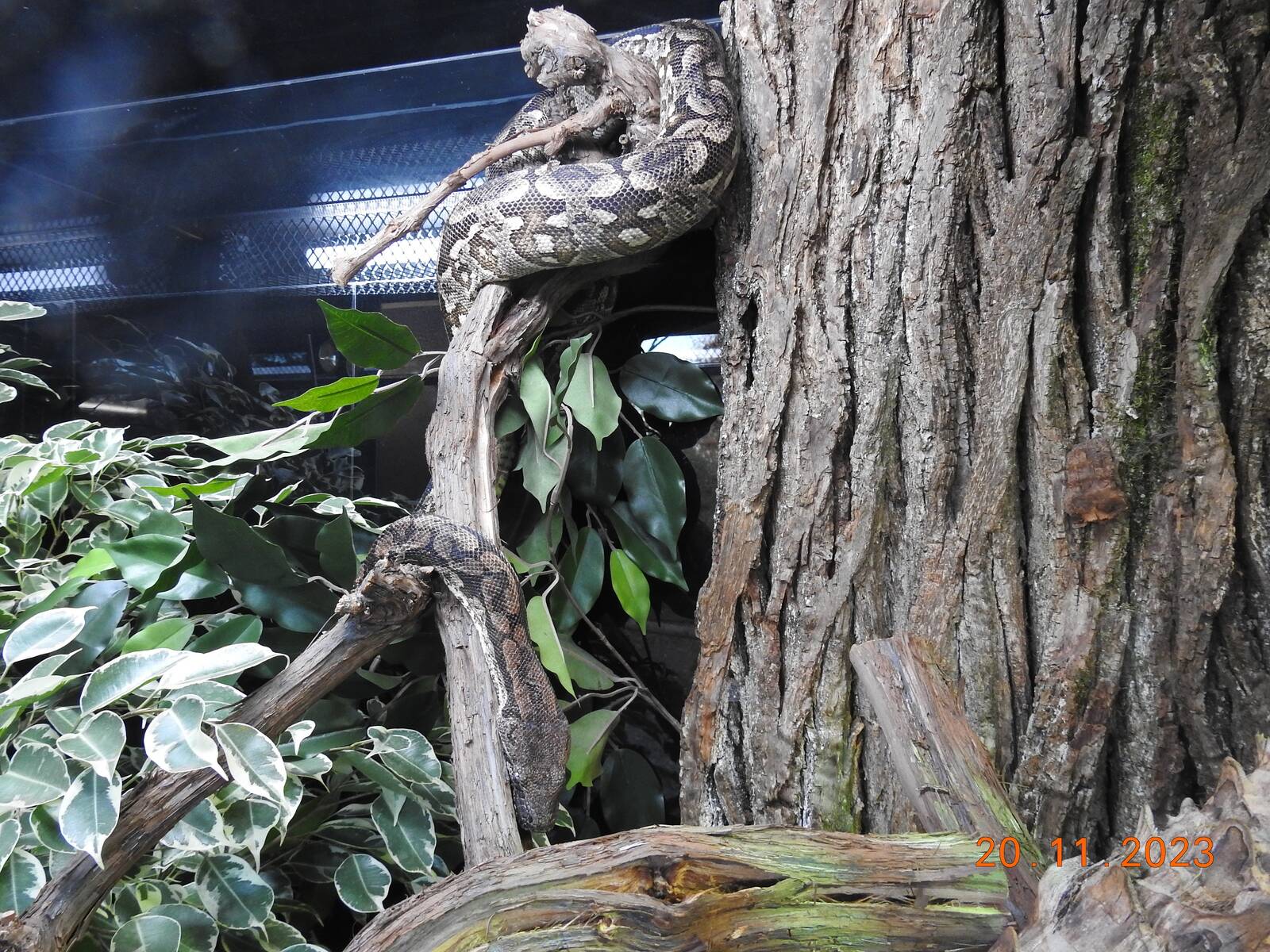
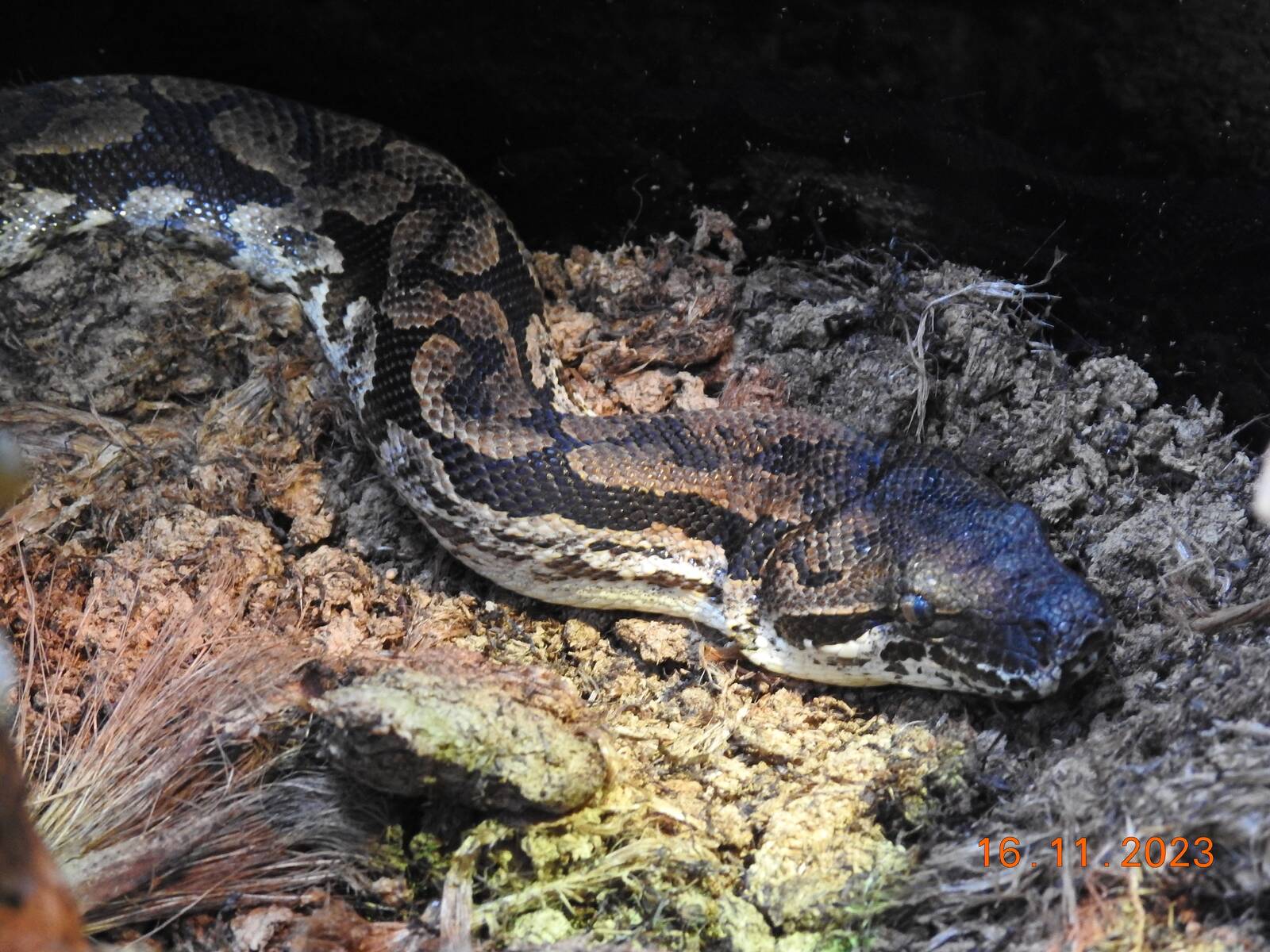
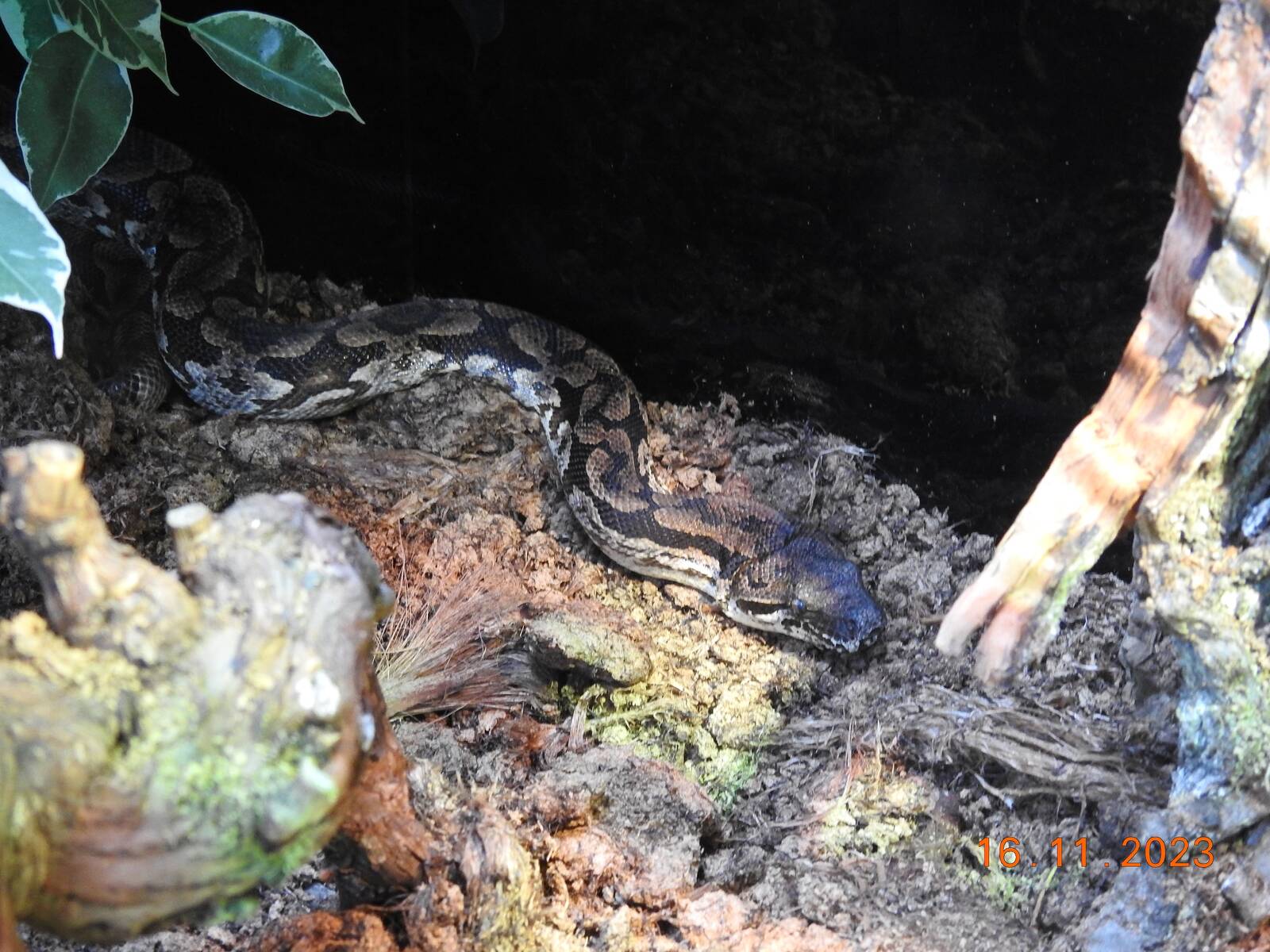
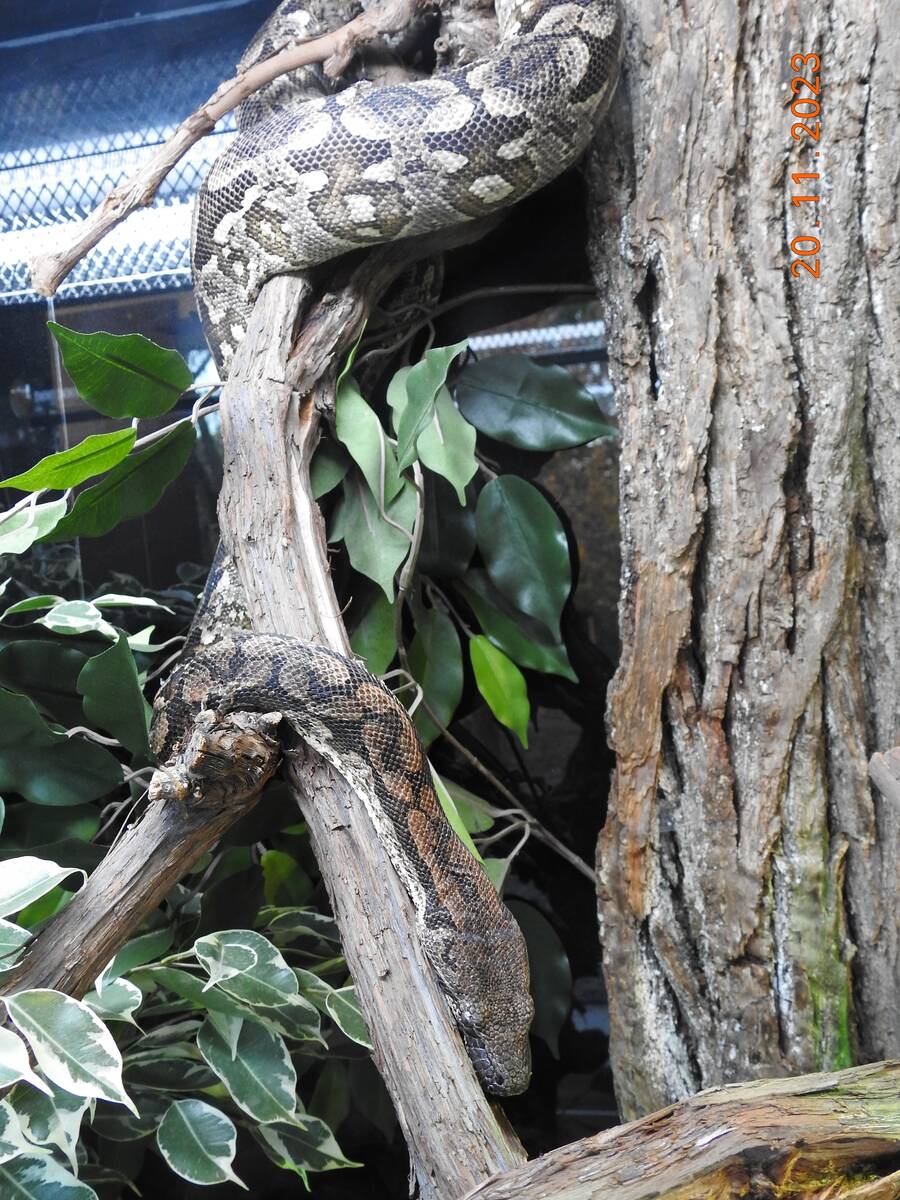
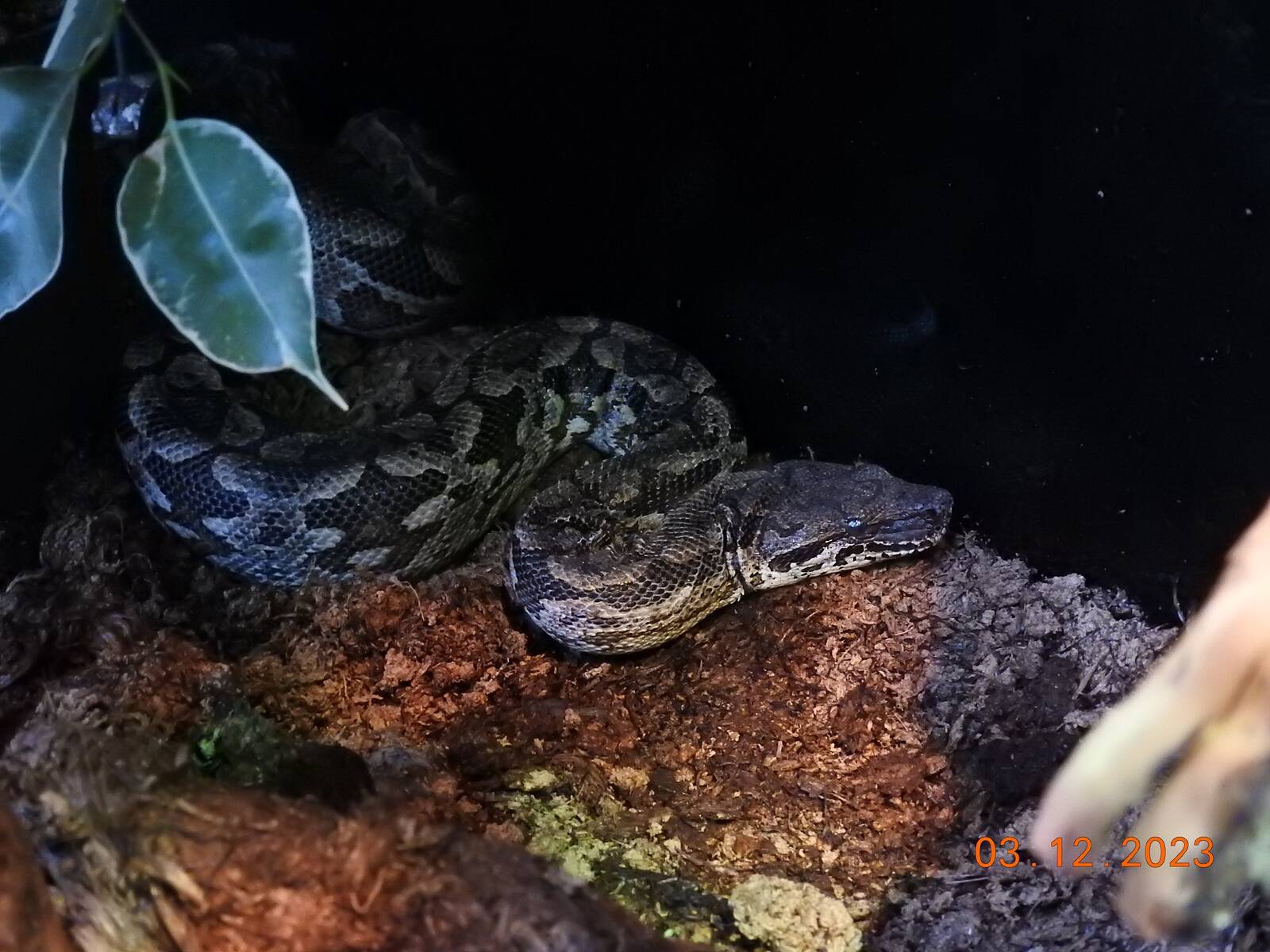
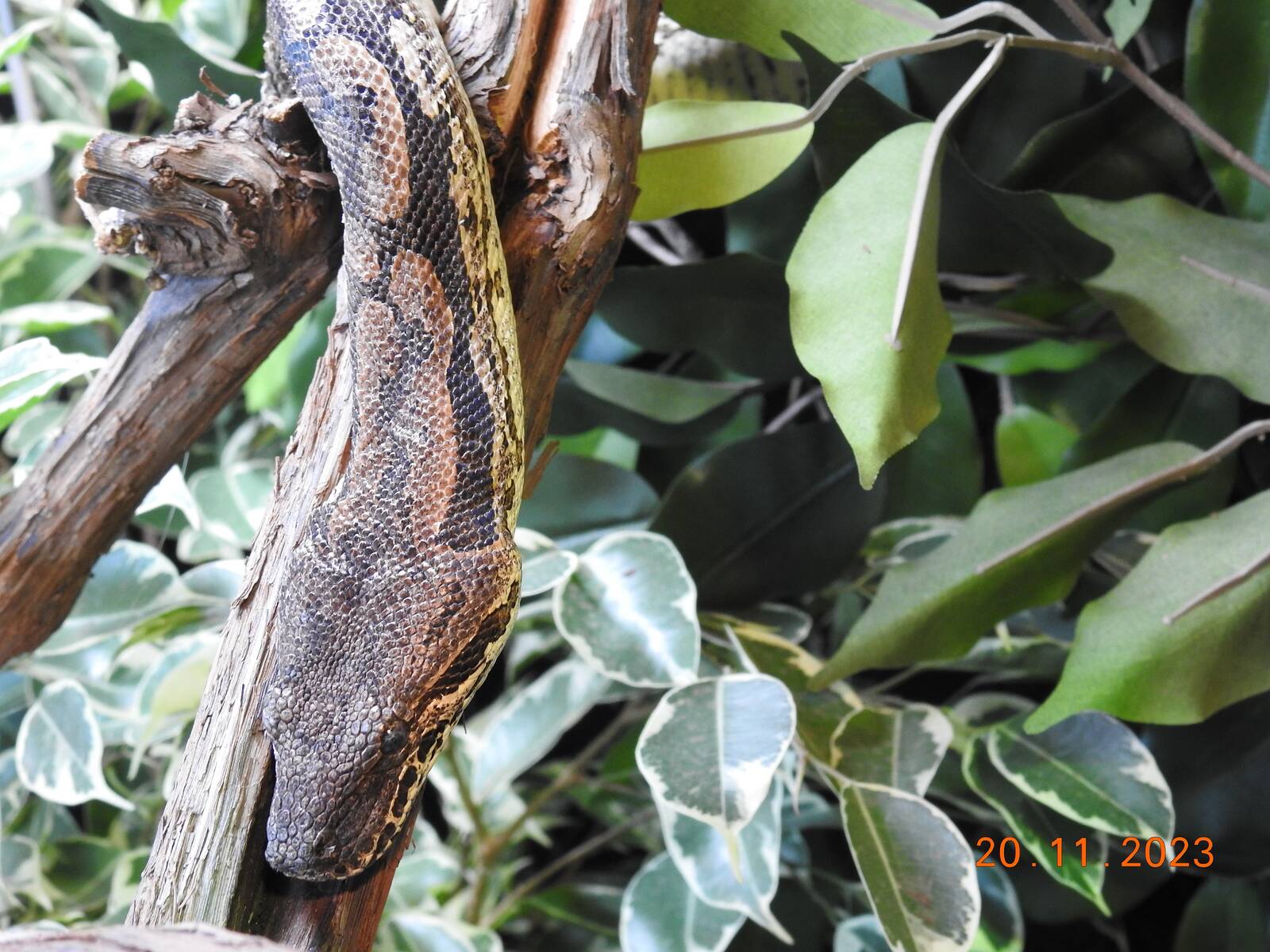
Southern Madagascar boa in the Tierwelt Herberstein
Dumeril's ground boa
Acrantophis dumerili
While young Madagascar boas are still quite adept at climbing, older individuals spend almost all their time on the ground, hidden in the foliage. Madagascar boas hunt during twilight and at night, though they do not actively pursue their prey. As ambush predators, they wait, buried in the foliage or the ground substrate, until suitable prey approaches. They then seize it, clamp down with the constricting grip typical of boas, and devour it.
Did you know?
Madagascar boas are ovoviviparous, which means the young develop inside their eggshells within the mother’s body and are born alive after a gestation period of about half a year. Immediately after birth, the young snakes shed their skin for the first time.
| Order | Scaly Reptiles |
| Family | Boas |
| Distribution | Africa: Southern and Southwestern Madagascar |
| Habitat |   |
| Food |  |
| Activity |   |
| Weight | 6–9 kg |
| Size | 160–200 cm (females are larger) |
| Service life | over 20 years |
| Reproduction | |
| Risk |  |
| Enemies | Human |

Tierwelt Herberstein
Steirischer Landestiergarten GmbH
A 8223 Stubenberg am See
Buchberg 50
Phone: +43 3176 80777
Fax: +43 3176 80777 20
Email: info (at) tierwelt-herberstein. at