


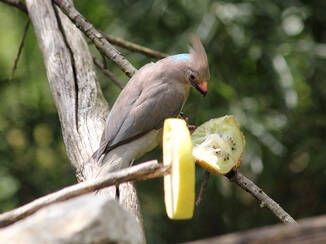





Strawberry Toppers
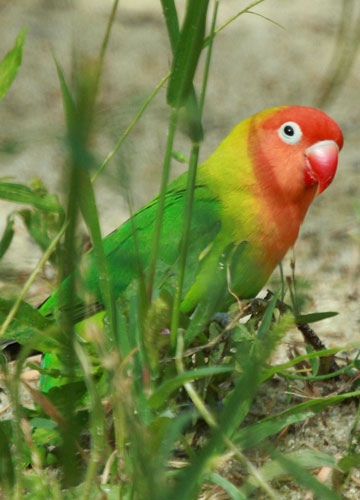
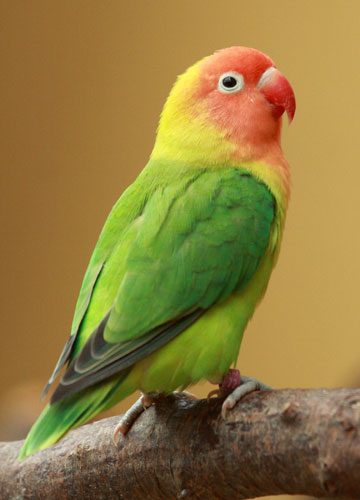
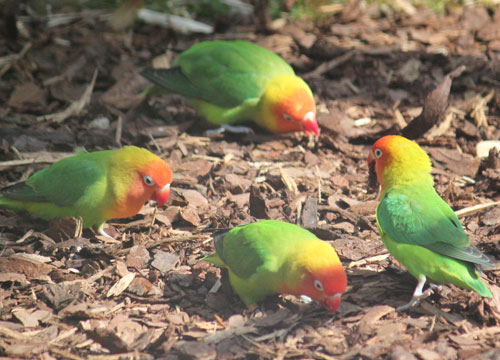
Nyasa Lovebird
Agapornis lilianae
Lovebirds belong to the Agapornithidae family, which has also been aptly named the “Lovebirds.” As is typical for most parrots, a pair of lovebirds stays together for life and expresses their bond by cuddling, preening each other’s feathers, and feeding each other.
Lovebirds live in flocks of between 20 and 100 birds and are found primarily on the edges of forests near riverine areas. They spend most of the day in bushes and trees or on the ground, searching for seeds and fruits. Several times a day, they visit watering holes to drink and bathe.
They use cavities and niches as nesting sites, as well as abandoned weaver bird nests. The female is primarily responsible for expanding this “shell” with twigs, grasses, and pieces of bark.
| Order | Parrots |
| Family | True Parrots |
| Distribution | Southern Tanzania, northwestern Mozambique, southern Malawi, and the border regions of Zambia and Zimbabwe |
| Habitat |  |
| Food |  |
| Activity |  |
| Weight | 28–40 g |
| Size | 13–14 cm |
| Service life | about 15 years |
| Reproduction | 21–22 days (4–5 eggs); fledging after 35–44 days |
| Risk |  |
| Enemies | - |

Tierwelt Herberstein
Steirischer Landestiergarten GmbH
A 8223 Stubenberg am See
Buchberg 50
Phone: +43 3176 80777
Fax: +43 3176 80777 20
Email: info (at) tierwelt-herberstein. at