






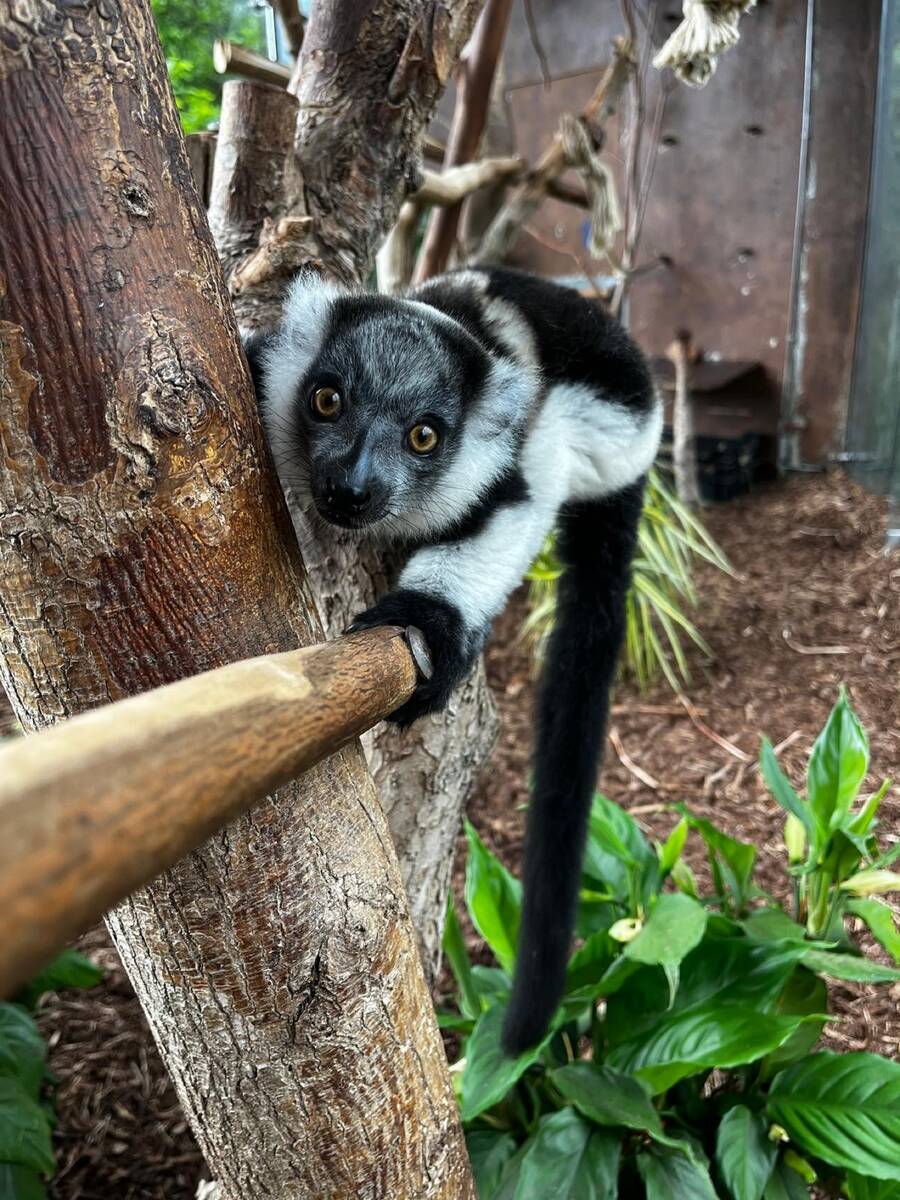
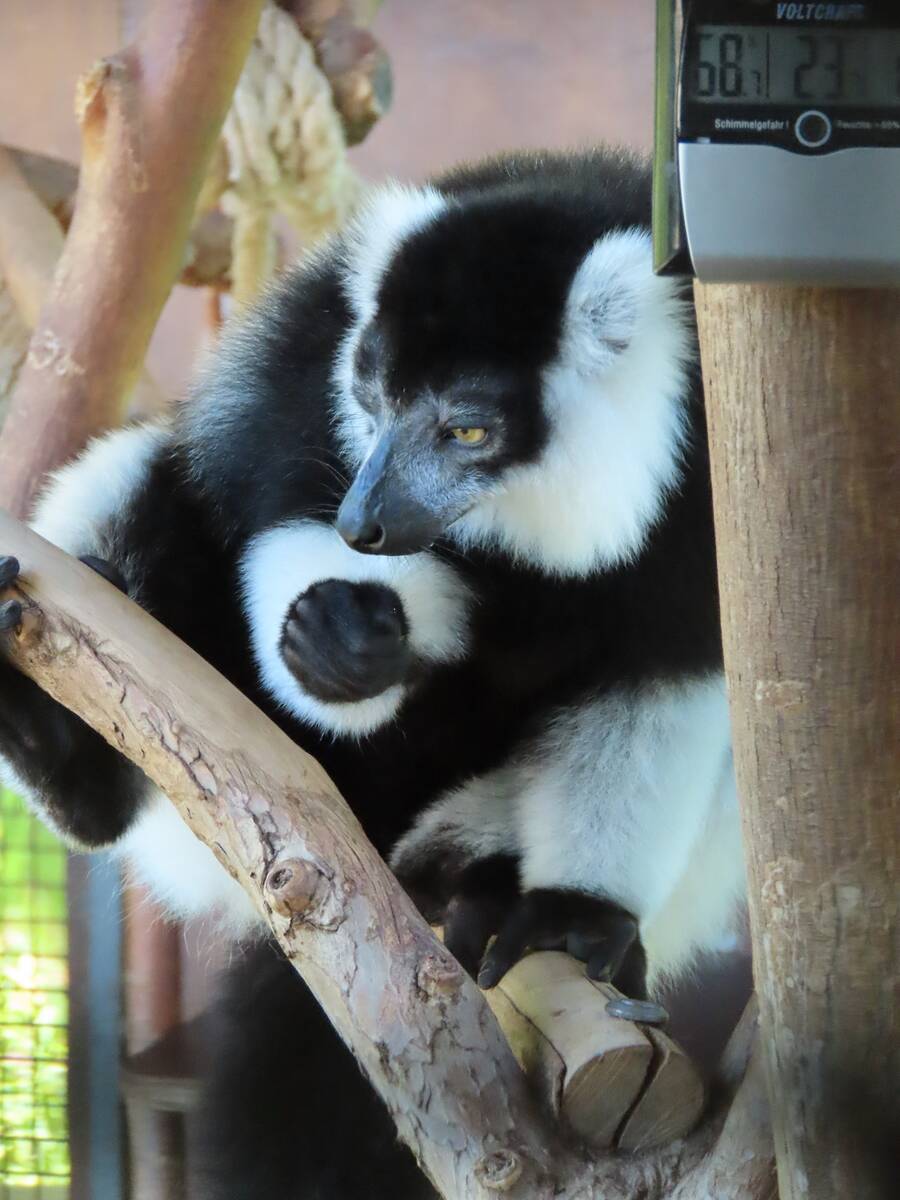
Black-and-white Vari in the Tierwelt Herberstein
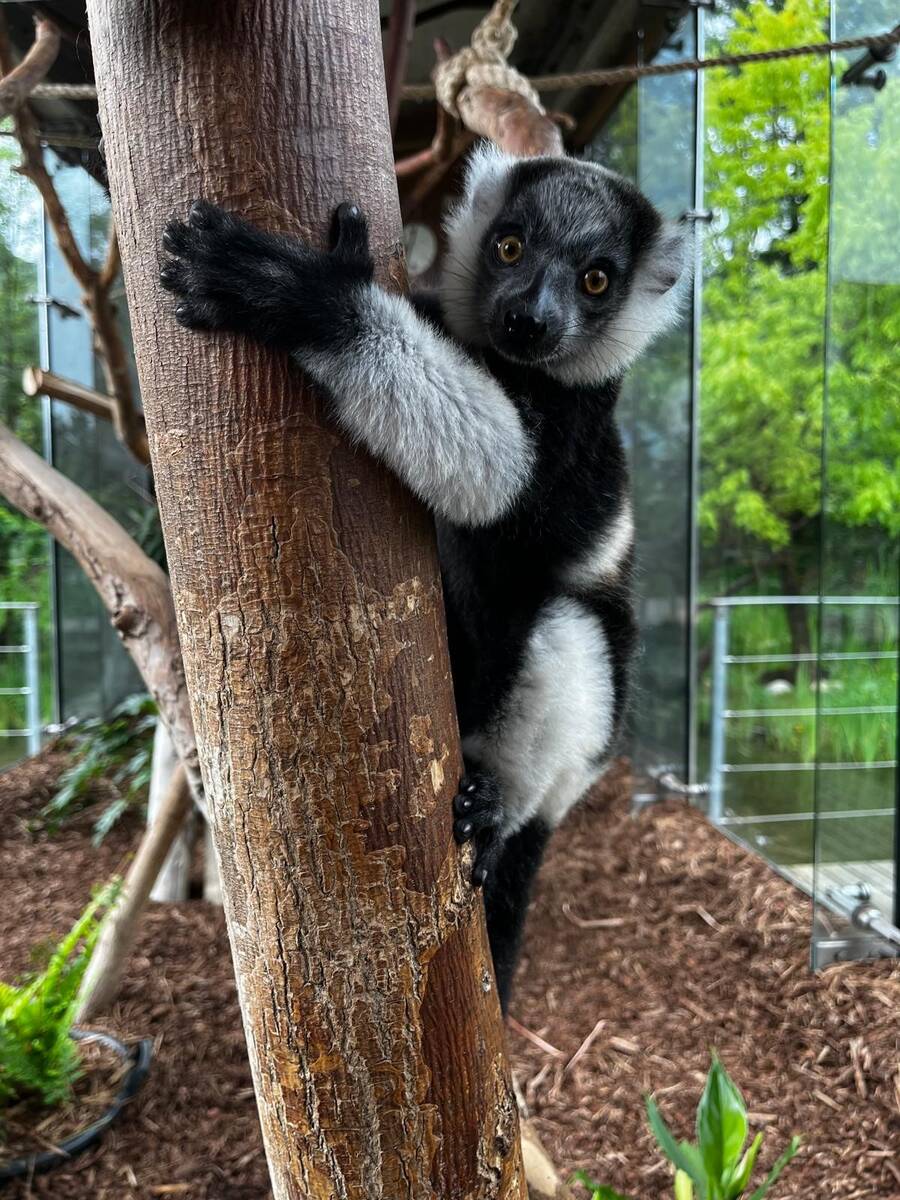
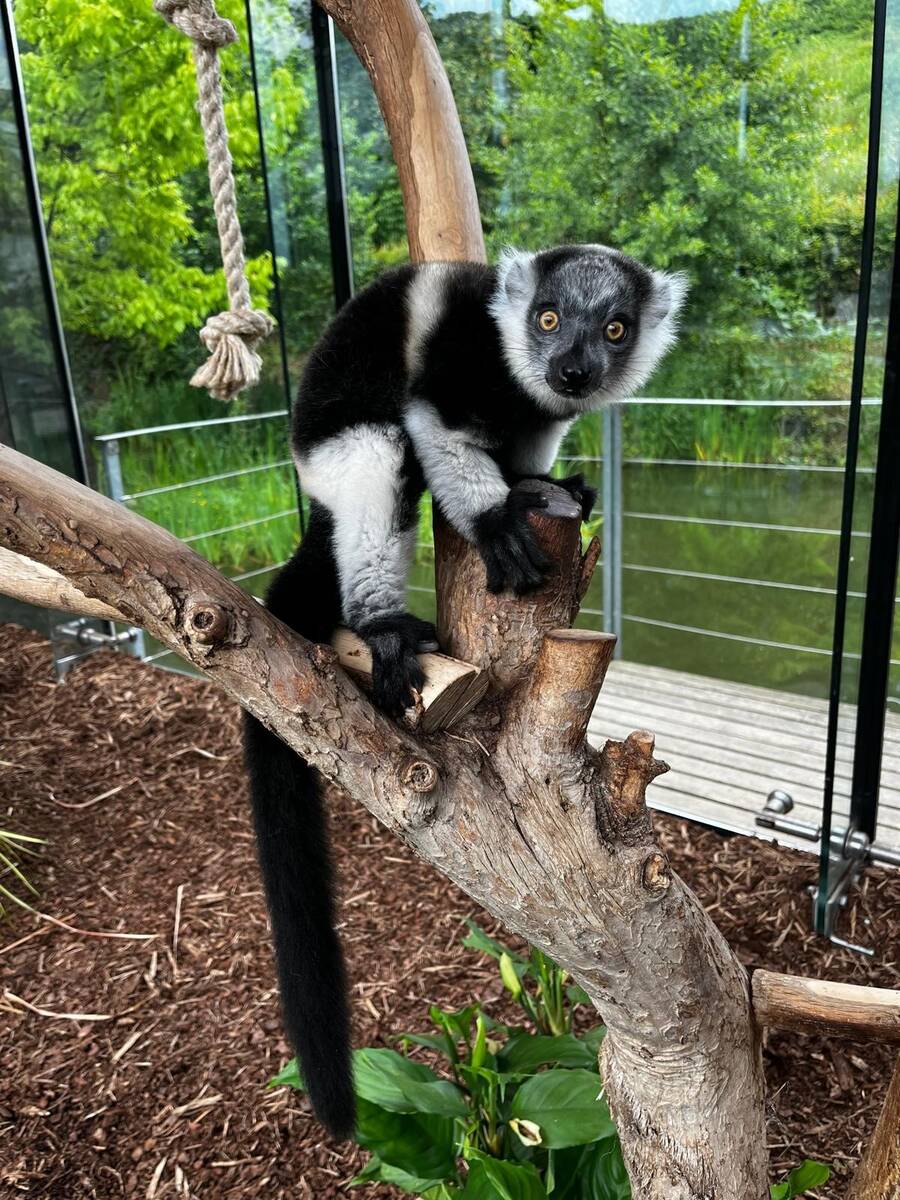
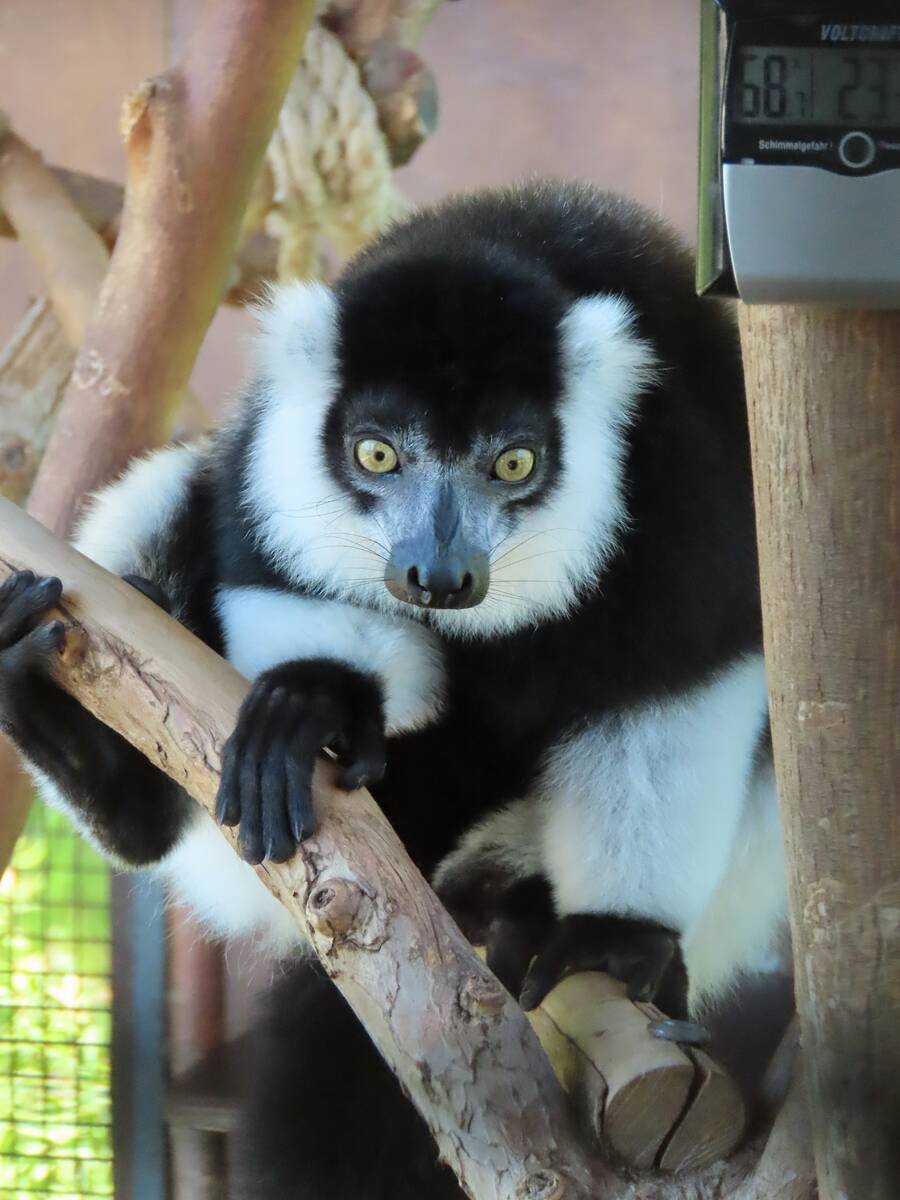
Black-and-white Ruffed Lemur
Varecia variegata
A monkey with a spoon and a comb
The black-and-white ruffed lemur is a member of the lemur family, which is found exclusively in Madagascar. Cut off from the rest of the world, many different species of lemurs evolved without any influence from “true monkeys” (which do not exist in Madagascar).
Varis feed mainly on fruit, but they also enjoy eating leaves and nectar. To better reach these treats, they spend about one-third of the time they devote to feeding hanging upside down, dangling only by their feet.
They also always carry a suitable tool for picking soft fruits. To understand this, it’s worth taking a closer look inside a Vari-Maul. At first glance, it looks as though they have six incisors in their lower jaw. In fact, however, the two canines have functionally transformed into incisors and, together with the four true incisors, form a forward-facing “tooth comb.”
It’s perfect as a spoon for scooping soft fruits. Plus, thanks to its serrated edge, it can also be used as a comb for grooming.
Group Roars and “Baby Parking”
Varis live in small family groups. Both males and females help keep their territory clear of other groups several times a day—by letting out loud roars. When you see one of these fluffy monkeys right in front of you, it’s hard to believe that it can produce such loud and piercing sounds.
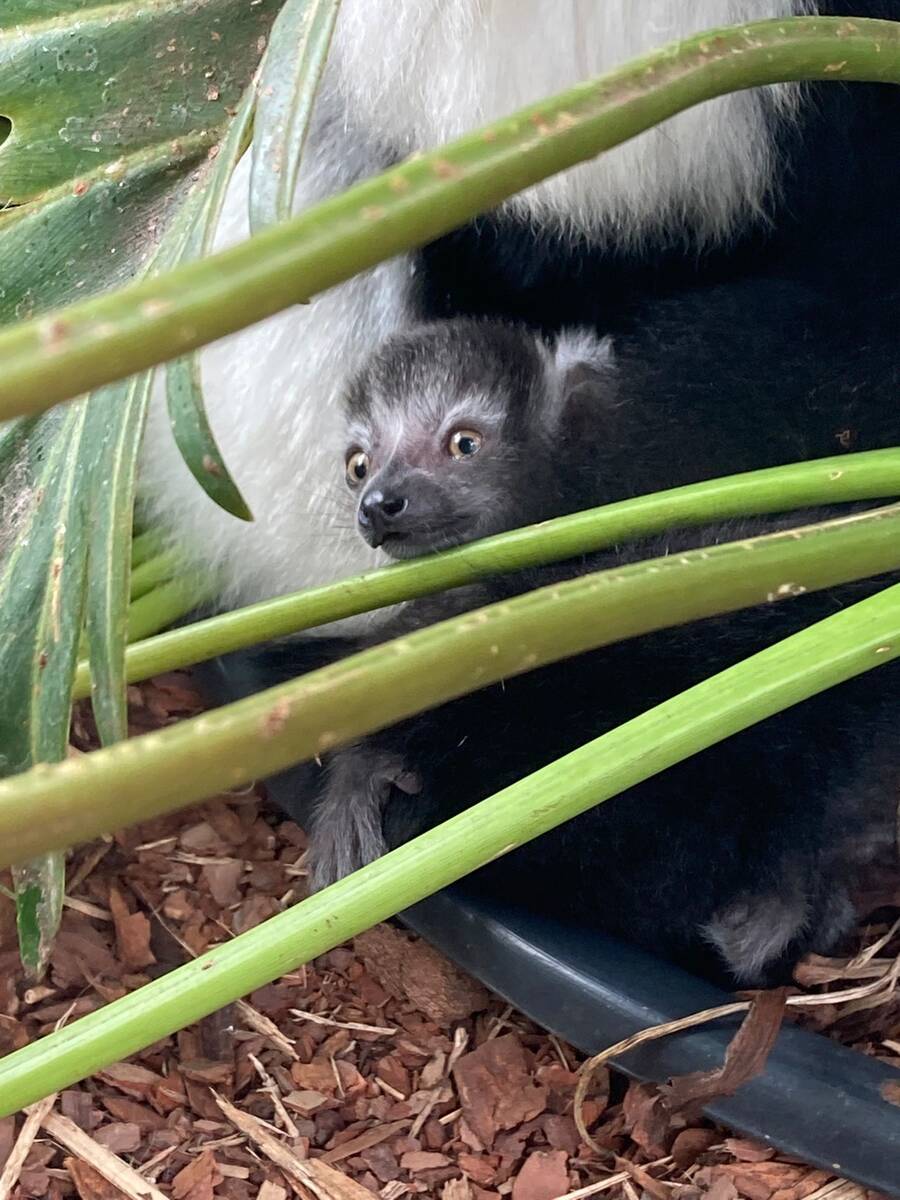
Raising the young, on the other hand, is entirely the females’ responsibility—and that can get pretty stressful. Unlike other monkeys, which usually give birth to only one offspring, Vari mothers typically have twins. Nursing is made easier, however, by three pairs of teats, which is a very primitive trait and is more reminiscent of a predator than a monkey.
At first, the young are carried in the mother’s mouth. After a while, however, this becomes too much of a hassle, and the young are simply “parked” in sheltered branches while the mother goes out in search of food.
Did you know?
Varis especially love to sunbathe for a long time in the morning. They sit down, spread their arms, and let the sun shine on their bellies with relish. Because of this behavior, the indigenous people of Madagascar used to believe that they worshipped the sun and had a connection to the gods. As a result, they considered the Vari a sacred animal, and this protected the Vari from human persecution for centuries.

| Order | Monkeys |
| Family | Lemurs |
| Distribution | Eastern Madagascar |
| Habitat |  |
| Food |  |
| Activity |   |
| Weight | 3.3–4.5 kg |
| Size | Body length 51–56 cm, tail length 56–65 cm |
| Service life | 10–15 years (zoo: 19 years) |
| Reproduction | After a gestation period of about 3.5 months, the female usually gives birth to twins, which weigh about 100 grams at birth. |
| Risk |  |
| Enemies | Humans, fossa (civet cat), birds of prey |
Corporate Sponsorships

Tierwelt Herberstein
Steirischer Landestiergarten GmbH
A 8223 Stubenberg am See
Buchberg 50
Phone: +43 3176 80777
Fax: +43 3176 80777 20
Email: info (at) tierwelt-herberstein. at