





Hungarian Steppe Cattle
Hungarian Steppe Cattle
Bos primigenius taurus 'Hungarian'
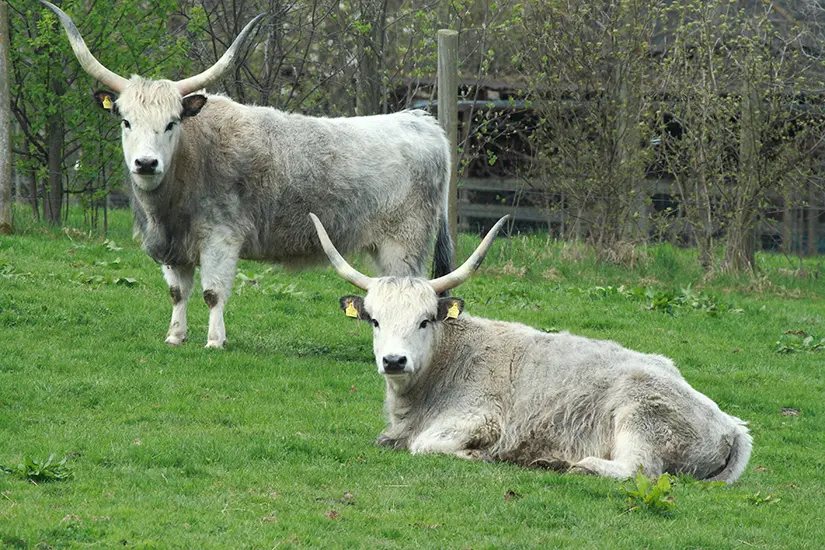
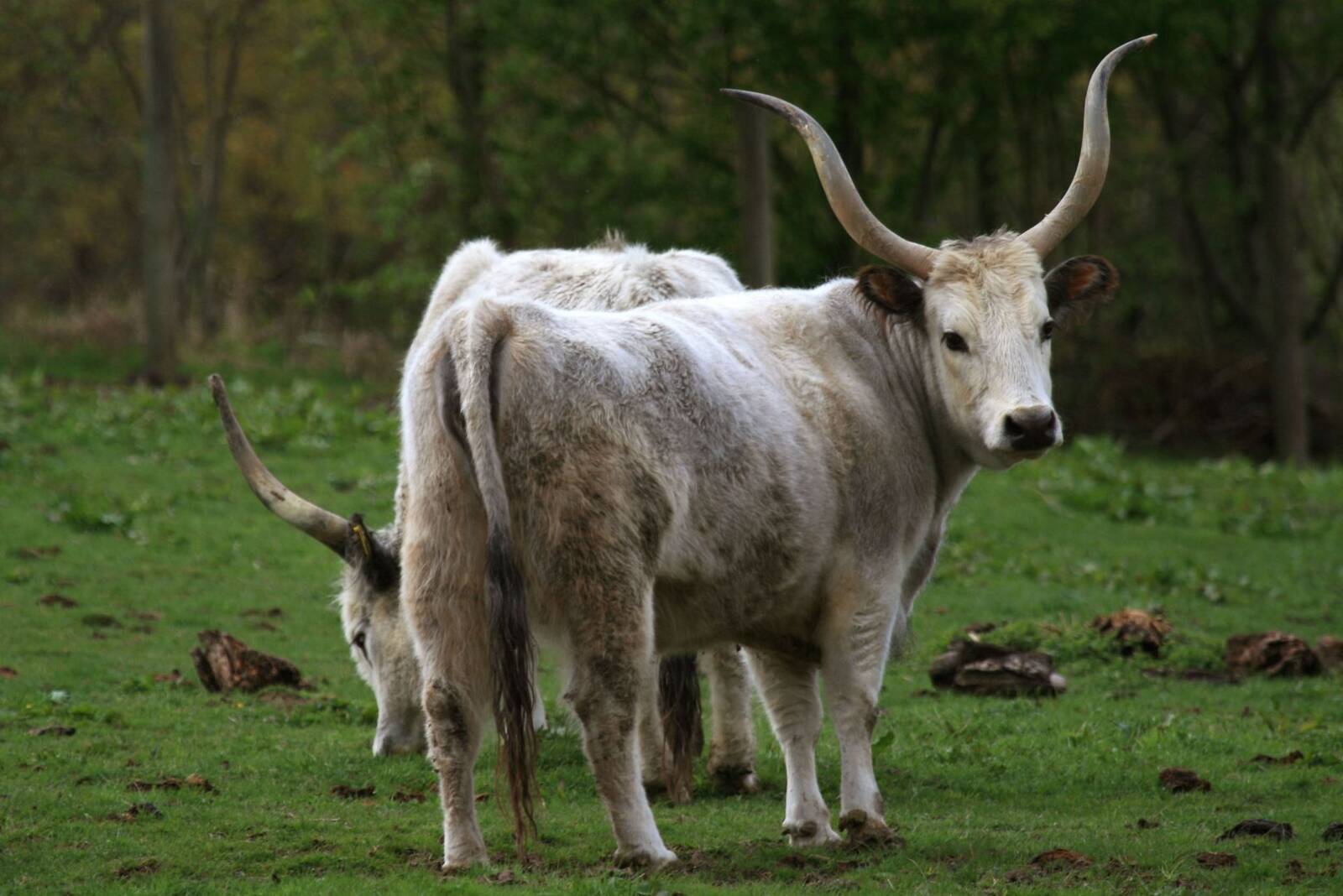
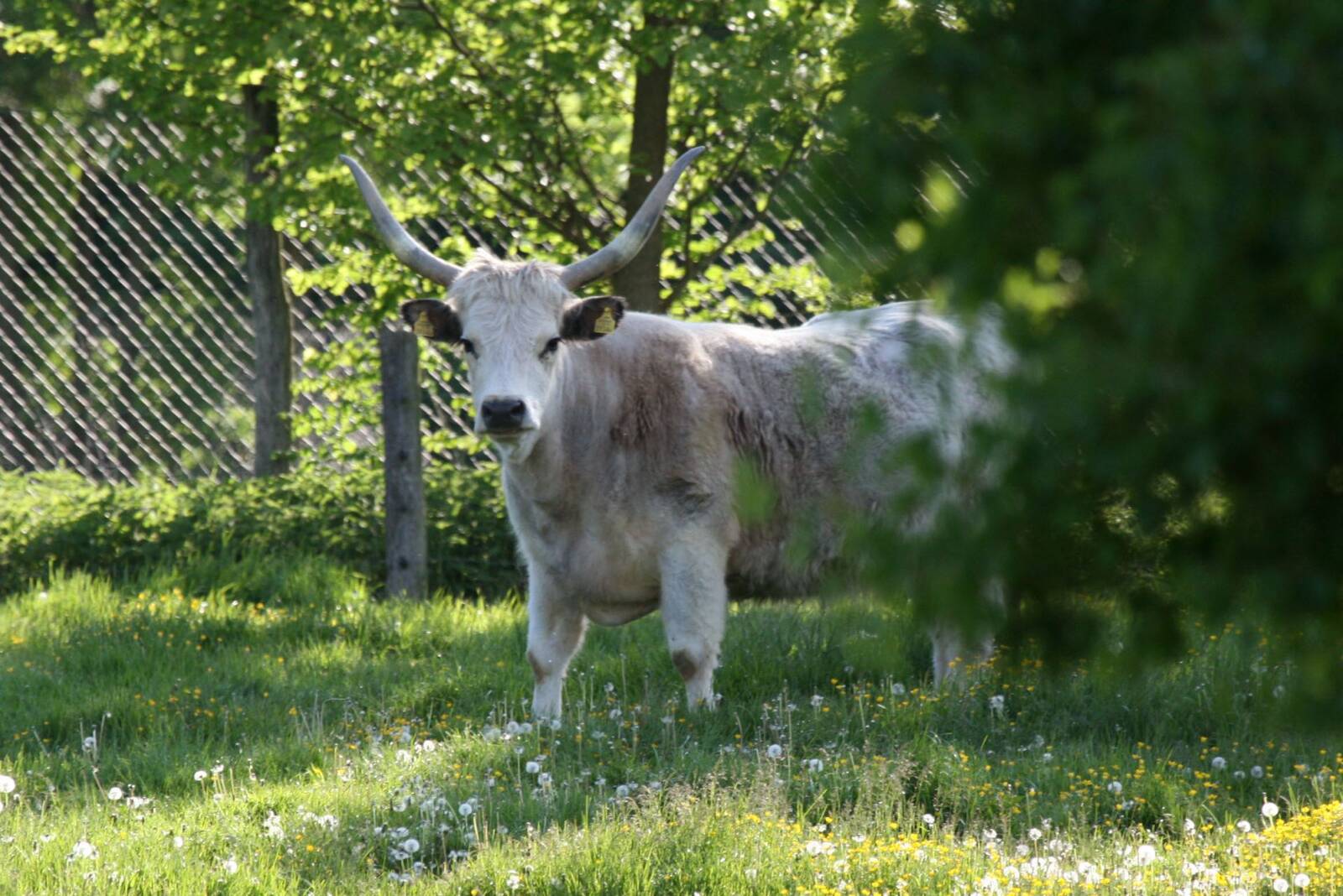
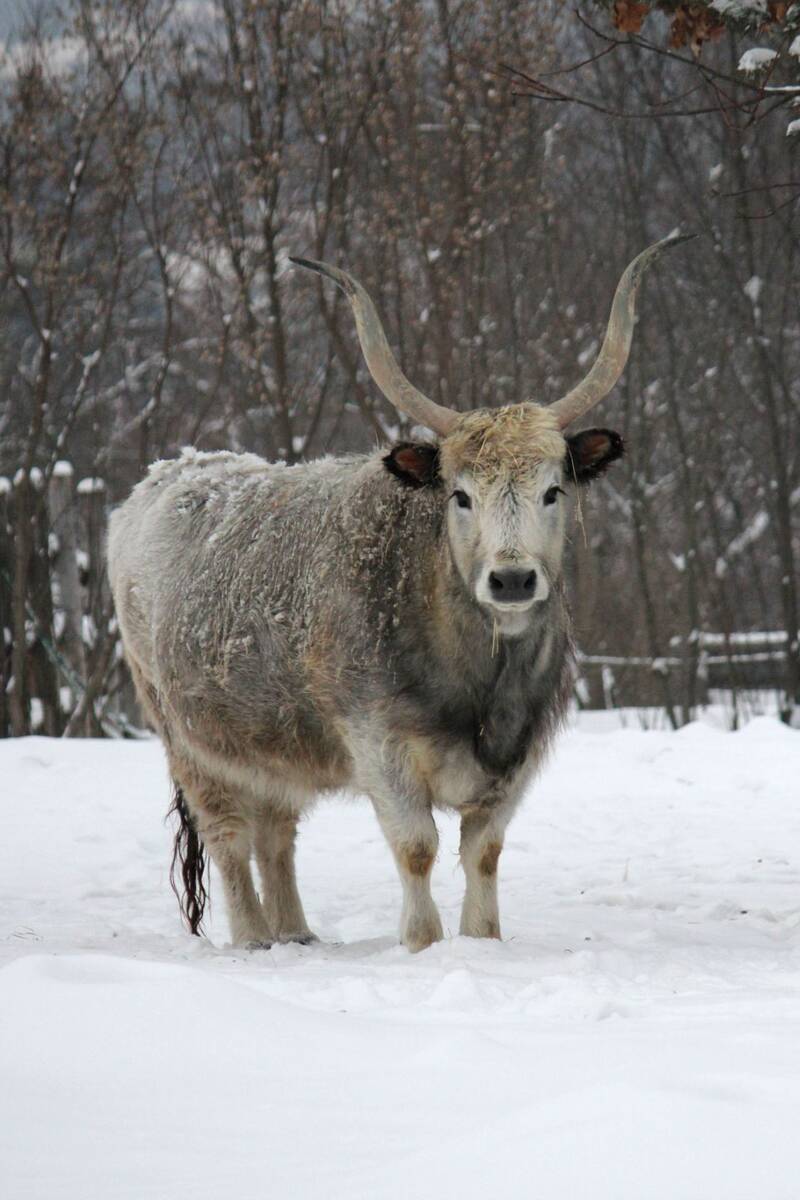
The silver-white to ash-gray Hungarian Steppe cattle are a typical “triple-purpose breed.” From the 14th through the 18th century, they were primarily raised for milk and meat; later, due to their hardiness, they were also used as draft animals. As agriculture became more intensive and the industry specialized in either dairy or beef production, this breed gradually lost its significance.
Did you know?
Today, they play an important role in extensive grazing and in keeping grasslands open, such as the Hungarian Puszta or the national park area around Lake Neusiedl.

| Order | Pair-hoofed animals |
| Family | Horn-bearer |
| Distribution | Once stretching from the Hungarian Plain to southern Russia |
| Habitat |   |
| Food |  |
| Activity |  |
| Weight | 600–1,000 kg |
| Size | Shoulder height: 135–155 cm |
| Service life | 25 years |
| Reproduction | Year-round—after a gestation period of 280–290 days, a calf with a reddish-brown coat is born. |
| Risk |  |
| Enemies | Human |
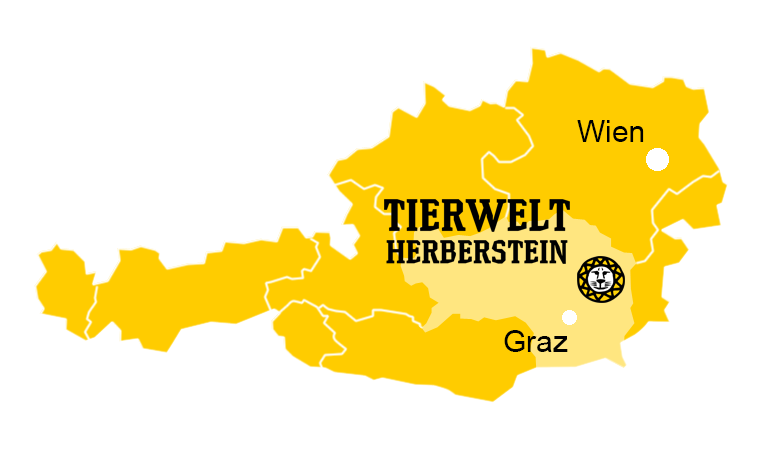
Tierwelt Herberstein
Steirischer Landestiergarten GmbH
A 8223 Stubenberg am See
Buchberg 50
Phone: +43 3176 80777
Fax: +43 3176 80777 20
Email: info (at) tierwelt-herberstein. at