




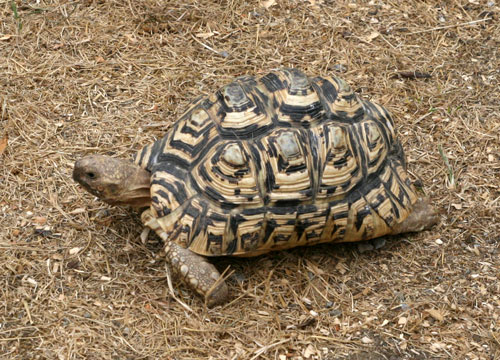
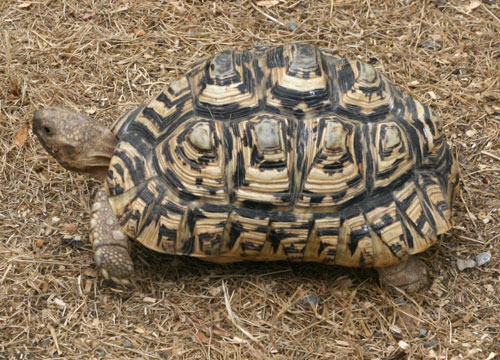
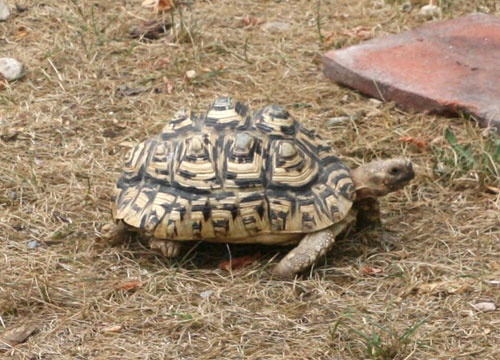
Leopard tortoise in the Tierwelt Herberstein
Leopard Tortoise
Stigmochelys pardalis
A Panther with a Hard Shell
The panther tortoise gets its name from its spotted shell. Black spots and stripes cover a light yellow to beige background, which help the animals blend into their surroundings.
There are two subspecies: the South African leopard tortoise, which has a lighter base color and a lower carapace, and the East African leopard tortoise, which has a darker base color and a highly domed carapace.
Did you know?
Leopard tortoises can also be found in mountainous regions at altitudes of up to nearly 3,000 meters above sea level!
| Order | Turtles |
| Family | Tortoise |
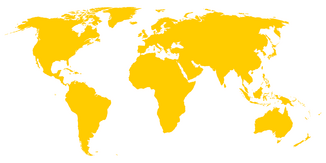
| Distribution | Southern and Eastern Africa (from South Africa to Ethiopia) |
| Habitat |   |
| Food |  |
| Activity |   |
| Weight | over 30 kg |
| Size | Body length up to 50 cm |
| Service life | up to 40 years |
| Reproduction | Mating seasons vary somewhat but generally occur in the summer. Egg-laying usually takes place in the second half of the summer; the female lays up to 20 round, hard-shelled eggs in a bottle-shaped pit that she digs with her hind legs. There are 3 to 6 clutches per year. After an incubation period of 180–400 days, the young, which are about 5 cm in size, usually hatch from March through April. |
| Risk |  |
| Enemies | Hyena, Lion, Human |
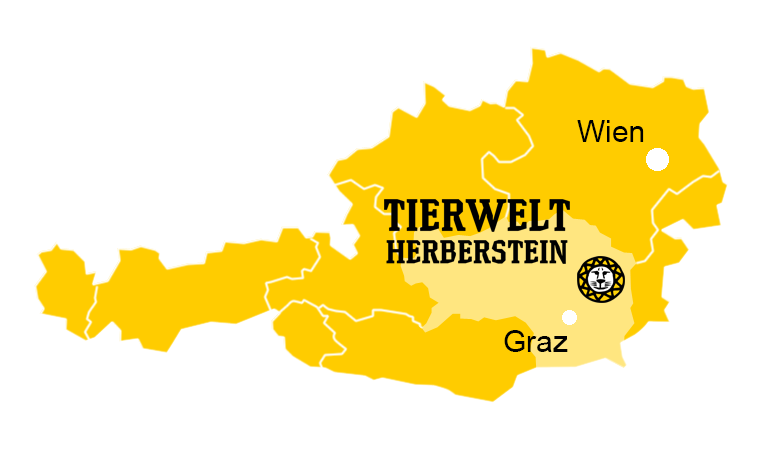
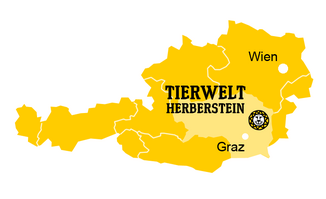
Tierwelt Herberstein
Steirischer Landestiergarten GmbH
A 8223 Stubenberg am See
Buchberg 50
Phone: +43 3176 80777
Fax: +43 3176 80777 20
Email: info (at) tierwelt-herberstein. at