




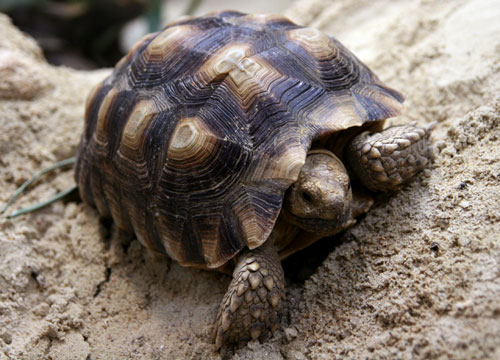
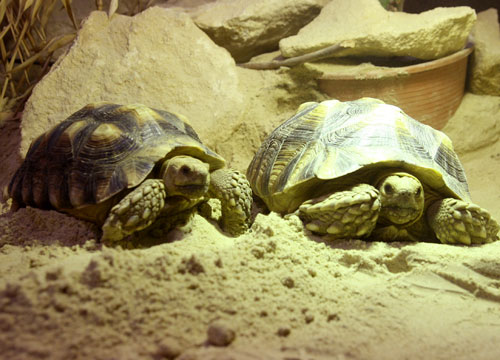
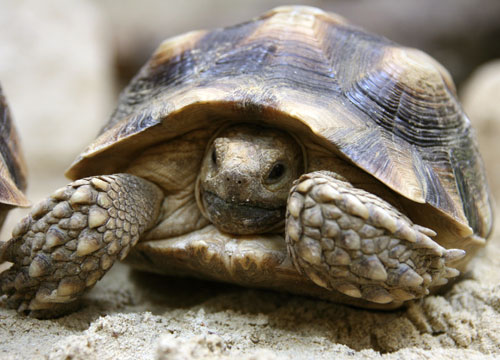
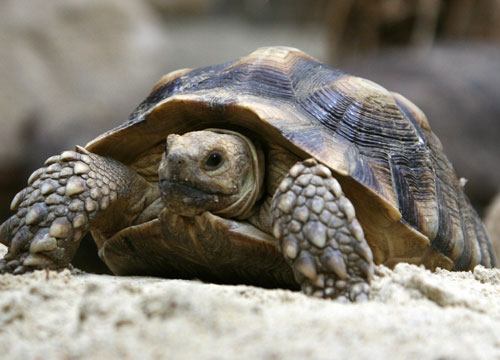
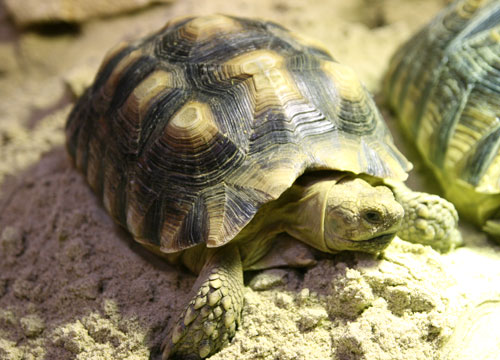
Spurred tortoise in the Tierwelt Herberstein
African Spurred Tortoise
Centrochelys sulcata
Armored Giants
After the Galápagos and Seychelles giant tortoises, the spurred tortoise is the third-largest land tortoise. It got its German name because of the two distinctive spurs on each of its hind legs. Its strong front limbs are particularly well-suited for digging. In burrows it digs itself—up to three meters deep and nine meters long—the spurred tortoise escapes the heat of the day and the cool nights.
Did you know?
The gross temperature—ranging from 27.0°C to 31.0°C—determines whether male or female juveniles hatch from the ping-pong-ball-sized eggs: at higher temperatures, more females hatch; at lower temperatures, more males hatch.
| Order | Turtles |
| Family | Tortoises |
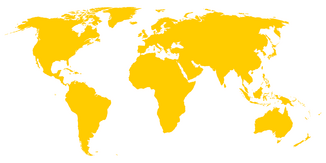
| Distribution | The Sahel Region of Central Africa—from the Atlantic Ocean to the Red Sea |
| Habitat |  |
| Food |  |
| Activity |   |
| Weight | 80 kg |
| Size | up to 80 cm |
| Service life | up to 100 years |
| Reproduction | Mating can be observed year-round, but is most frequent during the summer months. Eggs are laid in two to four clutches, up to a maximum of six, each containing 10 to 20 round eggs about the size of a ping-pong ball. At a constant incubation temperature of 27.0°C to 31.0°C (higher temperature → more females; lower temperature → more males), the young hatch after about 120 days. |
| Risk |  |
| Enemies | Hyena, lion, snakes, human |
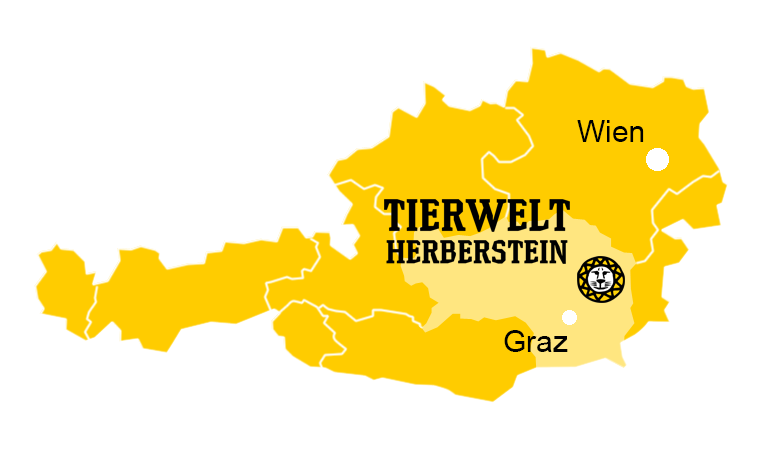
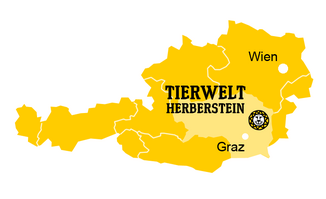
Tierwelt Herberstein
Steirischer Landestiergarten GmbH
A 8223 Stubenberg am See
Buchberg 50
Phone: +43 3176 80777
Fax: +43 3176 80777 20
Email: info (at) tierwelt-herberstein. at