


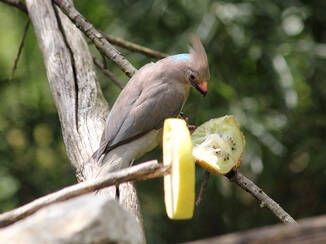





Oryx Weaver
Southern Red Bishop
Euplectes orix
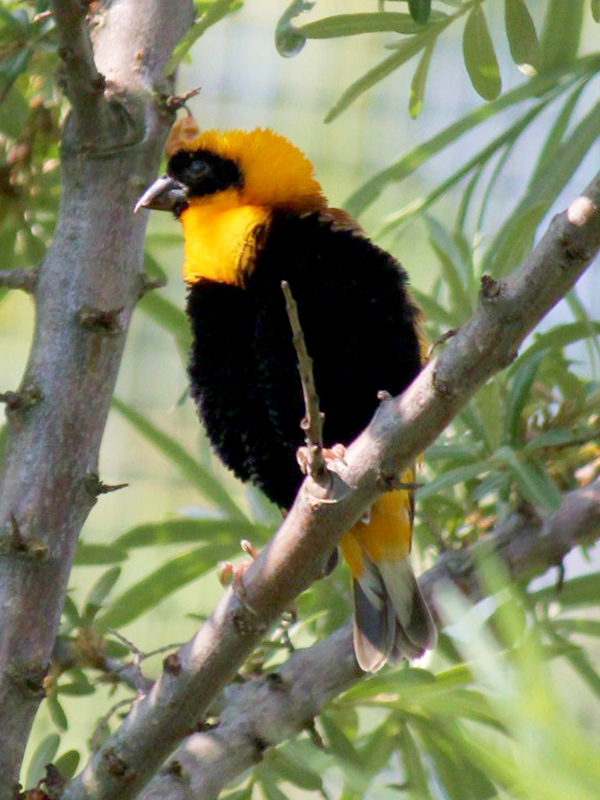
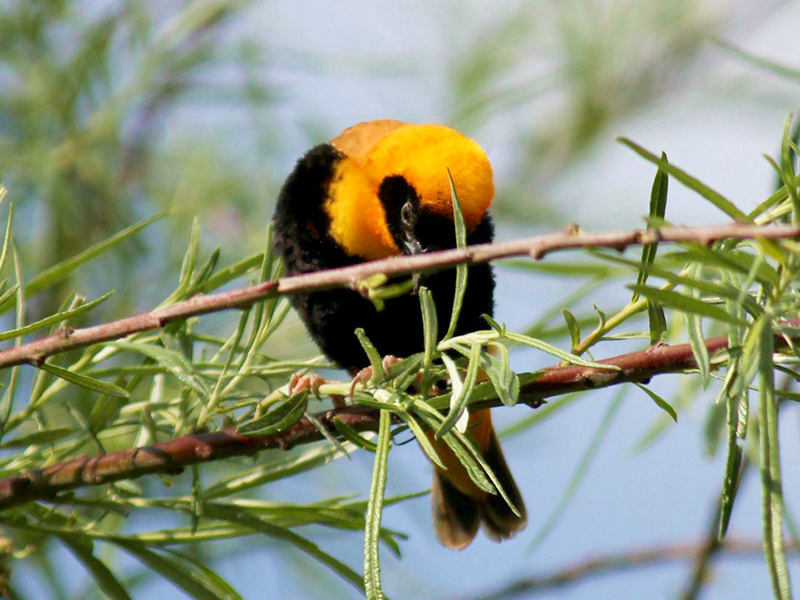
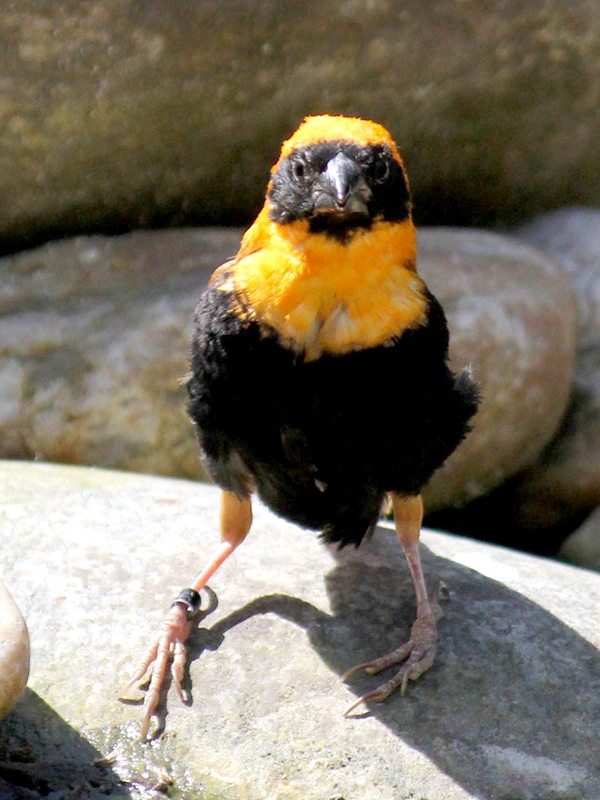
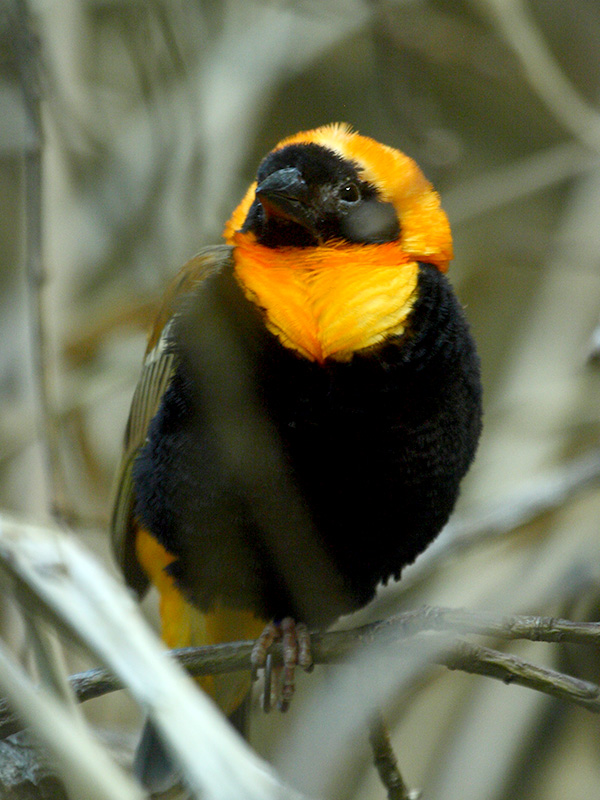
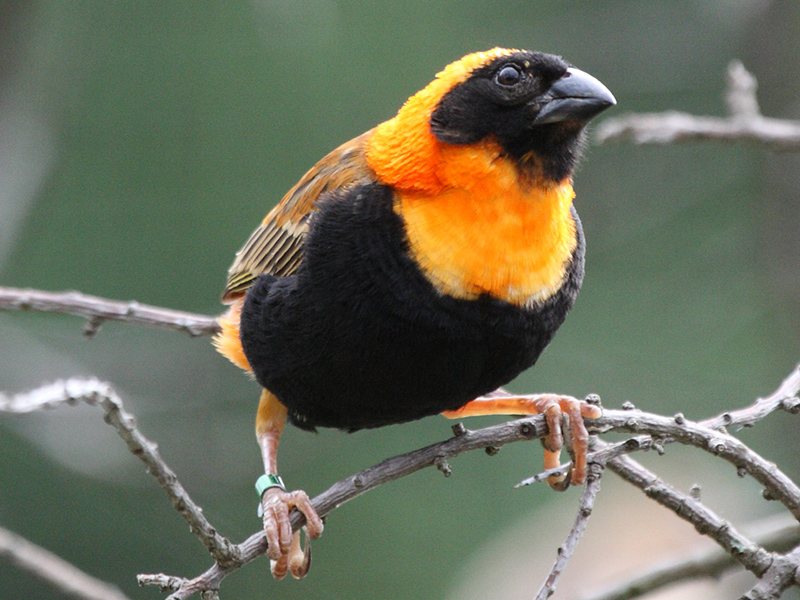
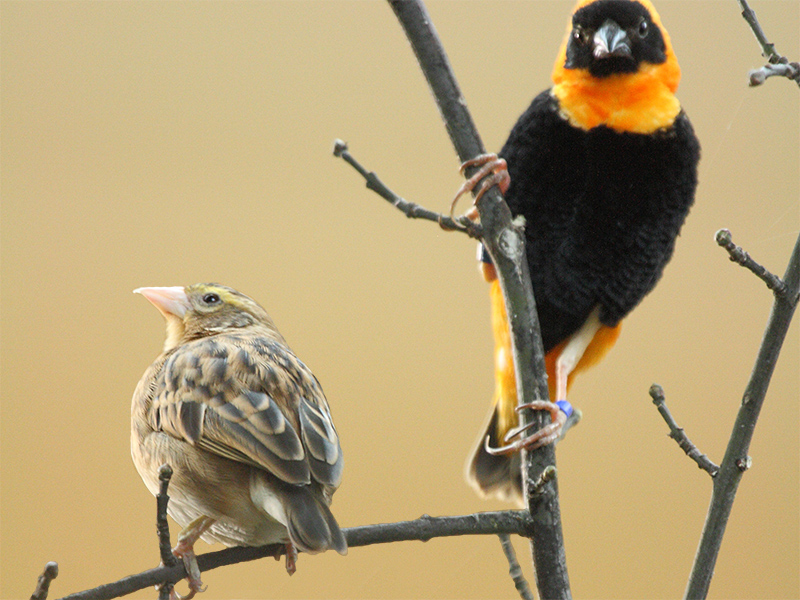
Outside the breeding season, both sexes have plain plumage and resemble house sparrows. During courtship, the male takes on a striking breeding plumage: his forehead and back are a vivid orange-red, contrasting with a deep black face and belly. Weaverbirds breed in large colonies, though individual males have strictly defined territories. They are polygamous and use courtship songs to attract several females to their territory. The male builds several nests, from which the females select one that suits them and then line and further embellish the interior, often even during the breeding season.
| Order | Passerines |
| Family | Weaver Birds |
| Distribution | Africa south of the equator |
| Habitat |   |
| Food |  |
| Activity |  |
| Weight | 17–30 grams |
| Size | up to 13 cm |
| Service life | up to 10 years |
| Reproduction | Among weaver birds, only the females lay eggs. The eggs—usually three in number and turquoise in color—hatch after about 13 days, and the chicks leave the nest at 2 weeks of age. |
| Risk |  |
| Enemies | Snakes, Rodents, Humans |

Tierwelt Herberstein
Steirischer Landestiergarten GmbH
A 8223 Stubenberg am See
Buchberg 50
Phone: +43 3176 80777
Fax: +43 3176 80777 20
Email: info (at) tierwelt-herberstein. at