


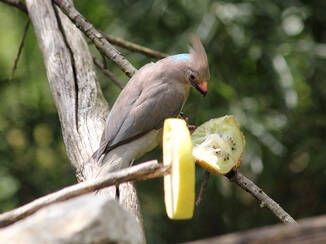





Silver-billed Finch
African Silverbill / Silverbill
Eudice Singing
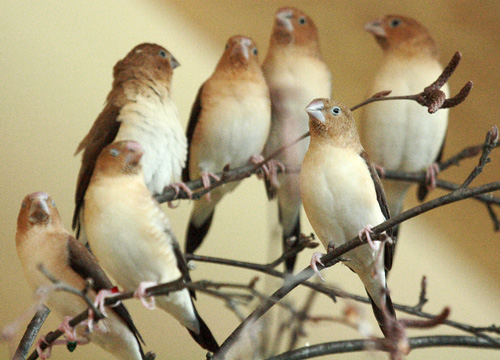
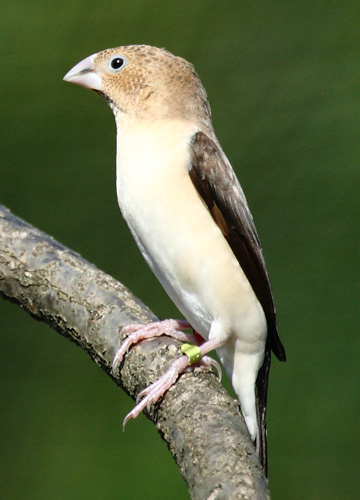
While other finches stand out because of their colorful plumage, that of the silver-billed finches is rather plain. Like many finches, they are very social; even during the breeding season, their nests are often not far apart. They can very often be observed “perching together” or preening each other’s feathers.


| Order | Passerines |
| Family | Ornate Finches |
| Distribution | South of the Sahara, occurring in a broad band stretching from west to east; extending further south in East Africa; also found in the southeastern part of the Arabian Peninsula; naturalized in Puerto Rico and Hawaii |
| Habitat |  |
| Food |  |
| Activity |  |
| Weight | up to 12 grams |
| Size | up to 11 cm |
| Service life | up to 8 years old |
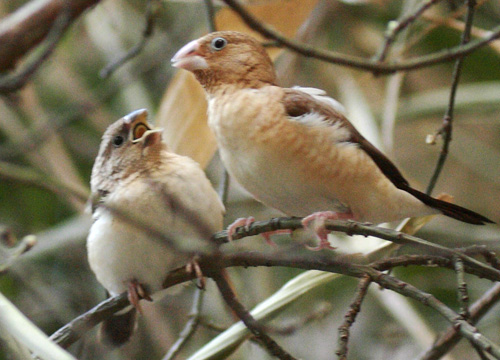
| Reproduction | The breeding season begins in the second half of the rainy season and can extend well into the dry season. The female lays 4–6 eggs in the spherical nest; the chicks hatch after about 12 days, leave the nest at about 3 weeks of age, but continue to be cared for by their parents for another two weeks. |
| Risk |  |
| Enemies | Birds of Prey, Snakes |

Tierwelt Herberstein
Steirischer Landestiergarten GmbH
A 8223 Stubenberg am See
Buchberg 50
Phone: +43 3176 80777
Fax: +43 3176 80777 20
Email: info (at) tierwelt-herberstein. at