


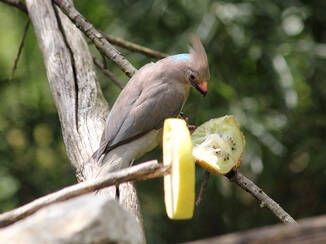





Mandrill in the Tierwelt Herberstein
Mandrill
Mandrillus sphinx
The Most Colorful of All Mammals
The piercing gaze of a male mandrill is enough to make your blood run cold. And when he yawns heartily on top of that, he makes it unmistakably clear: “I’m not to be messed with!” That’s because his canines—which can grow up to 6.5 cm long—are revealed, serving as his extremely effective weapons. This makes him one of the most dangerous animals on Tierwelt Herberstein.
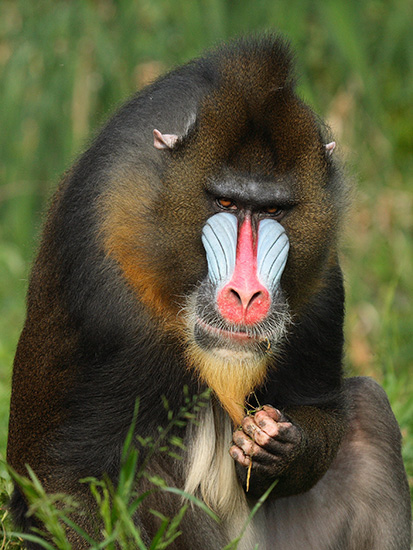
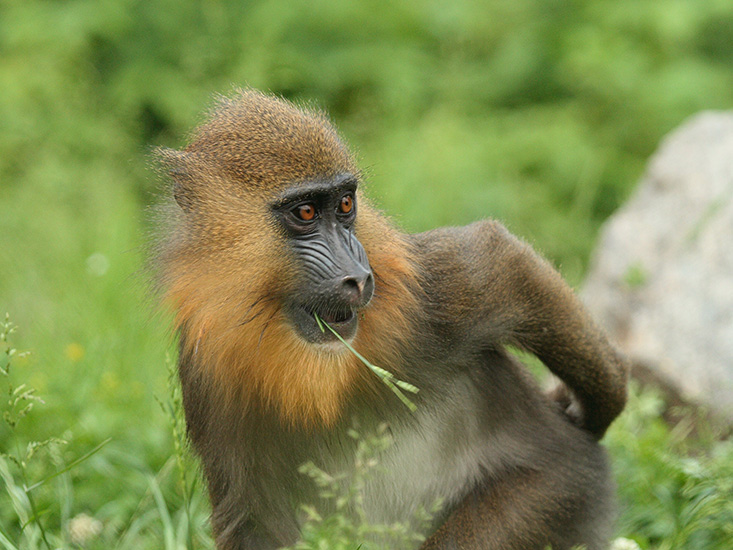
The head is disproportionately large, a feature attributable not to a particularly large brain but to its powerful jaws. The fearsome facial expression is further accentuated by massive eyebrows—but even more so by the bulging cheeks that earned the mandrill the name “cheek-furrowed baboon.”
In addition, these ridges glow blue and provide a striking contrast to the bright red nose. The appearance is rounded out by a golden-yellow chin beard. The colorful facial markings act as intimidating war paint to deter rivals. The more intense the markings, the greater the fighting power and strength they demonstrate.
The back also glows in shades of red, blue, and purple. It is believed that group members use this trait as a navigational aid in the dense jungle when they go on their daily foraging trips.
Monkey Commune
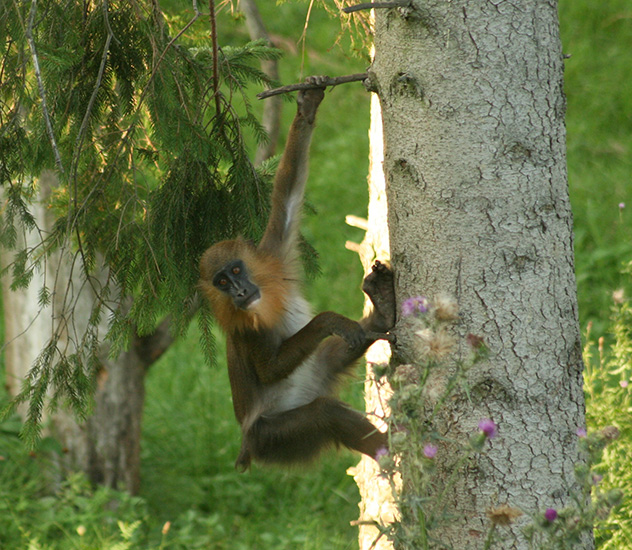
Our mandrill family shares the spacious enclosure with a troop of green monkeys. Both species benefit from this communal living arrangement. For example, you can watch the young play together or the adults engage in minor squabbles over food.
Not only is daily life more exciting, but there’s also much more space. Should any disagreements ever arise with the mandrill leader, the much more agile vervet monkeys simply vanish in the blink of an eye into the safety of the treetops.
The indoor enclosure contains a separate area where the size of the passageways to the communal area prevents adult mandrills from slipping through.
Did you know?
Mandrills are omnivores and eat just about anything they come across—from fruits and leaves to insects and small vertebrates. To find enough food, they go on daily foraging trips of up to 4.5 km.
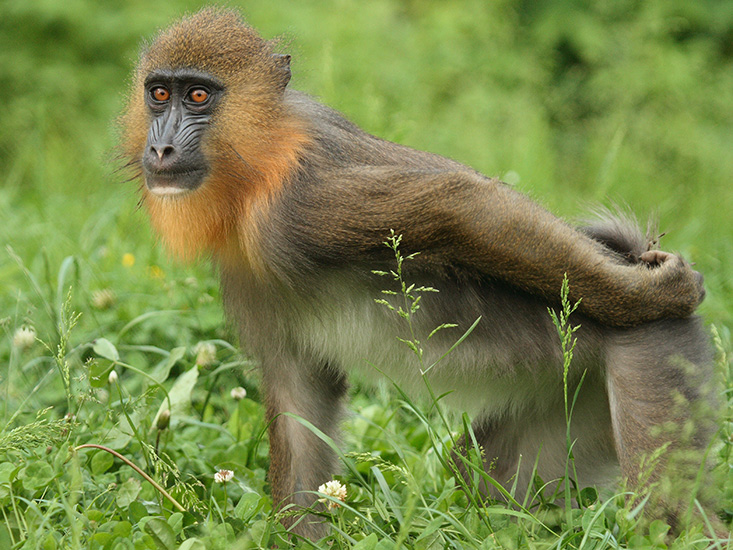
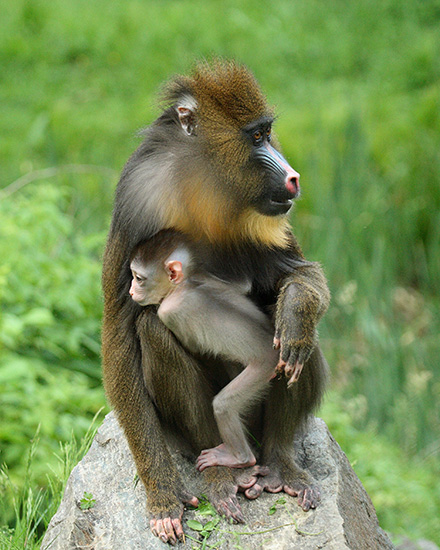
| Order | Monkeys |
| Family | Cheek-pouch monkeys |
| Distribution | Western Central Africa (southwestern Cameroon, western Congo, western Gabon, Equatorial Guinea) |
| Habitat |  |
| Food |  |
| Activity |  |
| Weight | M 27 kg, W 12 kg |
| Size | Body length 56–81 cm, shoulder height up to 80 cm |
| Service life | 25 years (zoo: 40 years) |
| Reproduction | After a gestation period of 6 months, 1 cub is born. |
| Risk |  |
| Enemies | Leopard, Human |

Tierwelt Herberstein
Steirischer Landestiergarten GmbH
A 8223 Stubenberg am See
Buchberg 50
Phone: +43 3176 80777
Fax: +43 3176 80777 20
Email: info (at) tierwelt-herberstein. at