


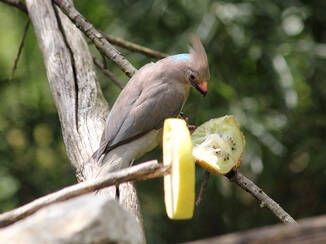





African Grey Parrot
Gray Parrot / Perroquet cendrè
Psittacus erithacus
African grey parrots are primarily forest dwellers. After the breeding season, they form large flocks that venture into fields in search of food, where they can cause damage. With the help of their beaks, African grey parrots are excellent climbers. Notable is their ability to mimic the calls of other birds and human voices. The underparts of females are sometimes lighter in color, and their upper beak is less curved.
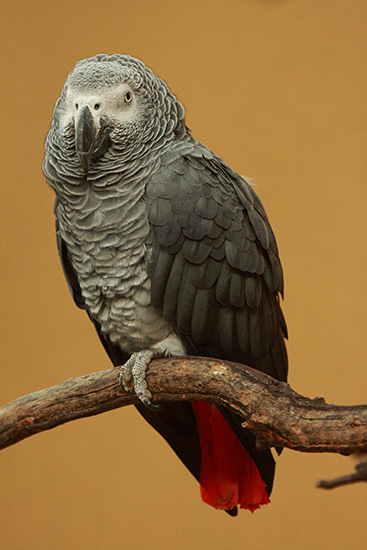
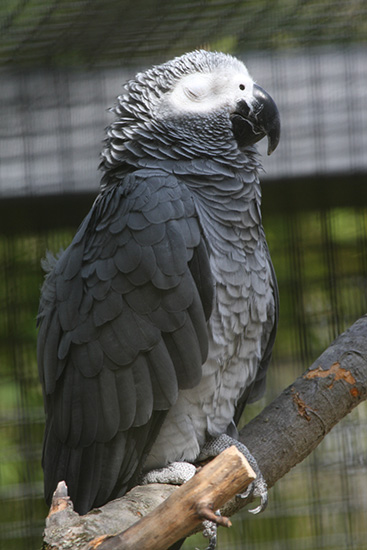
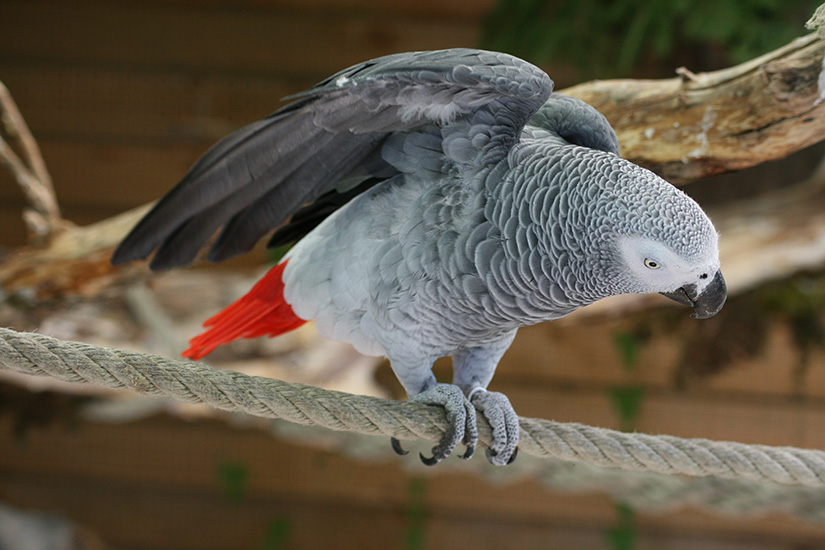
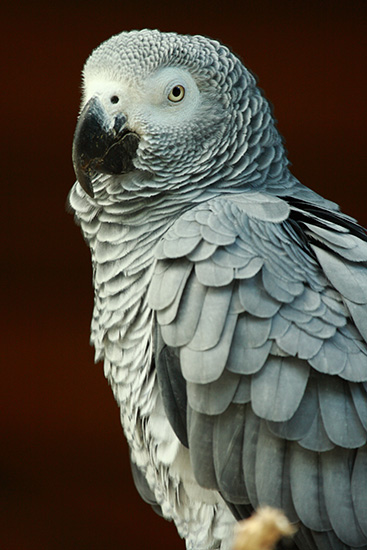
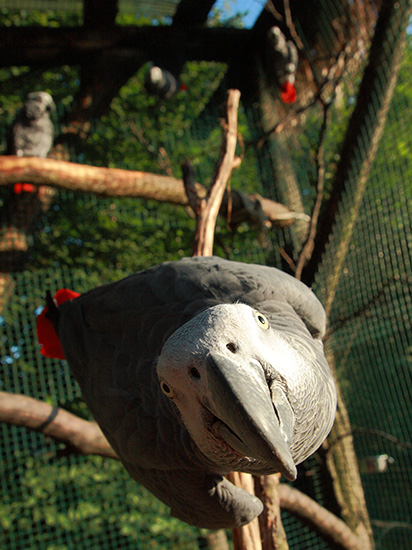
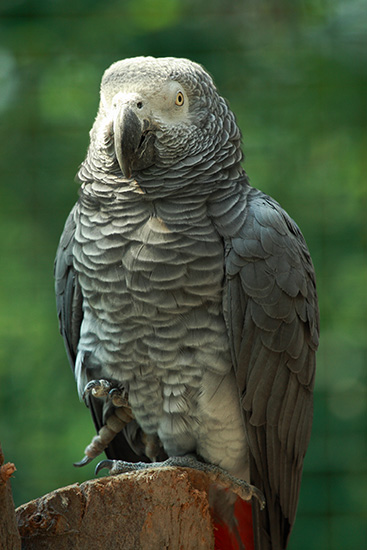
| Order | Parrots |
| Family | Parrots |
| Distribution | Central Africa |
| Habitat |    |
| Food |  |
| Activity |  |
| Weight | - |
| Size | 30–40 cm |
| Service life | 40–50 years (zoo) |
| Reproduction | African grey parrots nest in tree hollows. The clutch consists of 3–4 eggs, which are incubated for about 30 days. The chicks leave the nest at around 80 days of age and are cared for by the male for another 4 months. |
| Risk |  |
| Enemies | - |

Tierwelt Herberstein
Steirischer Landestiergarten GmbH
A 8223 Stubenberg am See
Buchberg 50
Phone: +43 3176 80777
Fax: +43 3176 80777 20
Email: info (at) tierwelt-herberstein. at