








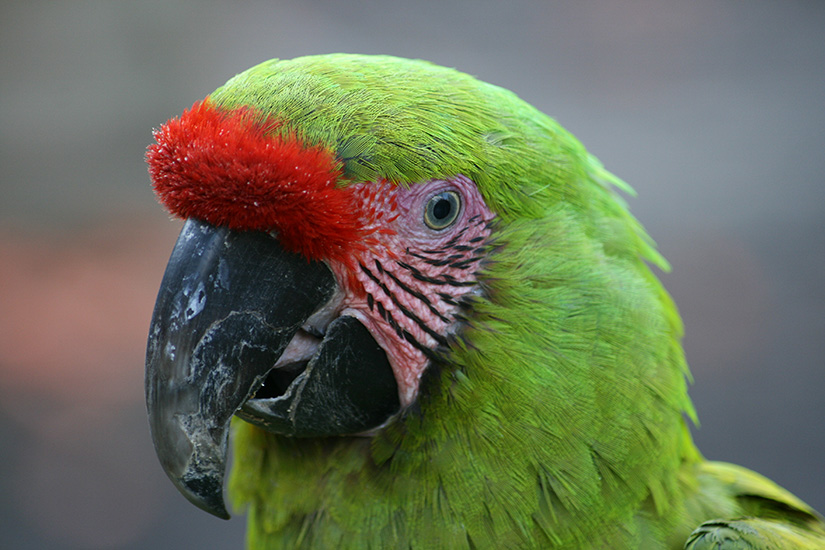
“The reason why we great military macaws had to keep losing our feathers in the past is quite simple and has nothing at all to do with a lack of respect for us birds,” explains military macaw
Jakob. “We had something that humans lacked: a variety of colors. That made us look pretty bare. We developed real crow’s feet—and we’re parrots! The Incas skillfully handcrafted headdresses for themselves and their deities. To do so, they used materials found in nature. I know from my great-great-great-great-great-great-great-grandmother that she was given the best food because the Incas hoped it would result in more colorful plumage. The Inca cockatoos had a similar experience. You wouldn’t believe what the Incas went through to get the most colorful and longest feathers from us birds.
In the capital of the Incas, Cuzco, considerable efforts were made to successfully mate my ancestors. At an altitude of 3,500 meters, this was no easy task, since macaws and cockatoos are usually found in lower-lying areas. We were kept in aviaries, and the people cared for us feathered companions devotedly in order to obtain the most beautiful feathers. They fed us and conscientiously protected us from the birds of prey circling in the sky. We birds were said to possess supernatural powers, and the Incas tried to divine the future from our behavior. That is why they observed us closely. Above all, however, our plumage served to adorn the ruler’s magnificent headdress. They preferred to pluck the longest tail feathers from us. How happy we are that at the “ Tierwelt Herberstein ” we are pampered without being plucked!”