







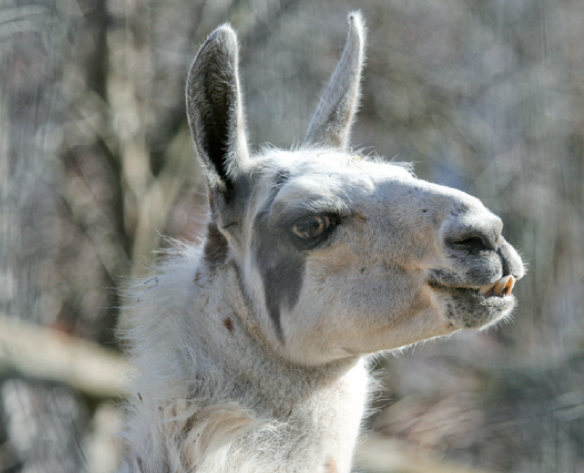
“Even today, we brave wind and weather. But in zoos, we’re only really put to use when we can spit as far as possible. That delights many visitors—but only when we hit something else. In the time of the Incas, we were something truly special. The indigenous people lived in the highlands of the Andes. Hostile territories could only be accessed with hardy animals. In the rugged terrain, they needed four-legged help. We were, so to speak, the trucks of that era. We also supplied milk, wool, hides, and meat. Our bones served as tools, and our dung as fuel. The Incas knew that without us llamas, they could not have lived the lives they did. For this reason, they held us pack animals in the highest regard.
... Die Inka widmeten uns aus Dankbarkeit für unsere Einsatzfähigkeit ihre gesamte Stadt. Überall wurden wir verewigt, sogar in Steinmauern und Gefäßen. Sie meißelten uns in Stein und richteten ihre Wohnanlage nach dem Sternbild von uns Lamas aus, da sie uns damals sogar am Himmel sahen. Wir waren hoch angesehene Tiere und galten als Symbol für den Ursprung des Lebens, das Wasser. Damit uns mit Hochachtung begegnet wurde, wie es sich für ein <link internal-link internal link in current>Göttertier gehört, wurden Zucht und Bestand vom Inka-Herrscher streng überwacht. Noch heute sind wir so stolze Tiere, weil wir von unserer herausragenden Bedeutung wissen.”