







New Nandu Chicks in Herberstein
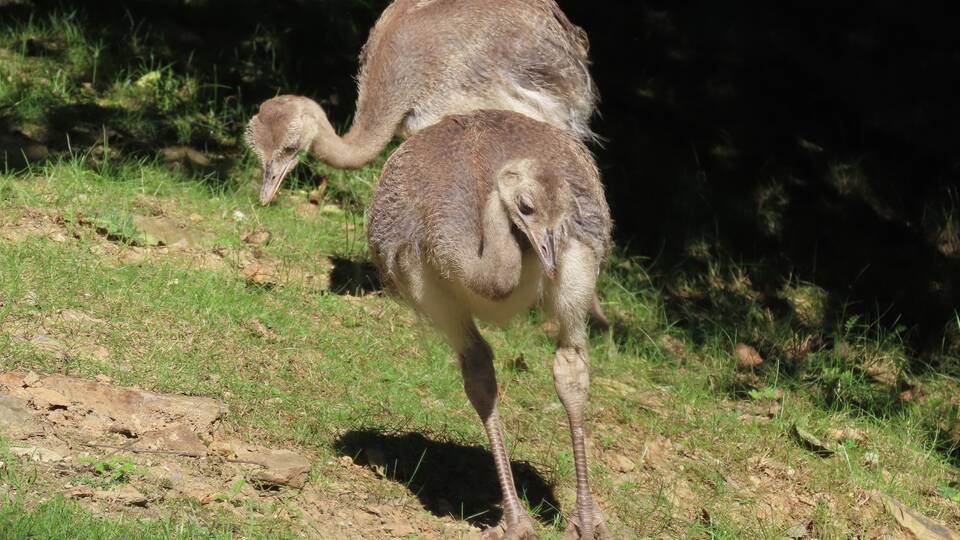
Two rhea chicks in the Tierwelt Herberstein
After a long hiatus, visitors to the zoo in eastern Styria can once again marvel at the new additions to the South American ratites. The hens laid their eggs in early June, and the male took care of incubating them. The chicks are exploring their enclosure, remain under their father’s constant care, and are clearly visible to visitors.
Nandus have the longest wings of any ratite, but they are flightless. Their wings are used only for courtship or to maintain balance. Their large body mass and poorly developed chest muscles prevent them from taking flight.
They inhabit grassy steppes in the eastern part of the continent, from Brazil to Argentina; they are considered diurnal and feed on grasses, fruits, seeds, insects, lizards, frogs, and other small animals.
Hours: Daily from 9 a.m. to 5 p.m.; visitors may remain on the premises until 6:30 p.m.
Through November 5: STEIERMARK EXHIBITION “Diversity of Life” included in the ticket price.
For inquiries:
Karin Winkler – Head of Marketing/PR
Buchberg 50, 8223 Stubenberg/See
M: +43 664 8865 4094
E: k.winkler (at) tierwelt-herberstein. at
Tierwelt Herberstein
Steirischer Landestiergarten GmbH
A 8223 Stubenberg am See
Buchberg 50
Phone: +43 3176 80777
Fax: +43 3176 80777 20
Email: info (at) tierwelt-herberstein. at